
Why Is Astaxanthin More Than a Strong Antioxidant?
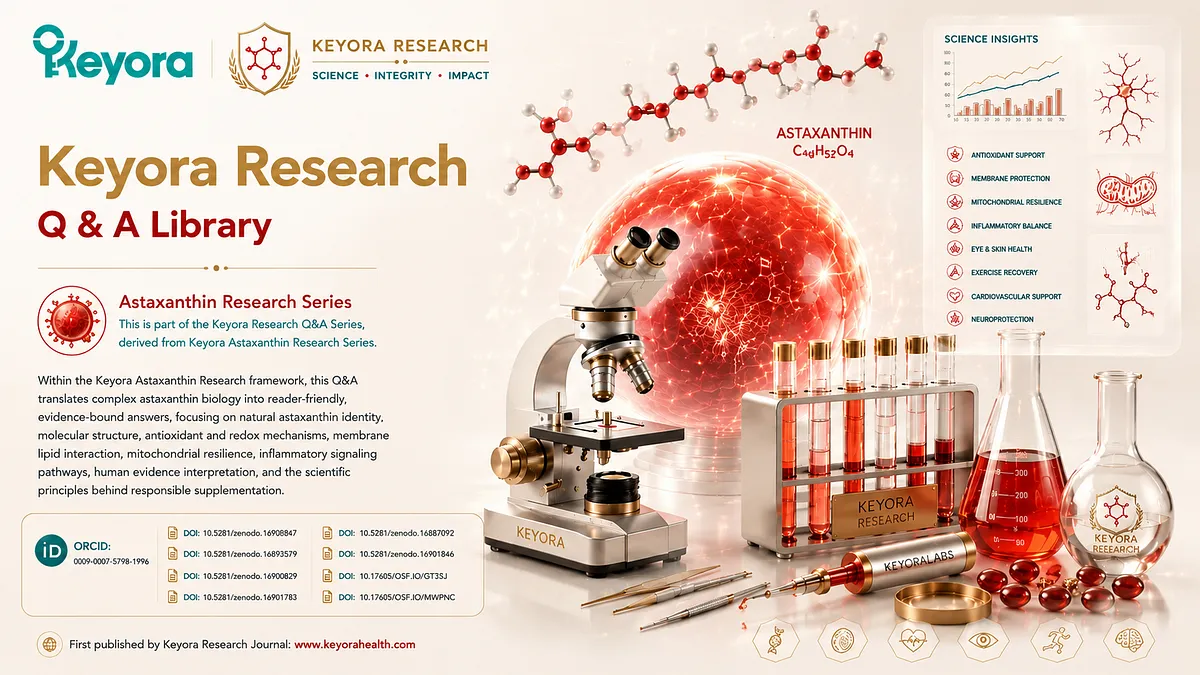
Keyora Research Q&A Library
This is part of the Keyora Research Q&A Series, derived from Keyora Astaxanthin Research Journal Series.
Within the Keyora Astaxanthin Researcn framework, this Q&A translates complex astaxanthin biology into reader-friendly, evidence-bound answers, focusing on natural astaxanthin identity, molecular structure, antioxidant and redox mechanisms, membrane lipid interaction, mitochondrial resilience, inflammatory signaling pathways, human evidence interpretation, and the scientific principles behind responsible supplementation.
First published by Keyora Research Journal: www.keyorahealth.com
Direct Answer
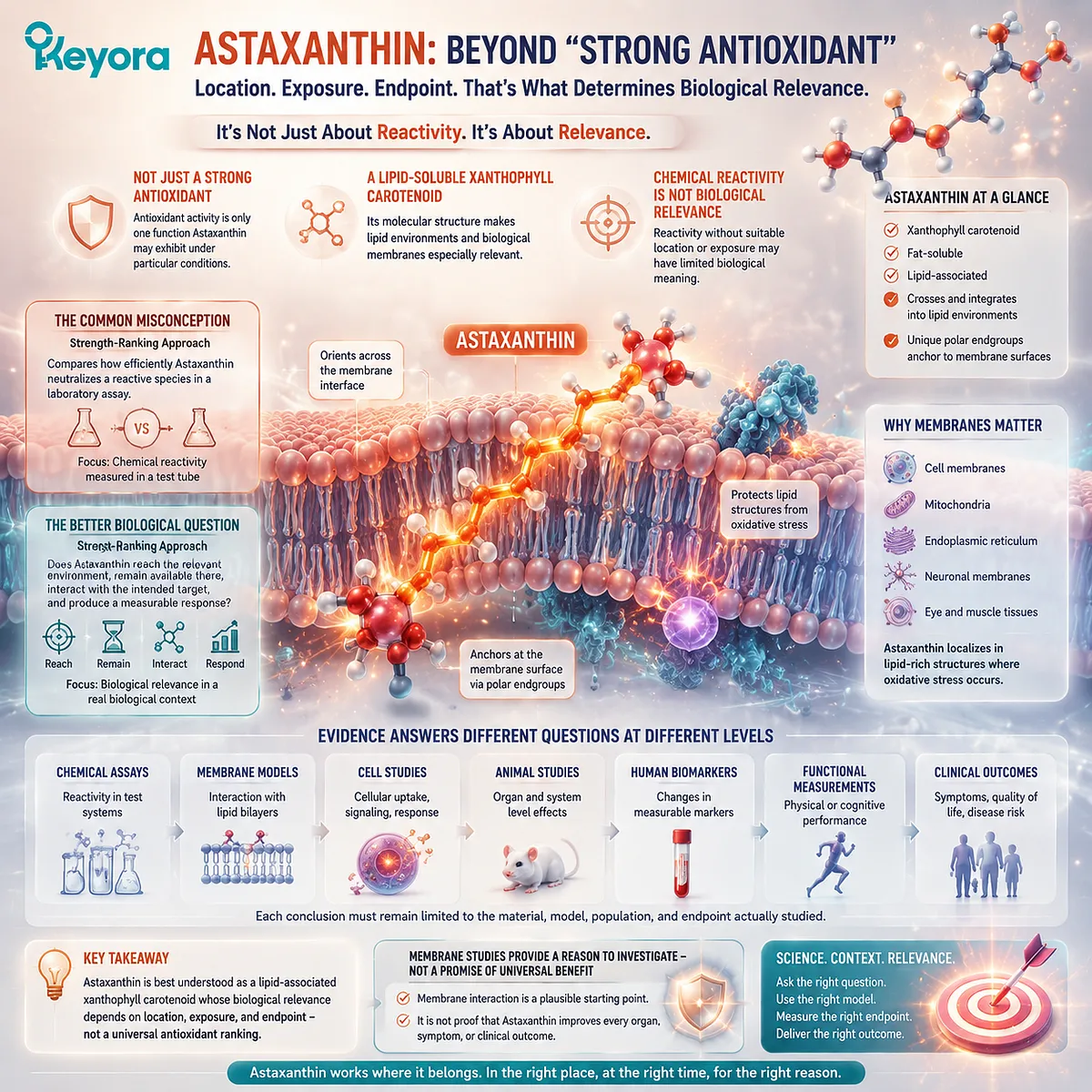
Astaxanthin should not be understood only as a “strong antioxidant.”
It is a fat-soluble xanthophyll carotenoid with a molecular structure that makes lipid environments and biological membranes especially relevant to its scientific interpretation.
Antioxidant activity describes something Astaxanthin may do under particular conditions. It does not fully define what the molecule is, where it may act, or which human outcomes it can produce.
The common strength-ranking approach asks whether Astaxanthin neutralizes a reactive species more efficiently than another compound in a laboratory assay.
A better biological question asks whether the molecule reaches the relevant environment, remains available there, interacts with the intended target, and produces a measurable response.
Chemical reactivity without suitable location or exposure may have limited biological meaning.
Astaxanthin is best understood as a lipid-associated xanthophyll carotenoid whose biological relevance depends on location, exposure, and endpoint, not a universal antioxidant ranking.
Membrane studies provide a plausible reason to investigate Astaxanthin in lipid-rich biological systems, but membrane interaction is not proof that it improves every organ, symptom, or clinical outcome.
Chemical assays, membrane models, cells, animals, human biomarkers, functional measurements, and clinical outcomes answer different questions.
Each conclusion must remain limited to the material, model, population, and endpoint actually studied.
“Antioxidant” Describes an Activity, Not the Whole Molecule
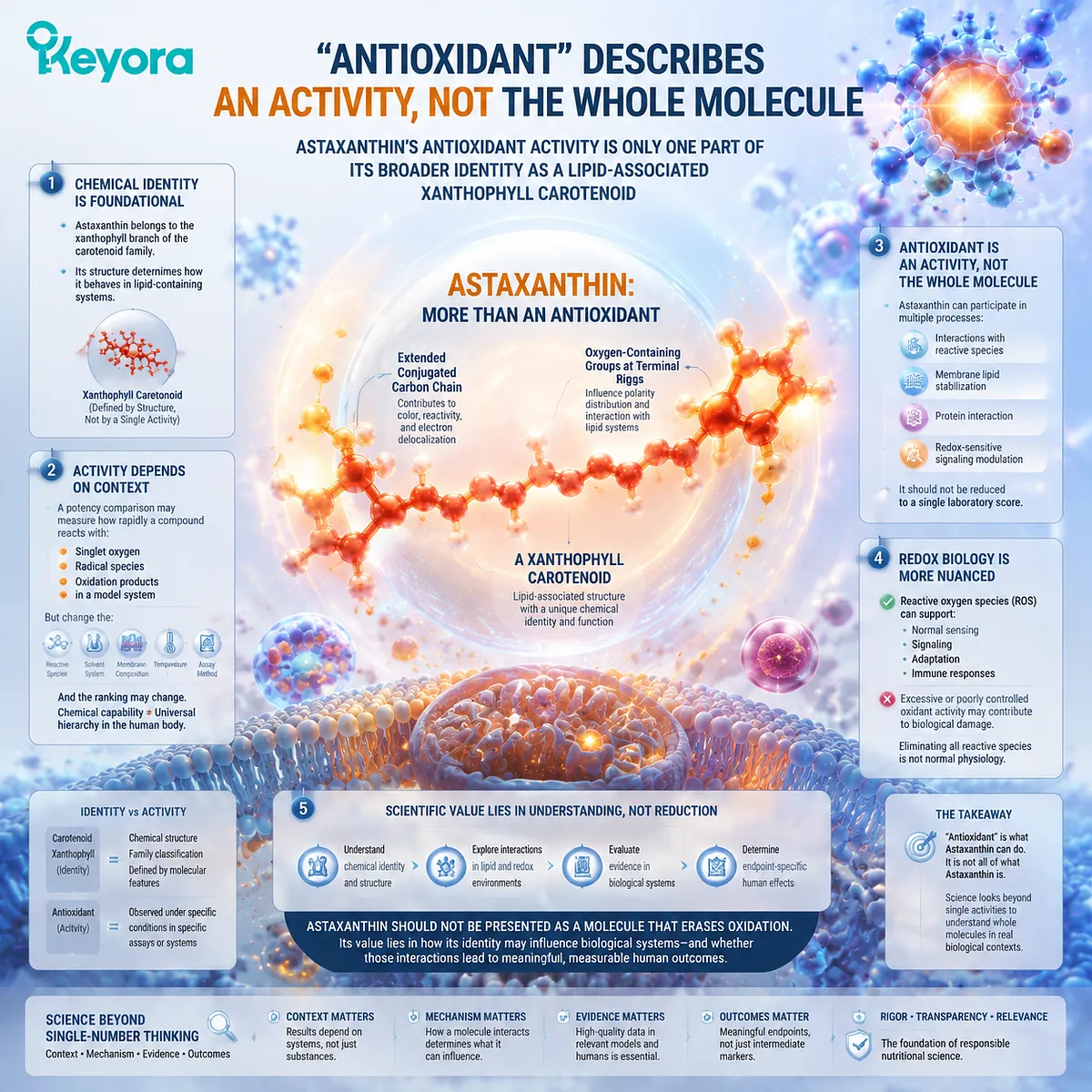
Astaxanthin’s antioxidant activity is only one part of its broader identity as a lipid-associated xanthophyll carotenoid
Astaxanthin belongs to the xanthophyll branch of the carotenoid family. Its chemical structure includes an extended conjugated carbon chain and oxygen-containing groups at its terminal rings. These features influence its color, chemical reactivity, polarity distribution, and interactions with lipid-containing systems.
Contemporary membrane research continues to classify Astaxanthin as a xanthophyll carotenoid rather than treating “antioxidant” as its complete molecular identity.
This distinction matters because “carotenoid” and “xanthophyll” describe chemical identity, while “antioxidant” describes activity observed under defined conditions. The same compound may participate in several processes, including interactions with reactive species, membrane lipids, proteins, or redox-sensitive signaling systems. It should not be reduced to a single laboratory score.
A potency comparison may measure how rapidly a compound reacts with singlet oxygen, a radical species, or an oxidation product in a selected solvent or model system.
Change the reactive species, concentration, solvent, membrane composition, temperature, or assay method, and the apparent ranking may change. Such results can establish chemical capability, but they do not create a universal hierarchy inside the human body.
Modern redox biology also shows why the simple “antioxidant versus free radical” story is incomplete.
Reactive oxygen species can contribute to normal sensing, signaling, adaptation, and immune responses at regulated concentrations.
Excessive or poorly controlled oxidant activity may contribute to biological damage, but eliminating all reactive species would not represent normal physiology.
Astaxanthin therefore should not be presented as a molecule that erases oxidation. Its scientific value lies in understanding how its chemical identity may influence selected lipid and redox environments, followed by determining whether those interactions produce meaningful, endpoint-specific human effects.
Why Membrane Context Changes the Scientific Question
A molecule’s biological relevance depends not only on reactivity, but also on whether it can reach the environment where a reaction occurs
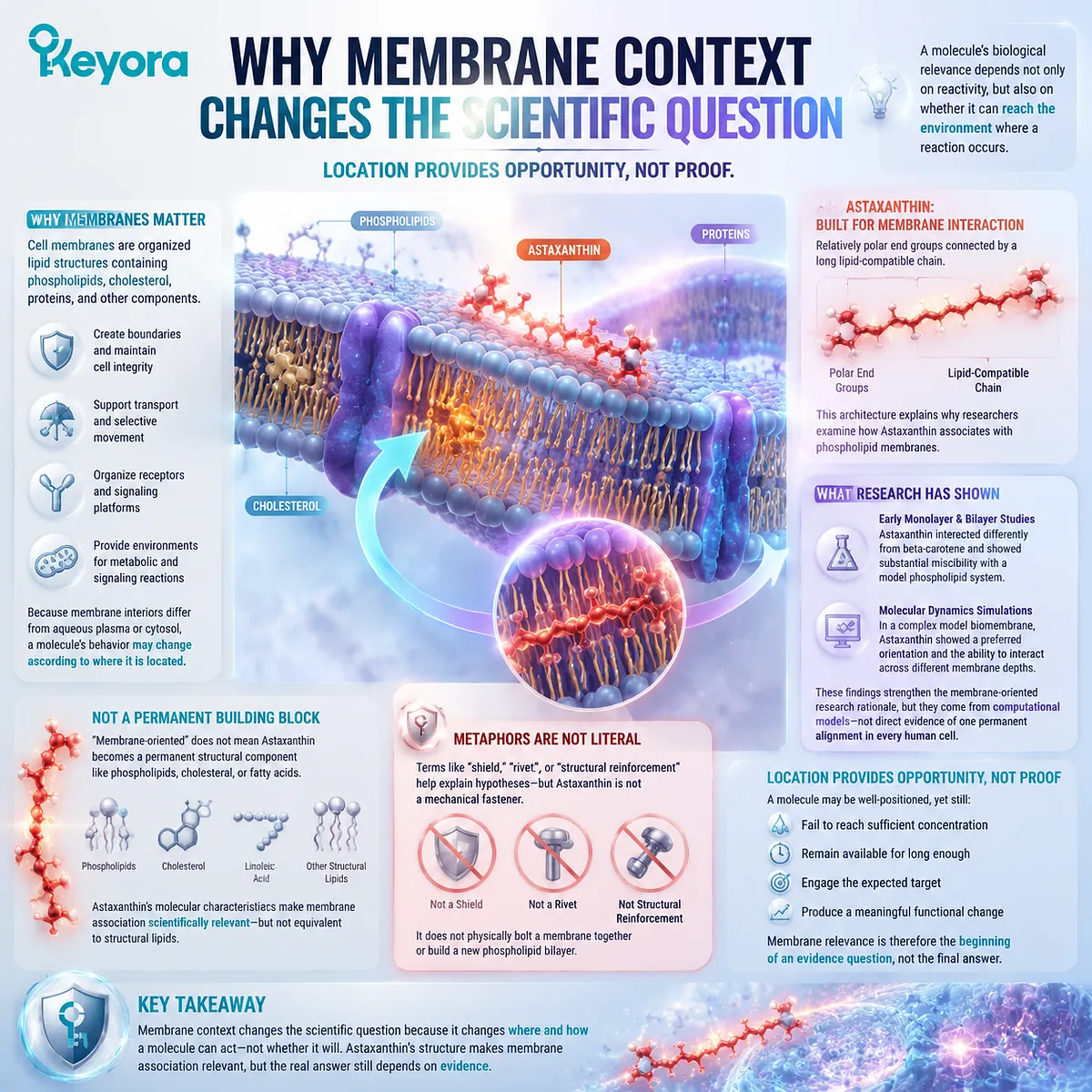
Cell membranes are organized lipid structures containing phospholipids, cholesterol, proteins, and other components. They create boundaries, support transport, organize receptors, and provide environments in which signaling and metabolic reactions occur. Because membrane interiors differ from aqueous plasma or cytosol, a molecule’s behavior may change according to where it is located.
Astaxanthin has relatively polar terminal regions connected by a long lipid-compatible chain. This architecture gives researchers a reason to examine how it associates with phospholipid membranes. An early monolayer and bilayer investigation found that Astaxanthin interacted differently with phospholipids from beta-carotene and showed substantial miscibility with a model phospholipid system.
More recent molecular-dynamics work examined Astaxanthin in a complex model biomembrane and described dynamic interactions among the carotenoid, phospholipid hydrocarbon chains, and membrane surfaces. The study reported a preferred modelled orientation and the ability of the molecule to interact across different membrane depths. These findings strengthen the membrane-oriented research rationale, but they remain results from a computational membrane model rather than direct evidence that every Astaxanthin molecule adopts one permanent alignment in every human cell.
“Membrane-oriented” therefore does not mean that Astaxanthin becomes a permanent building block equivalent to phospholipids, cholesterol, linoleic acid, or other structural lipids. It means its molecular characteristics make membrane association scientifically relevant.
The distinction also prevents educational metaphors from being read literally. Descriptions such as “shield,” “rivet,” or “structural reinforcement” may help readers picture membrane-related hypotheses, but Astaxanthin is not a mechanical fastener. It does not physically bolt a membrane together or construct a new phospholipid bilayer.
Location provides opportunity, not proof. A molecule may be suitably positioned for a reaction and still fail to reach a sufficient concentration, remain available for long enough, engage the expected target, or produce a meaningful functional change. Membrane relevance is therefore the beginning of an evidence question, not the final answer.
Why Potency Rankings Cannot Predict Human Results
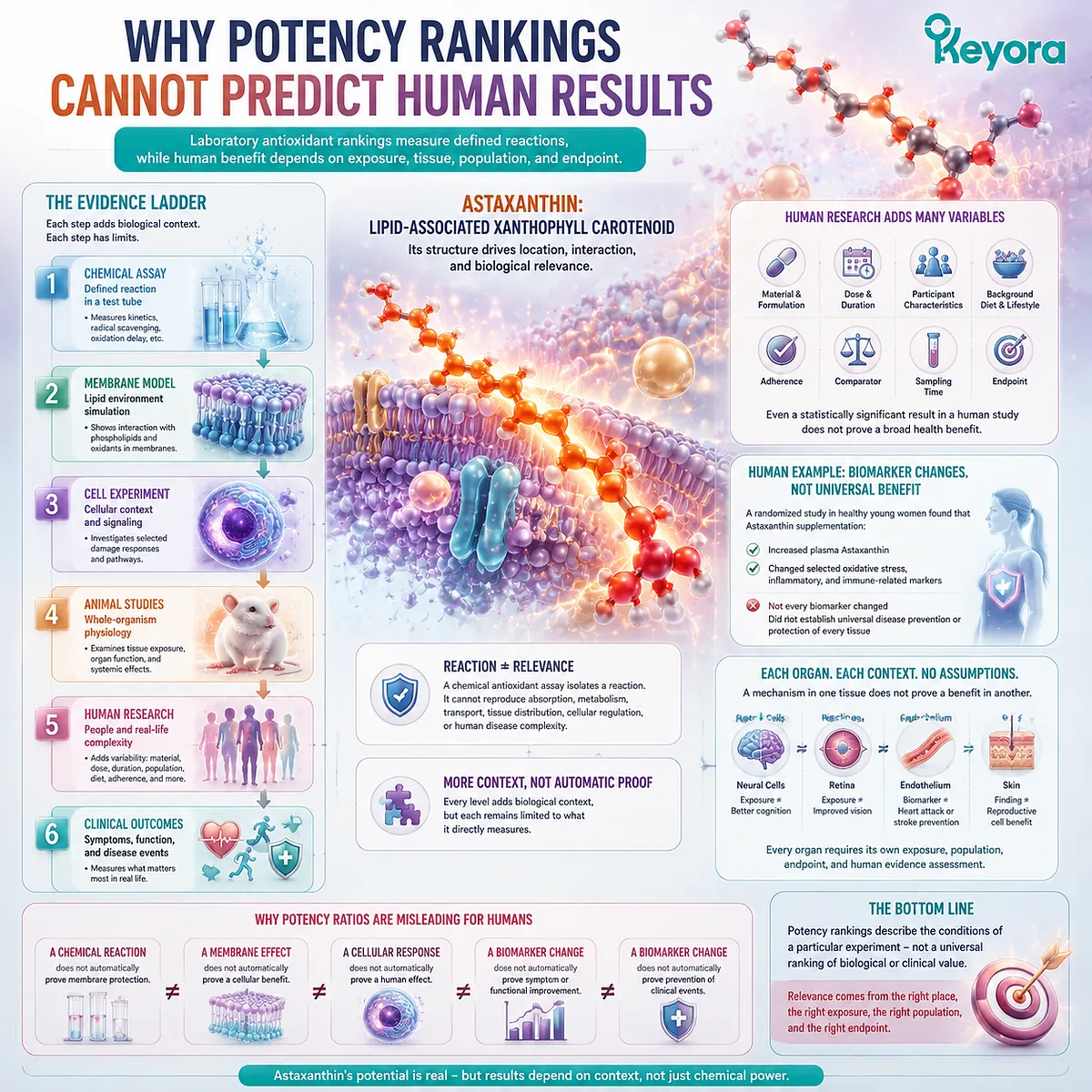
Laboratory antioxidant rankings measure defined reactions, while human benefit depends on exposure, tissue, population, and endpoint
A chemical antioxidant assay usually isolates a reaction so it can be measured under controlled conditions. This is useful for comparing reaction kinetics, radical-quenching behavior, oxidation delay, or other chemical properties. It cannot reproduce digestion, absorption, metabolism, circulating transport, tissue distribution, cellular regulation, or the complexity of human disease.
A membrane model adds another layer. It may show how Astaxanthin associates with selected phospholipids, alters model membrane behavior, or interacts with oxidants in a lipid environment.
A cell experiment can then investigate selected signaling or damage responses. Animal studies may examine tissue exposure and whole-organism physiology. Every step adds biological context, but each remains limited to what it directly measures.
Human research introduces additional variables: the Astaxanthin material, formulation, dose, duration, participant characteristics, background diet, adherence, comparator, sampling time, and endpoint. Even a human study does not prove a broad health benefit simply because it reports a statistically significant result.
For example, one randomized human study found that supplementation increased plasma Astaxanthin and changed selected oxidative, inflammatory, and immune-related measurements in healthy young women. However, not every measured biomarker changed, and the study did not establish universal disease prevention or protection of every tissue.
This illustrates the evidence ladder:
-
A chemical reaction does not automatically prove membrane protection.
-
A membrane effect does not automatically prove a cellular benefit.
-
A cellular response does not automatically prove a human effect.
-
A biomarker change does not automatically prove symptom improvement, functional enhancement, or prevention of a clinical event.
The same boundary applies across organs.
A plausible membrane mechanism in neural cells cannot prove better cognition. Retinal exposure cannot prove improved vision.
An endothelial biomarker cannot prove prevention of heart attack or stroke. Skin-related findings cannot be transferred to reproductive cells.
Every organ requires its own exposure, population, endpoint, and human evidence assessment.
This is why potency ratios should not be presented as estimates of how many times “better” Astaxanthin will work in a person. They describe the conditions of a particular experiment, not a universal ranking of biological or clinical value.
Use the Keyora Identity – Location – Evidence Check
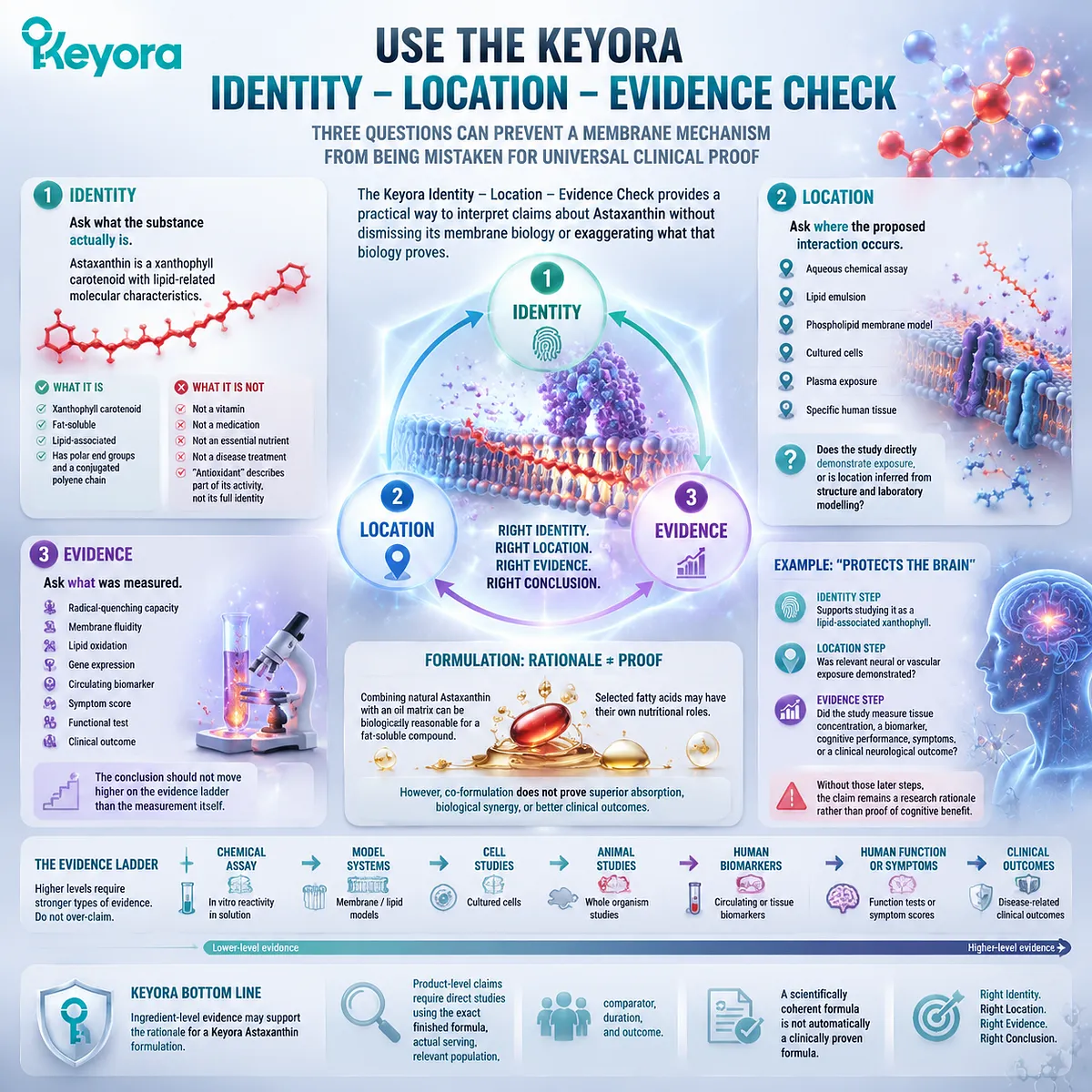
Three questions can prevent a membrane mechanism from being mistaken for universal clinical proof
The Keyora Identity – Location – Evidence Check provides a practical way to interpret claims about Astaxanthin without dismissing its membrane biology or exaggerating what that biology proves.
Identity: Ask what the substance actually is. Astaxanthin is a xanthophyll carotenoid with lipid-related molecular characteristics. “Antioxidant” describes part of its activity, while terms such as vitamin, medication, essential nutrient, or disease treatment would describe different categories that do not apply.
Location: Ask where the proposed interaction occurs. Is the claim based on an aqueous chemical assay, a lipid emulsion, a phospholipid membrane model, cultured cells, plasma exposure, or a specific human tissue? Does the study directly demonstrate exposure, or is location inferred from structure and laboratory modelling?
Evidence: Ask what was measured. Was the endpoint radical-quenching capacity, membrane fluidity, lipid oxidation, gene expression, a circulating biomarker, a symptom score, a functional test, or a clinical outcome? The conclusion should not move higher on the evidence ladder than the measurement itself.
Consider a claim that Astaxanthin “protects the brain because it is membrane-oriented.” The identity step supports studying it as a lipid-associated xanthophyll. The location step asks whether relevant neural or vascular exposure was demonstrated. The evidence step asks whether the study measured tissue concentration, a biomarker, cognitive performance, symptoms, or a clinical neurological outcome. Without those later steps, the claim remains a research rationale rather than proof of cognitive benefit.
The same method applies to formulation. Combining natural Astaxanthin with an oil matrix can be biologically reasonable for a fat-soluble compound, and selected fatty acids may have their own nutritional roles. However, co-formulation does not prove superior absorption, biological synergy, or better clinical outcomes.
Ingredient-level evidence may therefore support the rationale for a Keyora Astaxanthin formulation. Product-level claims require direct studies using the exact finished formula, actual serving, relevant population, comparator, duration, and outcome. A scientifically coherent formula is not automatically a clinically proven formula.
Closing Summary
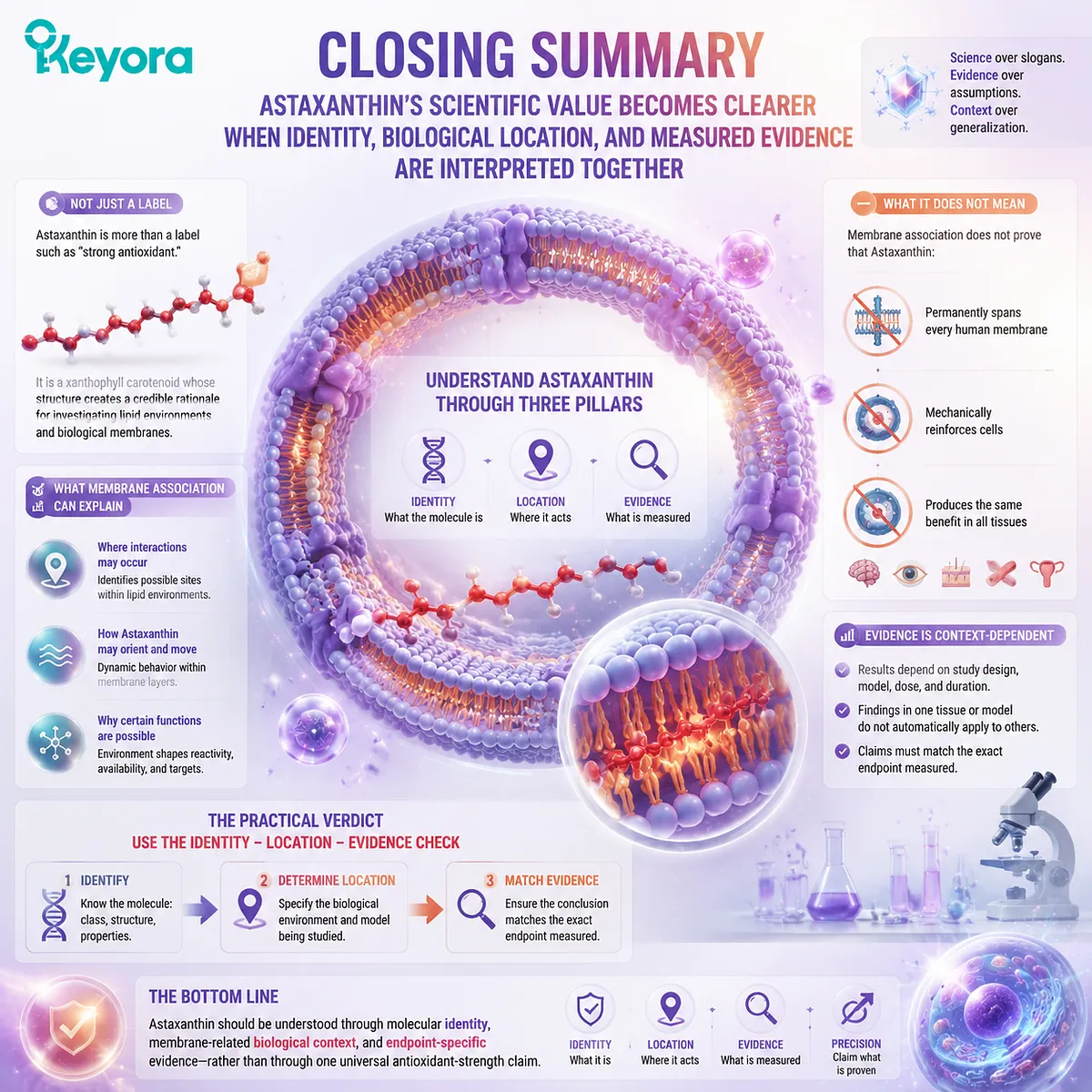
Astaxanthin’s scientific value becomes clearer when identity, biological location, and measured evidence are interpreted together
Astaxanthin is more than a label such as “strong antioxidant,” but this does not mean it should be promoted as a universal membrane protector. It is a xanthophyll carotenoid whose structure creates a credible rationale for investigating lipid environments and biological membranes.
Membrane association helps explain where selected interactions may occur. It does not prove that Astaxanthin permanently spans every human membrane, mechanically reinforces cells, or produces the same benefit in the brain, eyes, skin, blood vessels, and reproductive tissues.
The practical verdict is to use the Identity – Location – Evidence Check. Identify the molecule, determine the biological environment being studied, and match every conclusion to the exact endpoint measured.
Astaxanthin should therefore be understood through molecular identity, membrane-related biological context, and endpoint-specific evidence rather than through one universal antioxidant-strength claim.
This article is for educational and informational purposes only. It does not provide medical advice, diagnosis, treatment, cure, prevention, disease outcome claims, hormone restoration claims, fertility outcome claims, or formula-specific clinical efficacy claims.