
Can Your Eyes Recover From Screen Time?
Keyora Research Q&A Library
This is part of the Keyora Research Q&A Series, derived from Keyora Astaxanthin Research Journal Series.
Within the Keyora Astaxanthin Researcn framework, this Q&A translates complex astaxanthin biology into reader-friendly, evidence-bound answers, focusing on natural astaxanthin identity, molecular structure, antioxidant and redox mechanisms, membrane lipid interaction, mitochondrial resilience, inflammatory signaling pathways, human evidence interpretation, and the scientific principles behind responsible supplementation.
First published by Keyora Research Journal: www.keyorahealth.com
If you spend most of your day looking at a computer, you’ve probably asked yourself this question before.
Your eyes feel dry by mid-afternoon.
They’re sore by the time you finish work.
Even after closing your laptop, they still don’t feel quite right.
So, can your eyes actually recover from screen time?
The reassuring answer is yes. For most healthy adults, screen use causes temporary visual fatigue, not permanent damage. The challenge isn’t whether your eyes can recover—it’s whether you’re giving them enough opportunity to recover before asking them to work hard again.
Quick Answer
Yes. Most symptoms of screen-related eye fatigue are reversible. Your eyes naturally recover after prolonged visual work through rest, blinking, sleep, and reduced visual demand. Healthy screen habits, adequate sleep, and nutrients that support normal eye function may all contribute to better recovery. However, persistent pain or changes in vision should always be evaluated by an eye care professional.
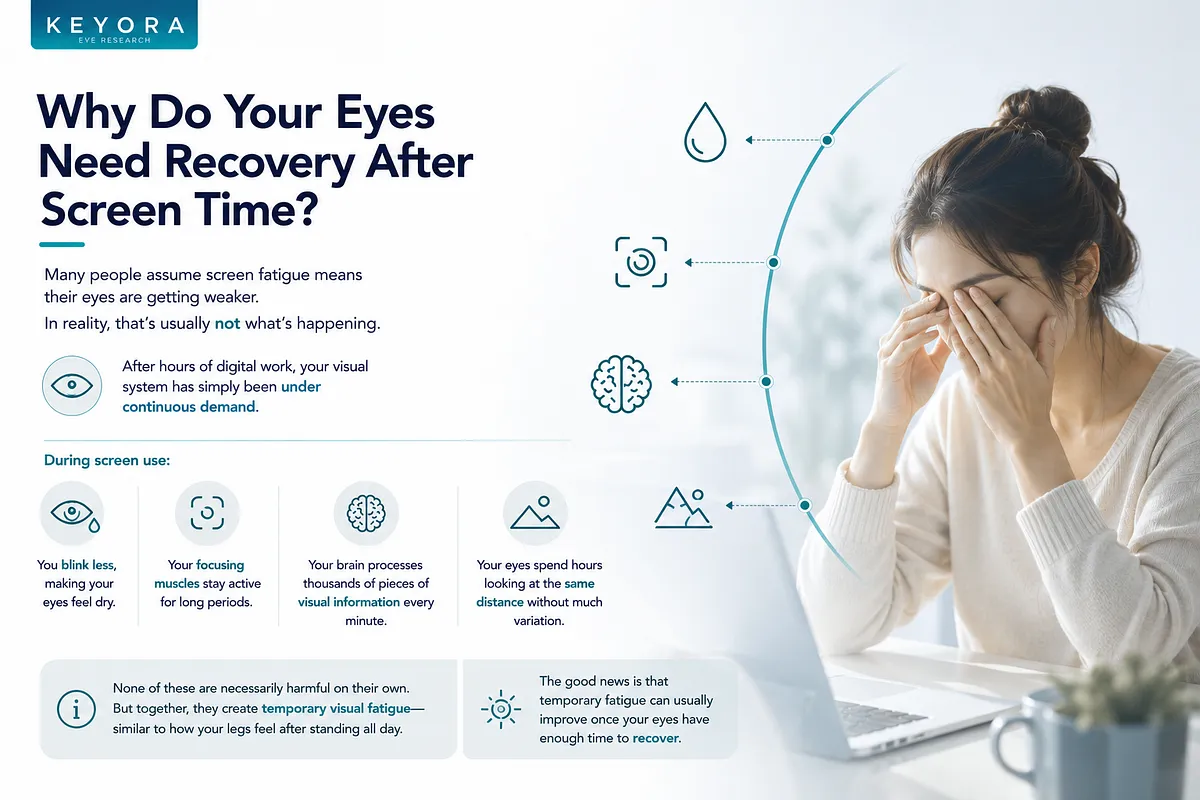
Why Do Your Eyes Need Recovery After Screen Time?
Many people assume screen fatigue means their eyes are getting weaker.
In reality, that’s usually not what’s happening.
After hours of digital work, your visual system has simply been under continuous demand.
During screen use:
· You blink less, making your eyes feel dry.
· Your focusing muscles stay active for long periods.
· Your brain processes thousands of pieces of visual information every minute.
· Your eyes spend hours looking at the same distance without much variation.
None of these are necessarily harmful on their own. But together, they create temporary visual fatigue—similar to how your legs feel after standing all day.
The good news is that temporary fatigue can usually improve once your eyes have enough time to recover.
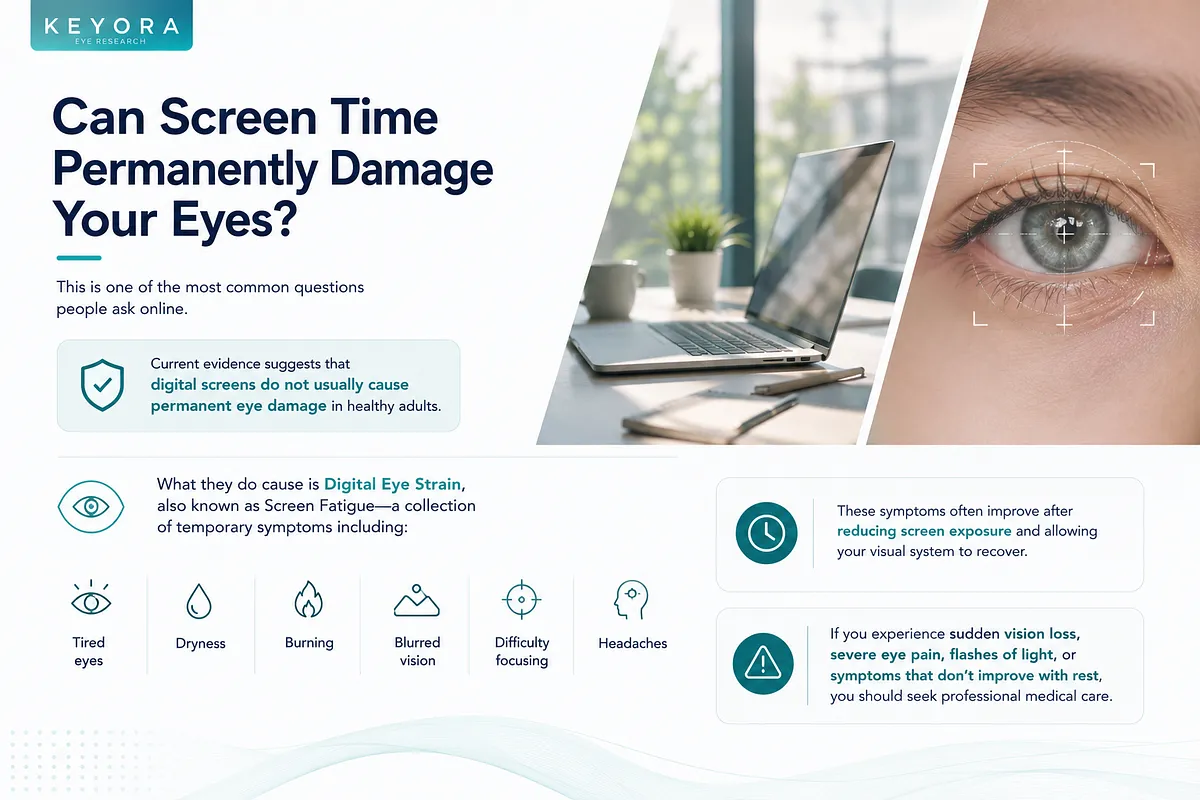
Can Screen Time Permanently Damage Your Eyes?
This is one of the most common questions people ask online.
Current evidence suggests that digital screens do not usually cause permanent eye damage in healthy adults.
What they do cause is Digital Eye Strain, also known as Screen Fatigue—a collection of temporary symptoms including:
· Tired eyes
· Dryness
· Burning
· Blurred vision
· Difficulty focusing
· Headaches
These symptoms often improve after reducing screen exposure and allowing your visual system to recover.
If you experience sudden vision loss, severe eye pain, flashes of light, or symptoms that don’t improve with rest, you should seek professional medical care.
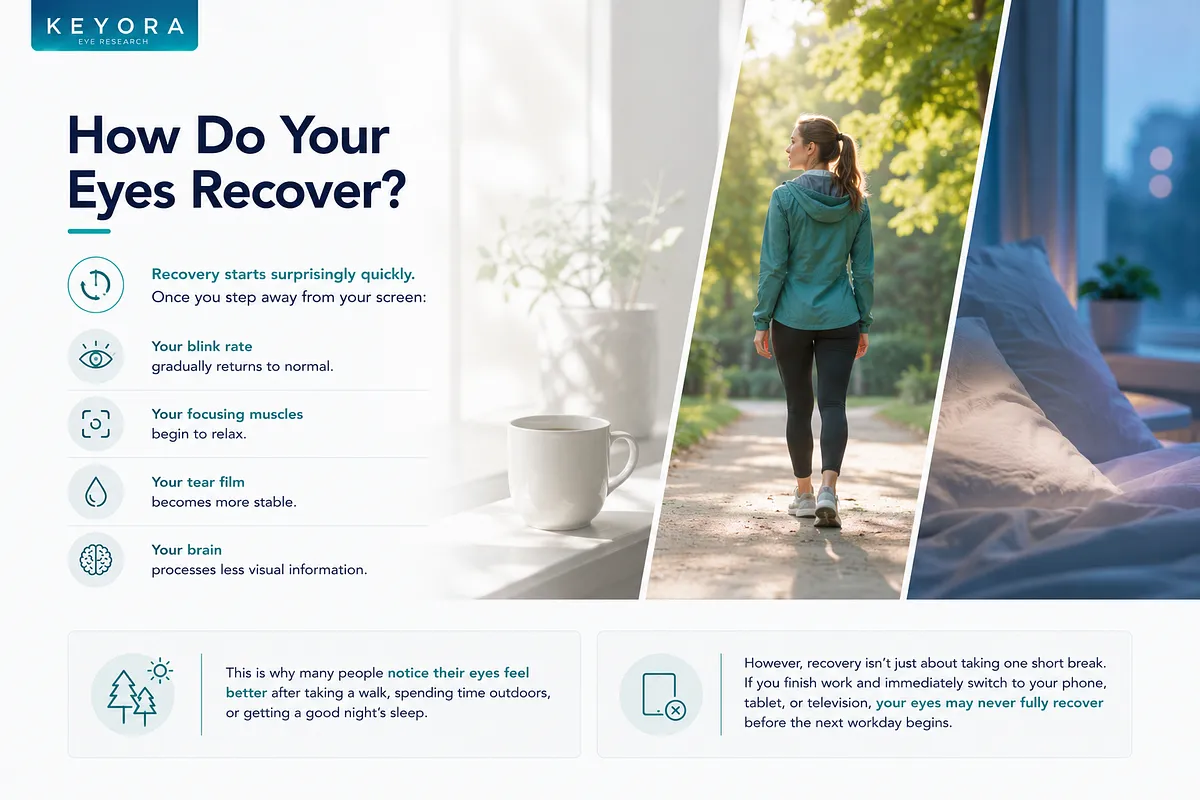
How Do Your Eyes Recover?
Recovery starts surprisingly quickly.
Once you step away from your screen:
· Your blink rate gradually returns to normal.
· Your focusing muscles begin to relax.
· Your tear film becomes more stable.
· Your brain processes less visual information.
This is why many people notice their eyes feel better after taking a walk, spending time outdoors, or getting a good night’s sleep.
However, recovery isn’t just about taking one short break.
If you finish work and immediately switch to your phone, tablet, or television, your eyes may never fully recover before the next workday begins.
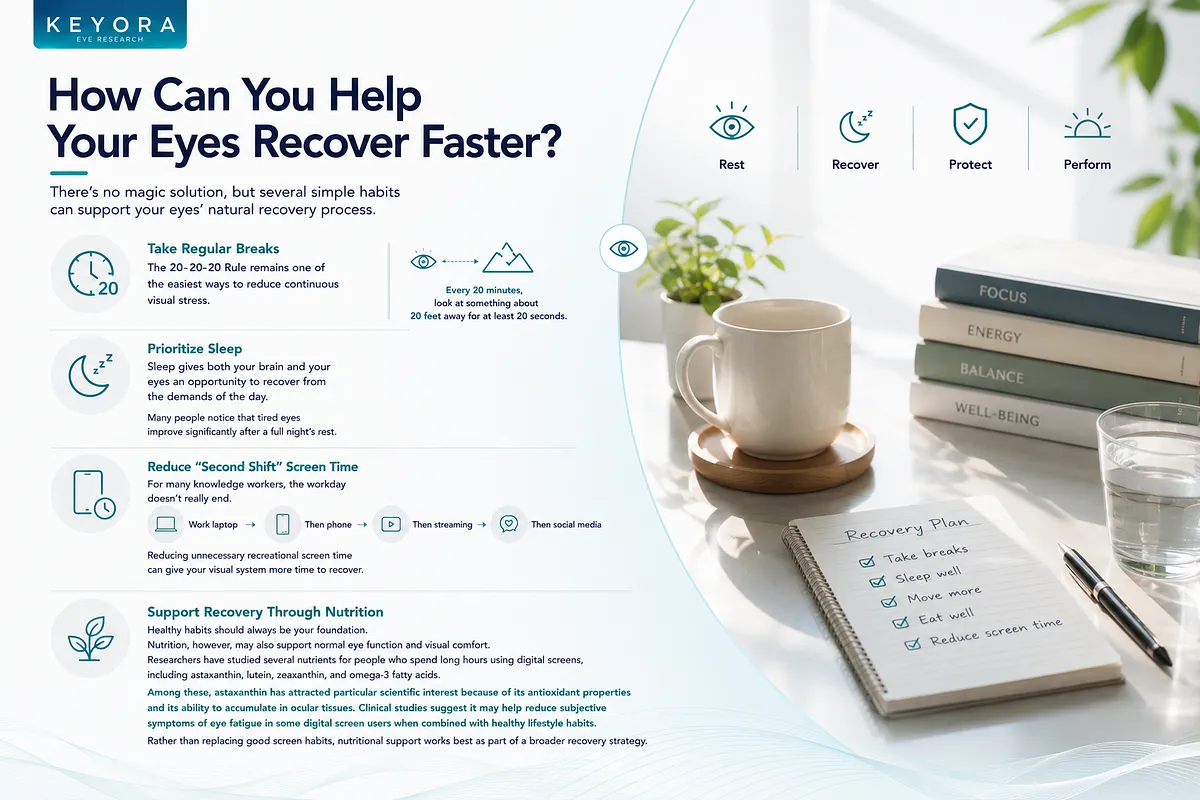
How Can You Help Your Eyes Recover Faster?
There’s no magic solution, but several simple habits can support your eyes’ natural recovery process.
Take Regular Breaks
The 20-20-20 Rule remains one of the easiest ways to reduce continuous visual stress.
Every 20 minutes, look at something about 20 feet away for at least 20 seconds.
Prioritize Sleep
Sleep gives both your brain and your eyes an opportunity to recover from the demands of the day.
Many people notice that tired eyes improve significantly after a full night’s rest.
Reduce “Second Shift” Screen Time
For many knowledge workers, the workday doesn’t really end.
Work laptop.
Then phone.
Then streaming.
Then social media.
Reducing unnecessary recreational screen time can give your visual system more time to recover.
Support Recovery Through Nutrition
Healthy habits should always be your foundation.
Nutrition, however, may also support normal eye function and visual comfort.
Researchers have studied several nutrients for people who spend long hours using digital screens, including astaxanthin, lutein, zeaxanthin, and omega-3 fatty acids.
Among these, astaxanthin has attracted particular scientific interest because of its antioxidant properties and its ability to accumulate in ocular tissues. Clinical studies suggest it may help reduce subjective symptoms of eye fatigue in some digital screen users when combined with healthy lifestyle habits.
Rather than replacing good screen habits, nutritional support works best as part of a broader recovery strategy.
Keyora Insight
Most advice focuses on protecting your eyes while you’re working.
At Keyora, we believe recovery deserves just as much attention.
Your eyes aren’t designed to work continuously for 10 or 12 hours without interruption. Like the rest of your body, they perform best when periods of focused work are balanced with opportunities to recover.
That’s why we view eye health as more than protection—it’s also about recovery.
Frequently Asked Questions
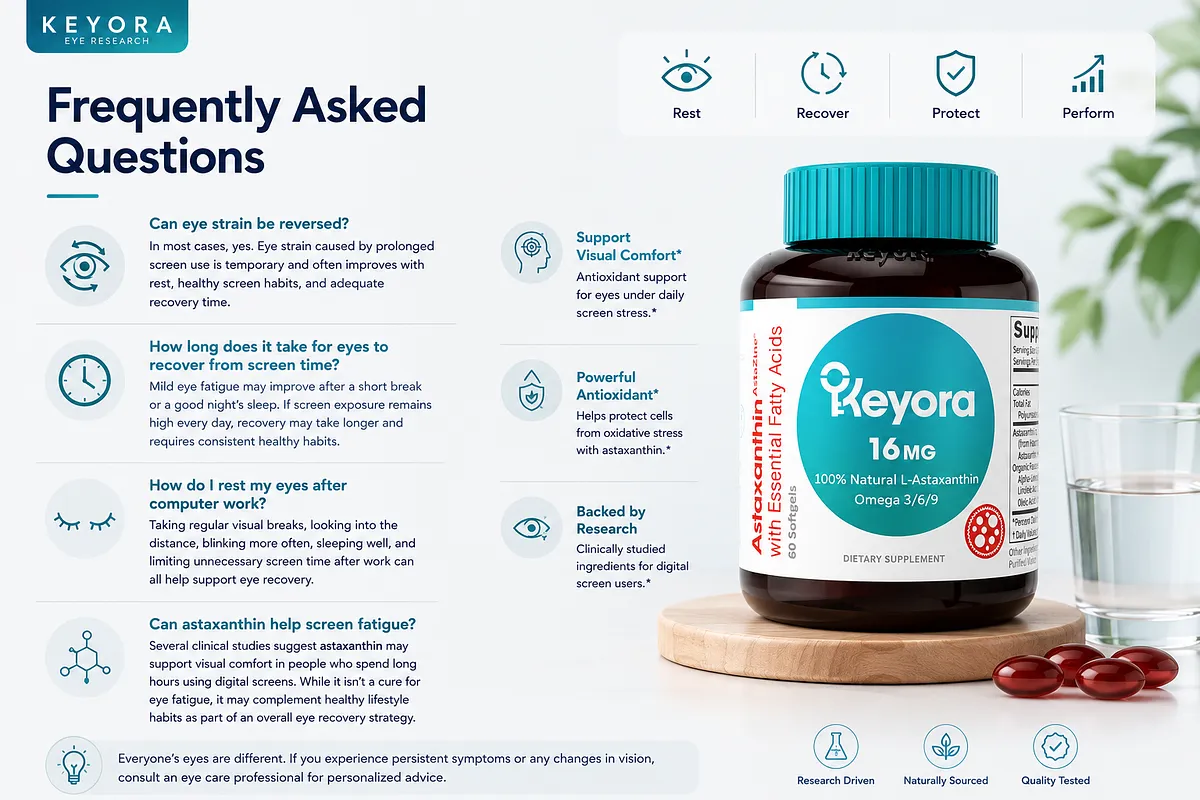
Can eye strain be reversed?
In most cases, yes. Eye strain caused by prolonged screen use is temporary and often improves with rest, healthy screen habits, and adequate recovery time.
How long does it take for eyes to recover from screen time?
Mild eye fatigue may improve after a short break or a good night’s sleep. If screen exposure remains high every day, recovery may take longer and requires consistent healthy habits.
How do I rest my eyes after computer work?
Taking regular visual breaks, looking into the distance, blinking more often, sleeping well, and limiting unnecessary screen time after work can all help support eye recovery.
Can astaxanthin help screen fatigue?
Several clinical studies suggest astaxanthin may support visual comfort in people who spend long hours using digital screens. While it isn’t a cure for eye fatigue, it may complement healthy lifestyle habits as part of an overall eye recovery strategy.
Key Takeaways
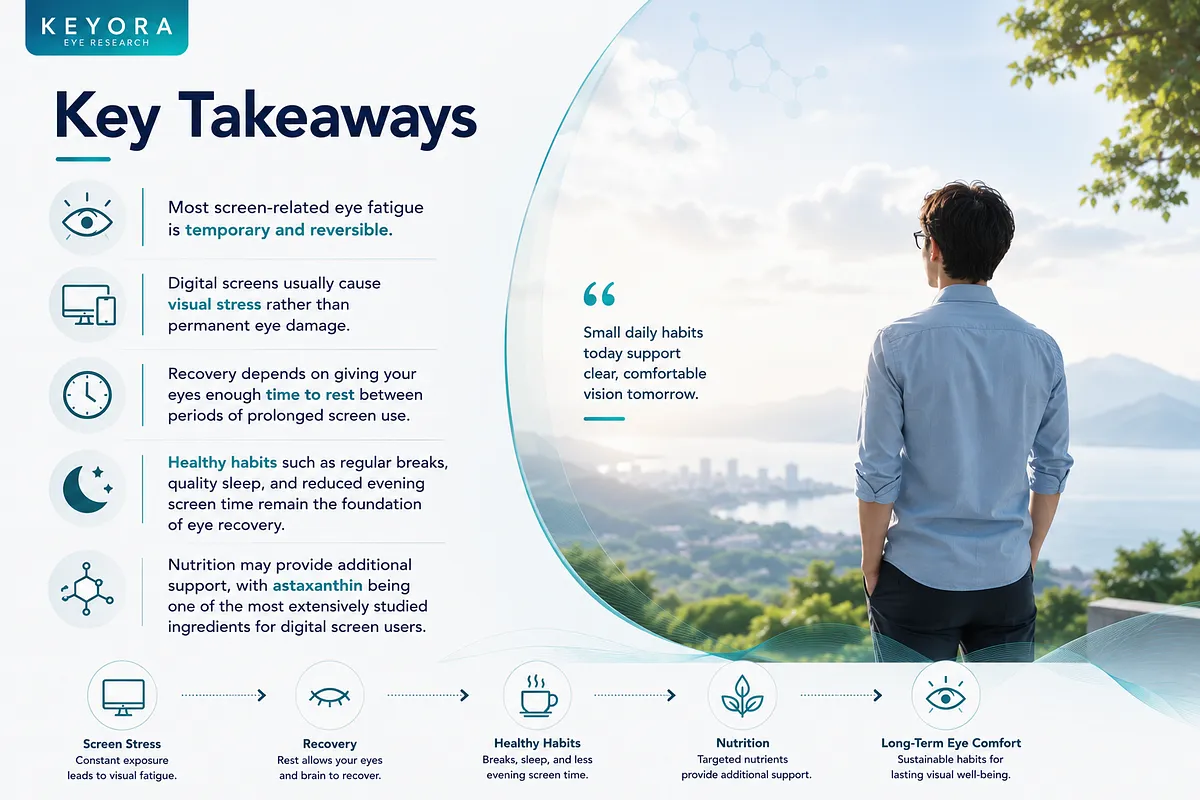
· Most screen-related eye fatigue is temporary and reversible.
· Digital screens usually cause visual stress rather than permanent eye damage.
· Recovery depends on giving your eyes enough time to rest between periods of prolonged screen use.
· Healthy habits such as regular breaks, quality sleep, and reduced evening screen time remain the foundation of eye recovery.
· Nutrition may provide additional support, with astaxanthin being one of the most extensively studied ingredients for digital screen users.
References
· Rosenfield M. Computer Vision Syndrome (Digital Eye Strain): A Review.
· Sheppard AL, Wolffsohn JS. Digital Eye Strain: Prevalence, Measurement and Amelioration.
· American Optometric Association. Computer Vision Syndrome.