
Why Am I Mentally Tired After a Day of Computer Work?
Keyora Research Q&A Library
This is part of the Keyora Research Q&A Series, derived from Keyora Astaxanthin Research Journal Series.
Within the Keyora Astaxanthin Researcn framework, this Q&A translates complex astaxanthin biology into reader-friendly, evidence-bound answers, focusing on natural astaxanthin identity, molecular structure, antioxidant and redox mechanisms, membrane lipid interaction, mitochondrial resilience, inflammatory signaling pathways, human evidence interpretation, and the scientific principles behind responsible supplementation.
First published by Keyora Research Journal: www.keyorahealth.com

Short Answer
Feeling mentally exhausted after a full day of computer work is common.
While many people assume they’re simply “working too hard,” mental fatigue is usually caused by a combination of prolonged concentration, continuous decision-making, information overload, screen exposure, and insufficient recovery.
Unlike physical fatigue, mental fatigue doesn’t necessarily improve with a short break. It reflects how hard your brain has been working to process information throughout the day.
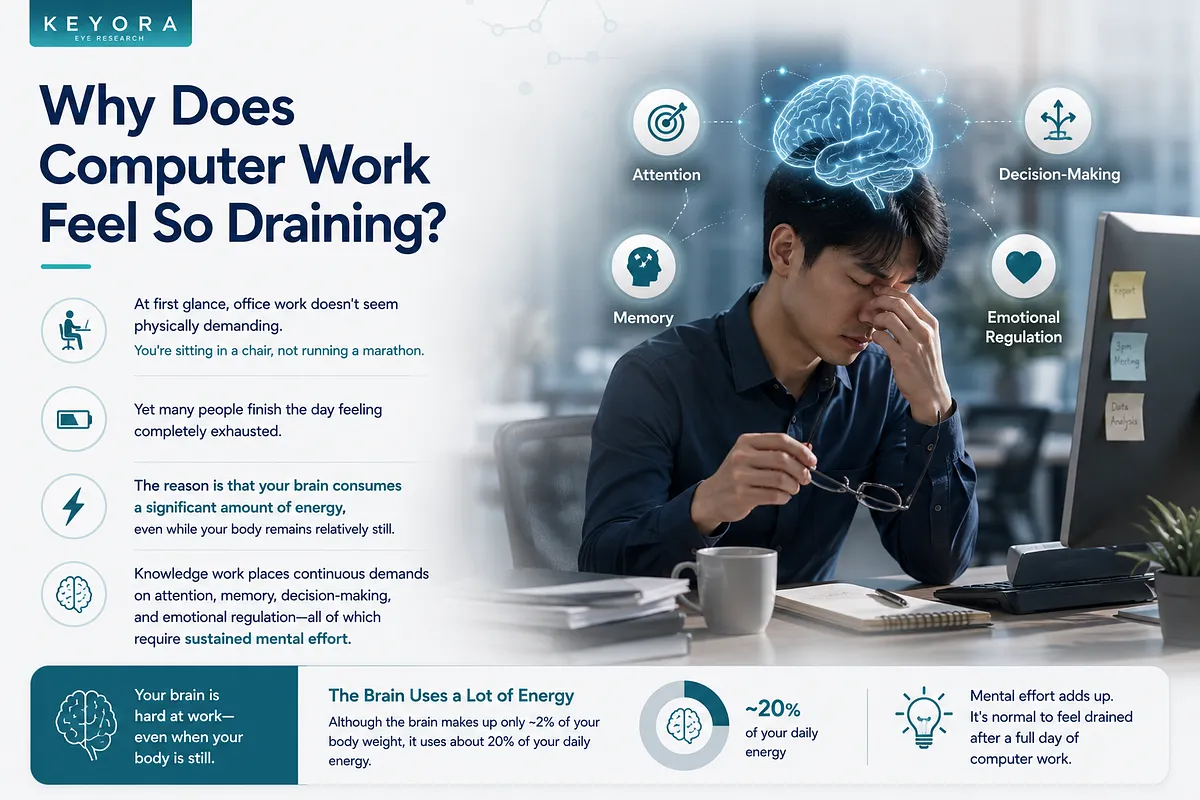
Why Does Computer Work Feel So Draining?
At first glance, office work doesn’t seem physically demanding.
You’re sitting in a chair, not running a marathon.
Yet many people finish the day feeling completely exhausted.
The reason is that your brain consumes a significant amount of energy, even while your body remains relatively still.
Knowledge work places continuous demands on attention, memory, decision-making, and emotional regulation—all of which require sustained mental effort.
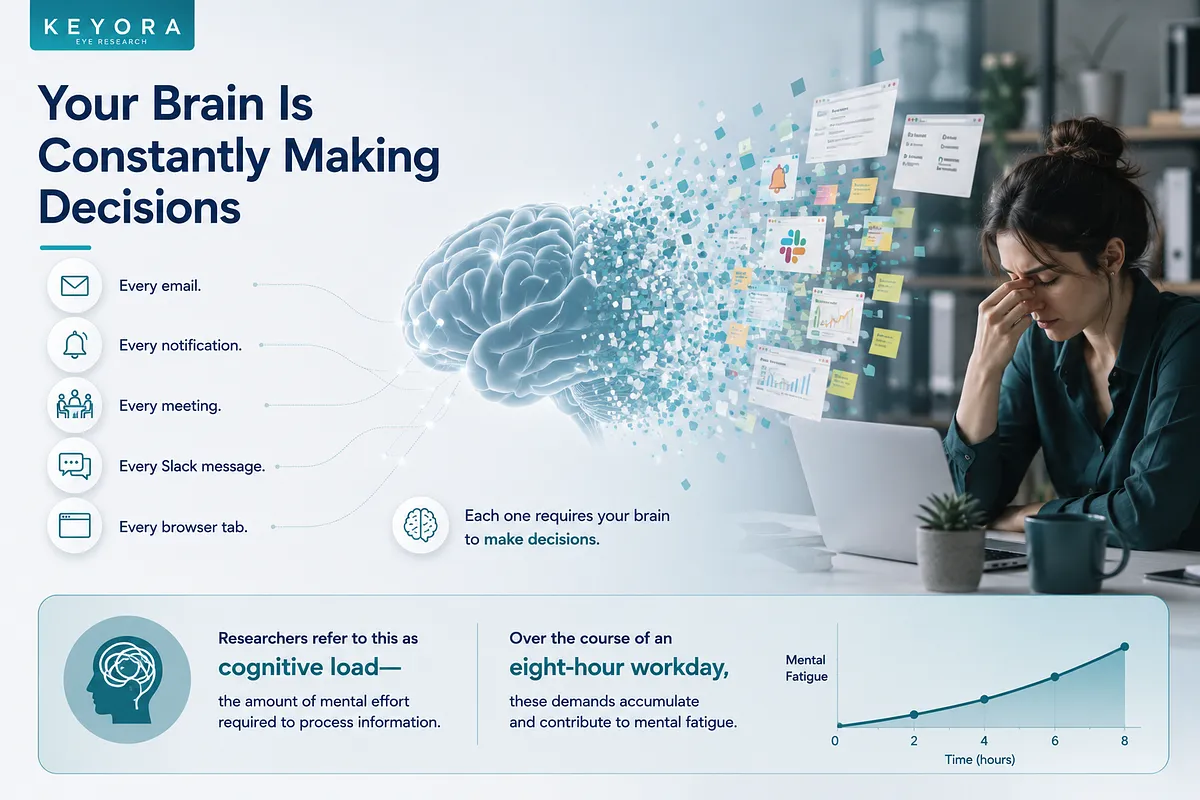
Your Brain Is Constantly Making Decisions
Every email.
Every notification.
Every meeting.
Every Slack message.
Every browser tab.
Each one requires your brain to make decisions.
Researchers refer to this as cognitive load—the amount of mental effort required to process information.
Over the course of an eight-hour workday, these demands accumulate and contribute to mental fatigue.
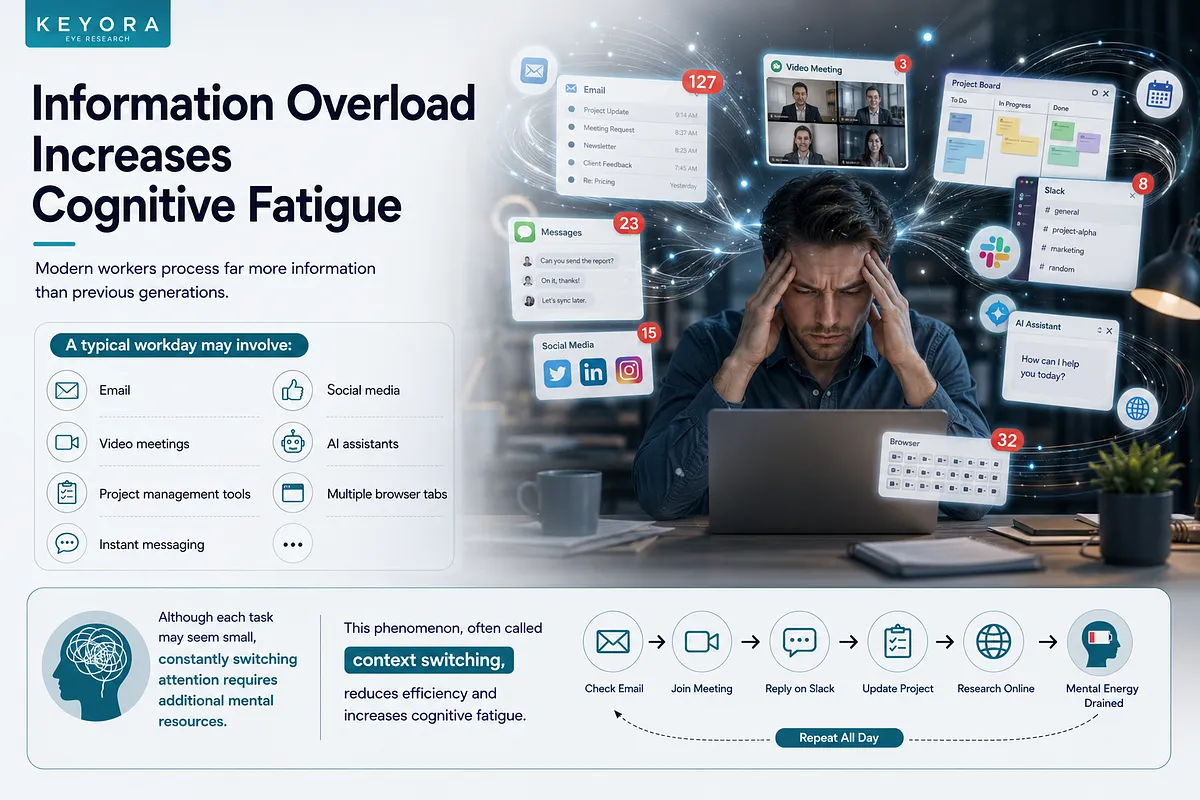
Information Overload Increases Cognitive Fatigue
Modern workers process far more information than previous generations.
A typical workday may involve:
· Video meetings
· Project management tools
· Instant messaging
· Social media
· AI assistants
· Multiple browser tabs
Although each task may seem small, constantly switching attention requires additional mental resources.
This phenomenon, often called context switching, reduces efficiency and increases cognitive fatigue.
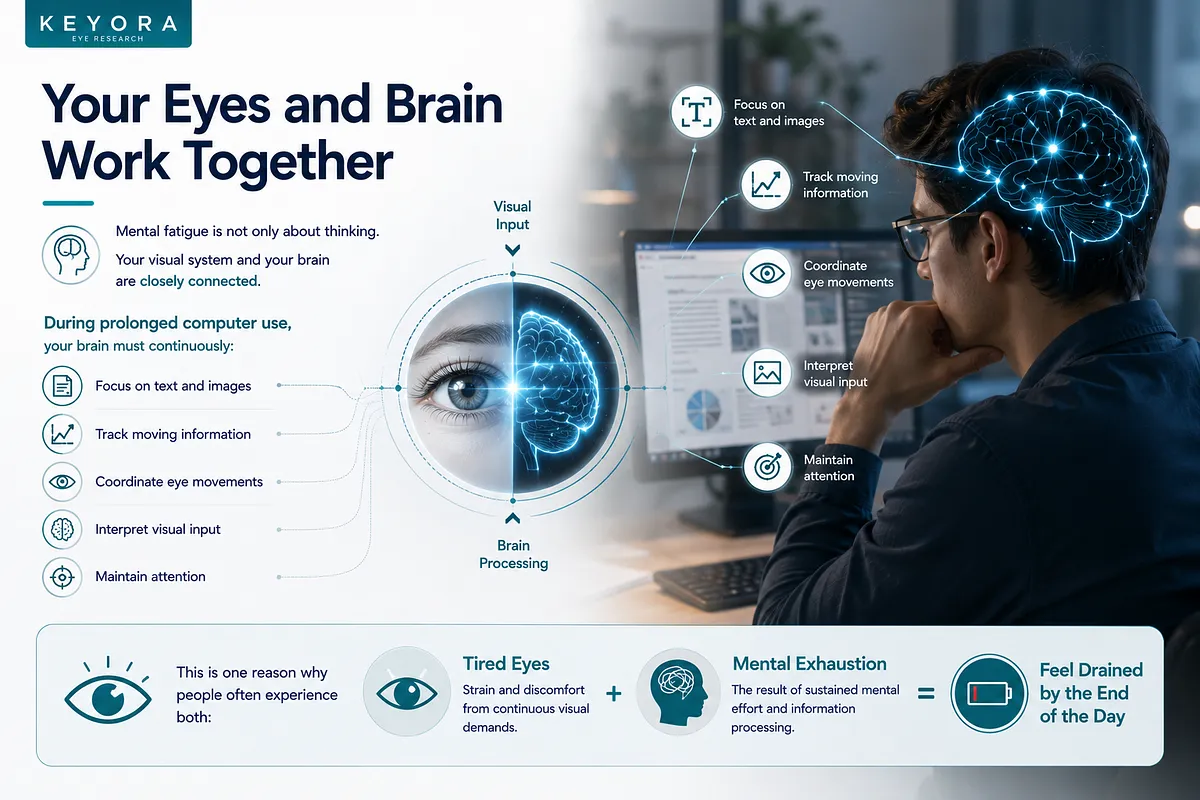
Your Eyes and Brain Work Together
Mental fatigue is not only about thinking.
Your visual system and your brain are closely connected.
During prolonged computer use, your brain must continuously:
· Focus on text and images
· Track moving information
· Coordinate eye movements
· Interpret visual input
· Maintain attention
This is one reason why people often experience both:
· Tired eyes
· Mental exhaustion
at the same time.
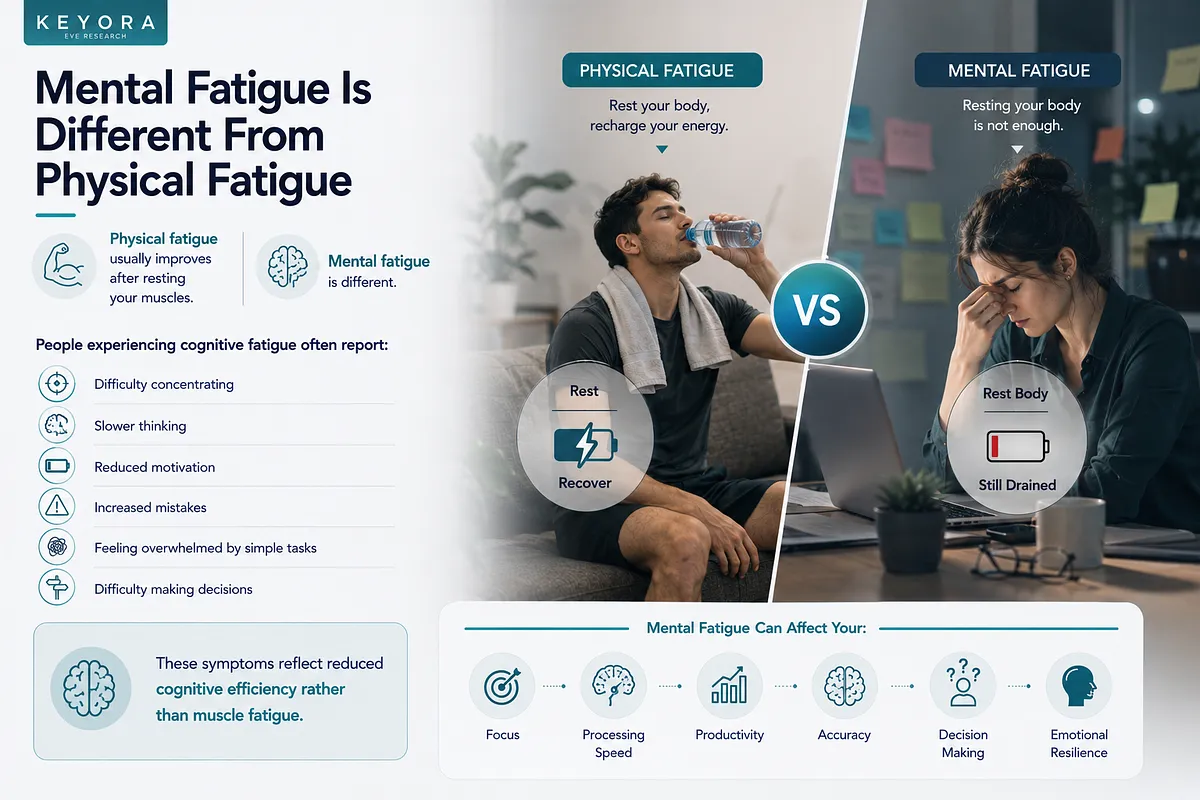
Mental Fatigue Is Different From Physical Fatigue
Physical fatigue usually improves after resting your muscles.
Mental fatigue is different.
People experiencing cognitive fatigue often report:
· Difficulty concentrating
· Slower thinking
· Reduced motivation
· Increased mistakes
· Feeling overwhelmed by simple tasks
· Difficulty making decisions
These symptoms reflect reduced cognitive efficiency rather than muscle fatigue.
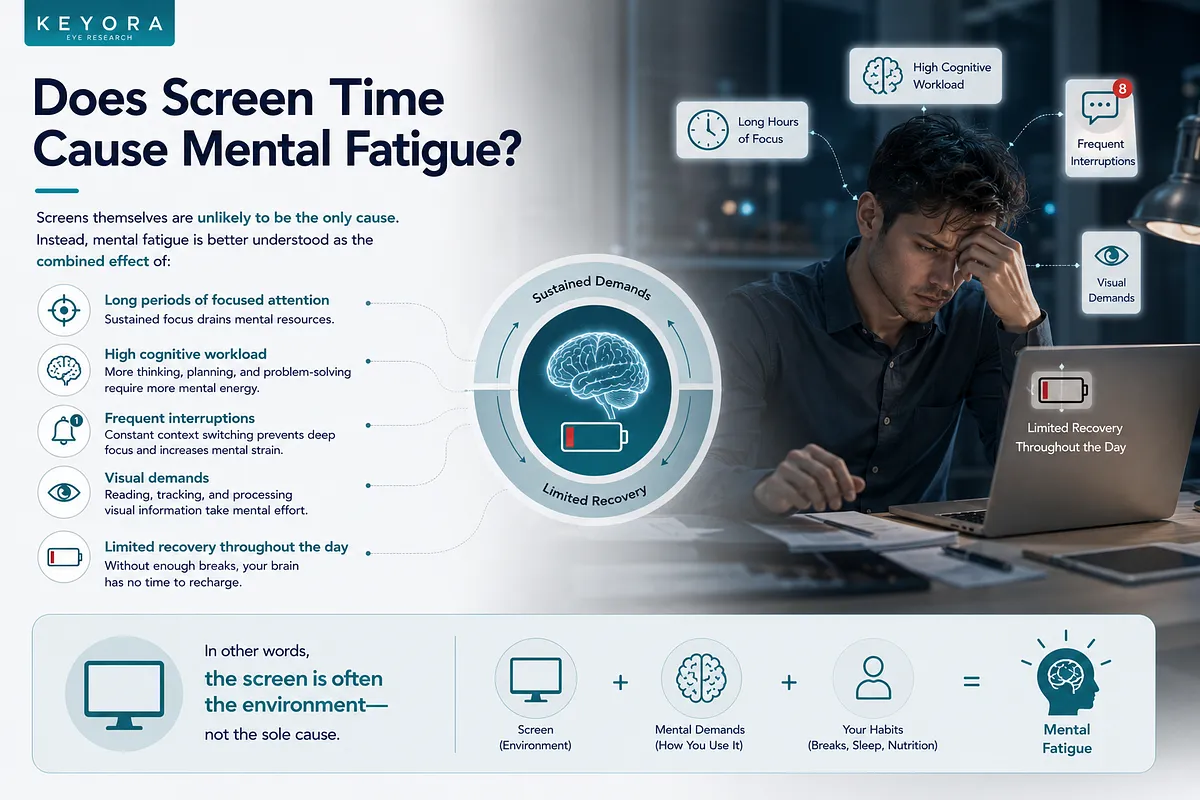
Does Screen Time Cause Mental Fatigue?
Screens themselves are unlikely to be the only cause.
Instead, mental fatigue is better understood as the combined effect of:
· Long periods of focused attention
· High cognitive workload
· Frequent interruptions
· Visual demands
· Limited recovery throughout the day
In other words, the screen is often the environment—not the sole cause.
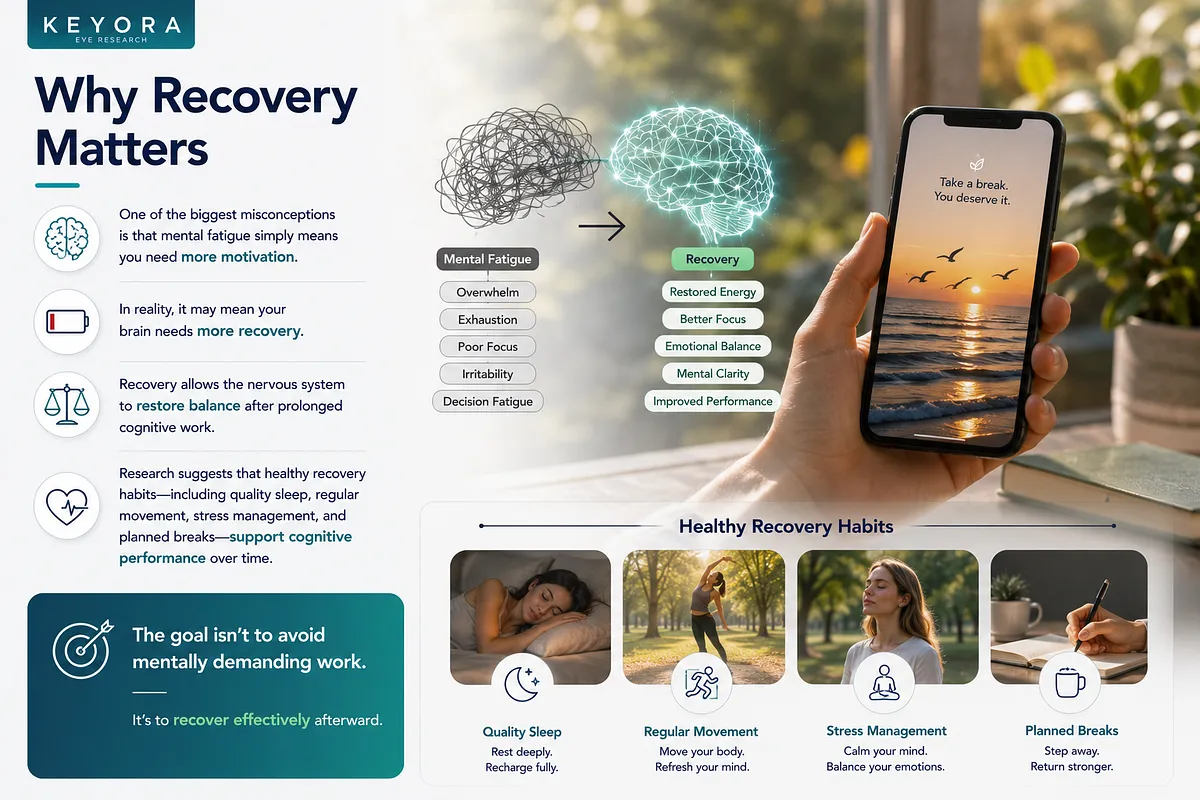
Why Recovery Matters
One of the biggest misconceptions is that mental fatigue simply means you need more motivation.
In reality, it may mean your brain needs more recovery.
Recovery allows the nervous system to restore balance after prolonged cognitive work.
Research suggests that healthy recovery habits—including quality sleep, regular movement, stress management, and planned breaks—support cognitive performance over time.
The goal isn’t to avoid mentally demanding work.
It’s to recover effectively afterward.
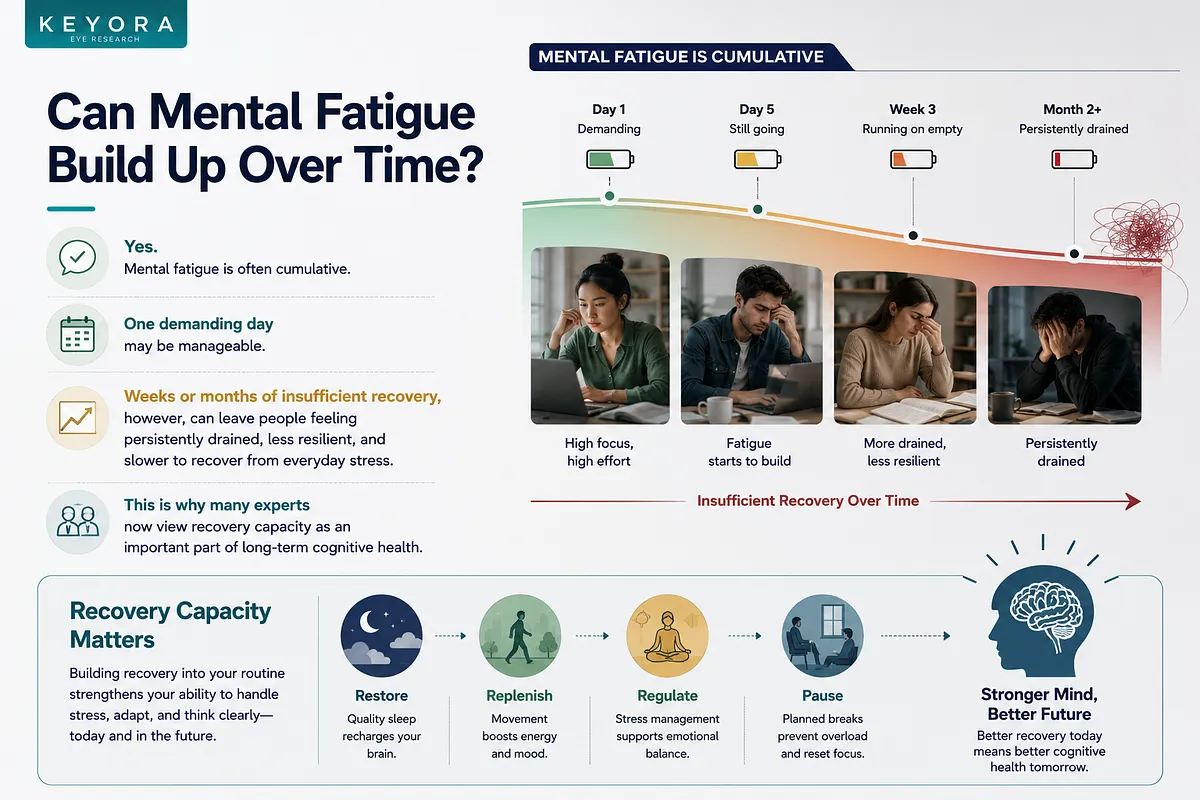
Can Mental Fatigue Build Up Over Time?
Yes.
Mental fatigue is often cumulative.
One demanding day may be manageable.
Weeks or months of insufficient recovery, however, can leave people feeling persistently drained, less resilient, and slower to recover from everyday stress.
This is why many experts now view recovery capacity as an important part of long-term cognitive health.
How Can You Reduce Mental Fatigue?
Evidence suggests several habits may help support mental recovery:
Work in Focused Blocks
Reduce unnecessary multitasking and constant context switching.
Take Regular Movement Breaks
Standing, walking, or stretching for a few minutes can help interrupt prolonged sedentary work.
Protect Your Sleep
Sleep remains one of the most important recovery processes for the brain.
Reduce Digital Overload
Turning off unnecessary notifications and limiting distractions may reduce cognitive load.
Support Overall Recovery
Nutrition, physical activity, stress management, and consistent recovery habits all contribute to long-term mental resilience.

Key Takeaways
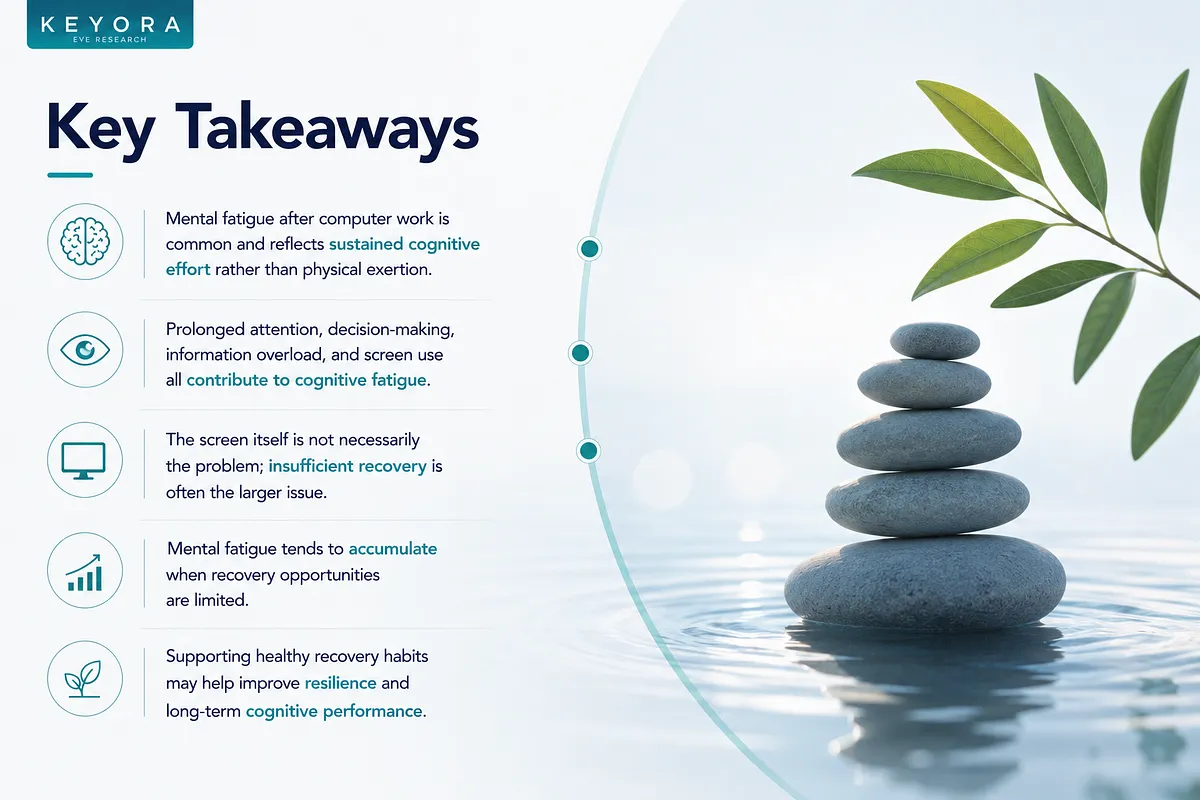
· Mental fatigue after computer work is common and reflects sustained cognitive effort rather than physical exertion.
· Prolonged attention, decision-making, information overload, and screen use all contribute to cognitive fatigue.
· The screen itself is not necessarily the problem; insufficient recovery is often the larger issue.
· Mental fatigue tends to accumulate when recovery opportunities are limited.
· Supporting healthy recovery habits may help improve resilience and long-term cognitive performance.
Evidence Snapshot
Topic
Mental Fatigue from Computer Work
What Current Research Suggests
Research consistently shows that prolonged cognitive workload, sustained attention, multitasking, and frequent task switching contribute to mental fatigue. Studies also indicate that adequate sleep, regular physical activity, and structured recovery periods are associated with improved cognitive performance and resilience.
Evidence Strength
★★★★☆ Strong
Human Studies
Research spans cognitive psychology, occupational health, neuroscience, and ergonomics, including laboratory and workplace studies on mental workload and digital work environments.
Last Reviewed
June 2026
References
Core References
1. Boksem MAS, Tops M. Mental Fatigue: Costs and Benefits. Brain Research Reviews.
Why it matters: A foundational review explaining the biological and psychological mechanisms underlying mental fatigue.
2. Hockey GRJ. The Psychology of Fatigue.
Why it matters: Explores how prolonged cognitive demands affect attention, performance, and decision-making.
3. Lim J, Dinges DF. A Meta-Analysis of the Impact of Short-Term Sleep Deprivation on Cognitive Variables. Psychological Bulletin.
Why it matters: Demonstrates the relationship between insufficient sleep and impaired cognitive performance.
4. Ophir E, Nass C, Wagner AD. Cognitive Control in Media Multitaskers. Proceedings of the National Academy of Sciences (PNAS).
Why it matters: Shows how heavy multitasking is associated with reduced attentional control.
5. Rosenfield M. Computer Vision Syndrome: A Review of Ocular Causes and Potential Treatments. Ophthalmic and Physiological Optics.
Why it matters: Connects prolonged screen use with visual strain, which often coexists with mental fatigue.
6. Sandi C. Stress and Cognition. Wiley Interdisciplinary Reviews: Cognitive Science.
Why it matters: Reviews how chronic stress influences learning, memory, attention, and cognitive resilience.