
What Do Human Studies Actually Show About Astaxanthin, Oxidative Stress, and Inflammation?
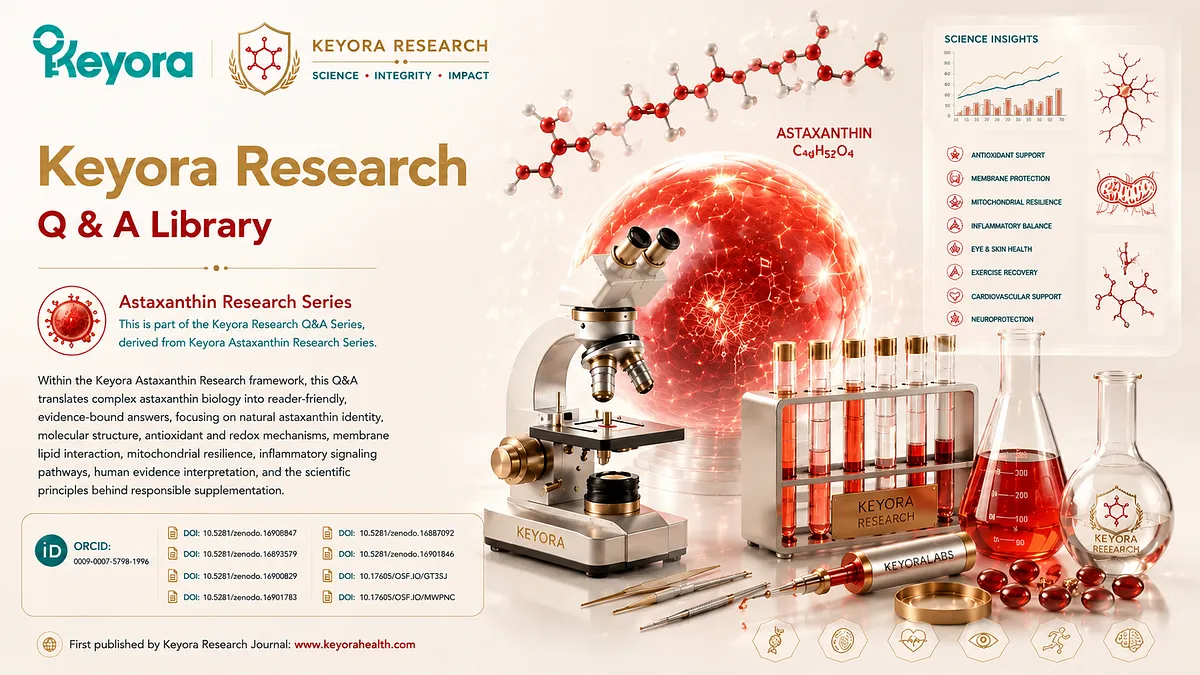
Keyora Research Q&A Library
This is part of the Keyora Research Q&A Series, derived from Keyora Astaxanthin Research Journal Series.
Within the Keyora Astaxanthin Researcn framework, this Q&A translates complex astaxanthin biology into reader-friendly, evidence-bound answers, focusing on natural astaxanthin identity, molecular structure, antioxidant and redox mechanisms, membrane lipid interaction, mitochondrial resilience, inflammatory signaling pathways, human evidence interpretation, and the scientific principles behind responsible supplementation.
First published by Keyora Research Journal: www.keyorahealth.com
Direct Answer
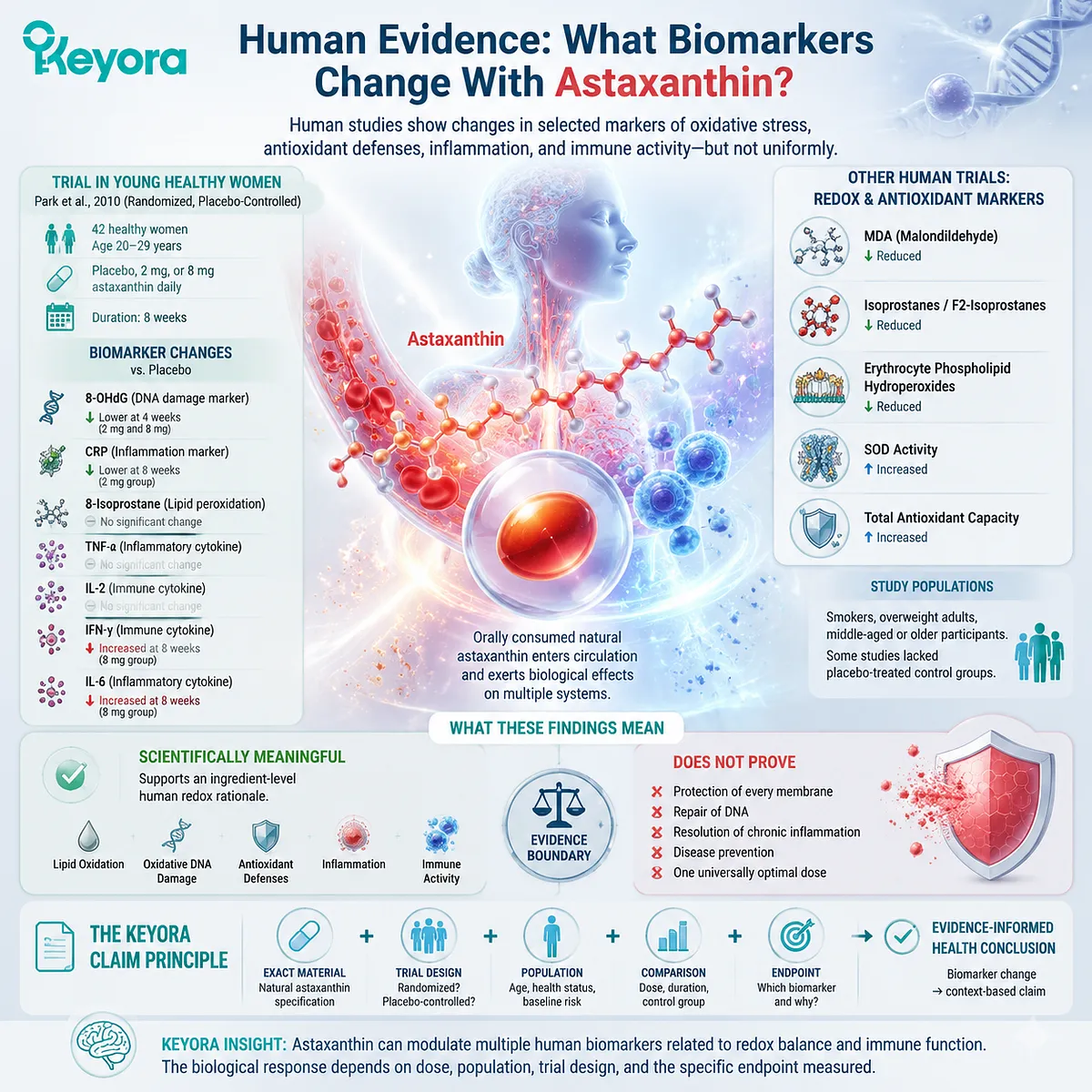
Human studies show that orally consumed natural Astaxanthin can enter circulation and may change selected biomarkers related to lipid oxidation, oxidative DNA damage, antioxidant defenses, inflammation, and immune activity. The results are scientifically meaningful, but they are not uniform across every marker or study.
A randomized trial in young healthy women reported lower plasma 8-OHdG, a marker associated with oxidative DNA damage, after four weeks of 2 or 8 mg Astaxanthin. The 2 mg group also had lower CRP at eight weeks, but plasma 8-isoprostane did not change. TNF-alpha and IL-2 were unchanged, while IFN-gamma and IL-6 increased in the 8 mg group at eight weeks.
Other trials reported reductions in MDA, isoprostanes, or erythrocyte phospholipid hydroperoxides, together with increases in SOD activity or total antioxidant capacity. However, those studies involved different populations, including smokers, overweight adults, and middle-aged or older participants, and some lacked a placebo-treated intervention group.
These findings support an ingredient-level human redox rationale. They do not prove protection of every membrane, repair of DNA, resolution of chronic inflammation, disease prevention, or one universally optimal dose.
A human Astaxanthin claim should identify the exact material, trial design, population, comparison, and endpoint before turning a biomarker change into a health conclusion.
What the Main Human Astaxanthin Trials Actually Measured
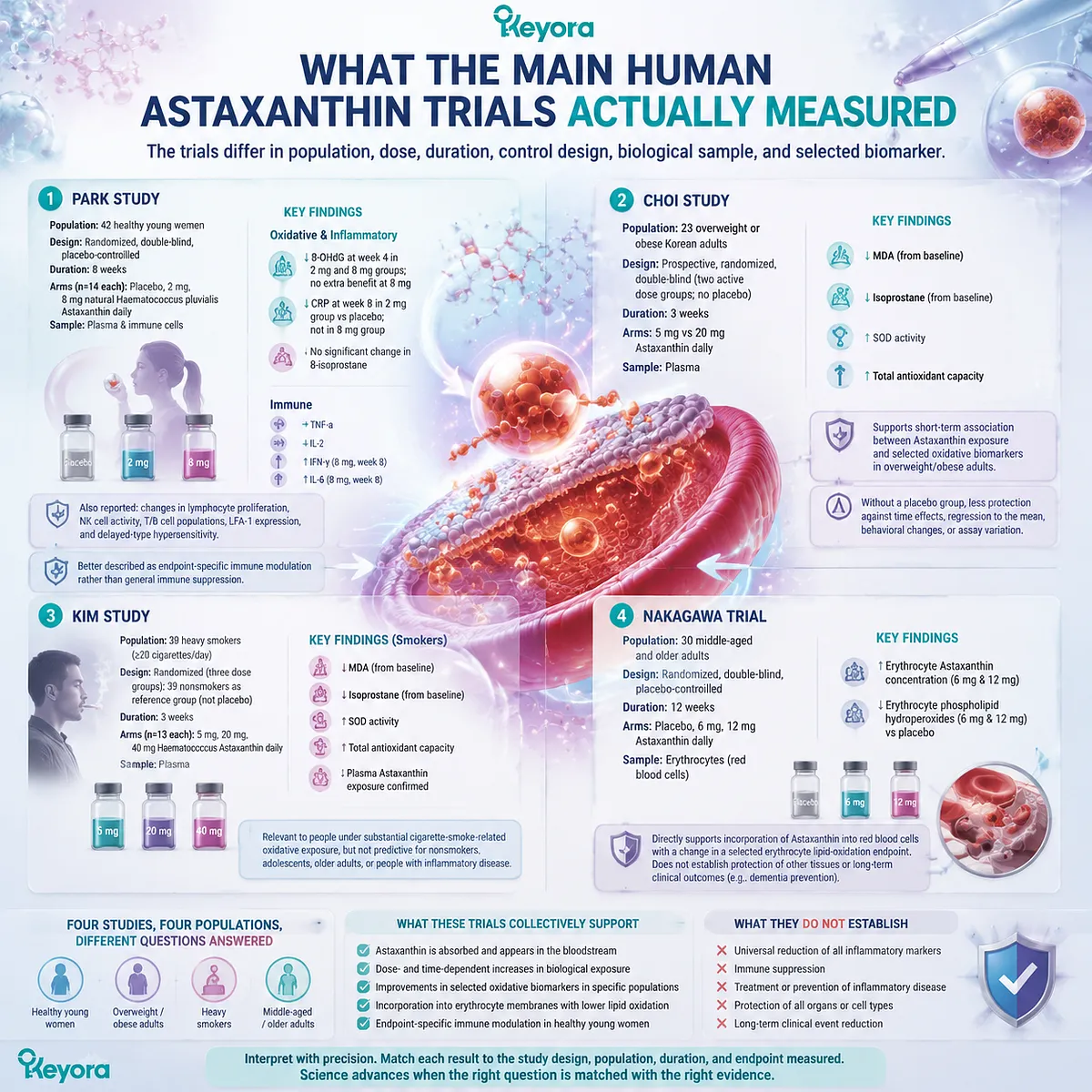
The trials differ in population, dose, duration, control design, biological sample, and selected biomarker
The Park study was a randomized, double-blind, placebo-controlled trial involving 42 healthy young women, with 14 participants assigned to placebo, 2 mg, or 8 mg of natural Haematococcus pluvialis Astaxanthin daily for eight weeks. Plasma Astaxanthin increased dose-dependently, confirming systemic exposure under the study conditions.
The oxidative and inflammatory findings were selective rather than uniformly positive. Plasma 8-OHdG was lower by week four in both supplemented groups, with no additional reduction from the higher dose. CRP was lower at week eight in the 2 mg group compared with control, but the 8 mg group did not show the same CRP result. Plasma 8-isoprostane, the study’s lipid-peroxidation endpoint, did not change significantly.
The immune findings also moved in more than one direction. TNF-alpha and IL-2 did not differ, while IFN-gamma and IL-6 were higher in the 8 mg group at week eight. The study also reported changes in lymphocyte proliferation, natural-killer-cell activity, T- and B-cell populations, LFA-1 expression, and delayed-type hypersensitivity responses. These results are better described as endpoint-specific immune modulation than as general immune suppression.
The Choi study involved 23 overweight or obese Korean adults who were randomized to receive either 5 mg or 20 mg Astaxanthin daily for three weeks. The study was described as prospective, randomized, and double-blind, but its published abstract reports two active-dose groups rather than a placebo arm. MDA and isoprostane decreased from baseline, while SOD activity and total antioxidant capacity increased in both groups.
That design supports a short-term association between Astaxanthin exposure and selected oxidative biomarkers in overweight or obese adults. Without a placebo group, however, the study provides less protection against explanations such as time effects, regression toward the mean, behavioral changes, or assay variation than a placebo-controlled trial would provide.
The Kim study focused on a different population: 39 heavy smokers who consumed at least 20 cigarettes per day. Participants were randomized to 5, 20, or 40 mg of Haematococcus Astaxanthin daily, with 13 people in each dose group, for three weeks. Thirty-nine nonsmokers were enrolled as a reference group rather than as placebo-treated smokers.
Across the supplemented smoker groups, plasma MDA and isoprostane decreased from baseline, while SOD and total antioxidant capacity increased. Plasma Astaxanthin exposure was also measured. These results are relevant to people under substantial cigarette-smoke-related oxidative exposure, but they cannot automatically predict the response of nonsmokers, adolescents, older adults, or people with a clinical inflammatory disease.
The Nakagawa trial used a stronger placebo-controlled design for a more specific membrane-related endpoint. Thirty middle-aged and older participants were assigned to placebo, 6 mg, or 12 mg Astaxanthin daily for 12 weeks in a randomized, double-blind trial. Both supplemented groups developed higher erythrocyte Astaxanthin concentrations and lower erythrocyte phospholipid hydroperoxide concentrations than placebo.
This trial directly supports incorporation of Astaxanthin into red blood cells together with a change in a selected erythrocyte lipid-oxidation endpoint. It does not establish protection of neuronal, retinal, mitochondrial, endothelial, or reproductive-cell membranes, and it did not test dementia prevention or another long-term clinical event.
Why the Biomarker Results Are Not Uniform
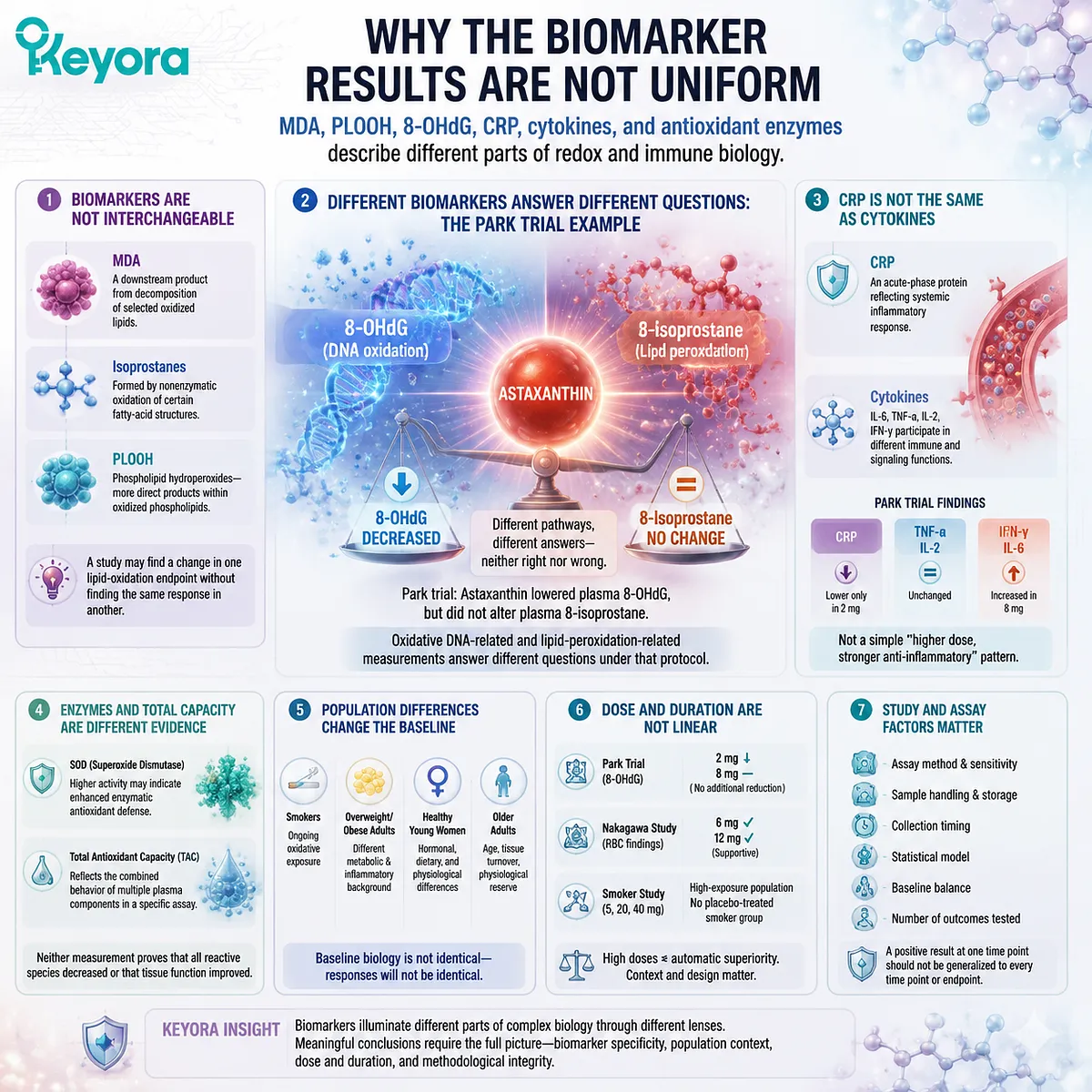
MDA, PLOOH, 8-OHdG, CRP, cytokines, and antioxidant enzymes describe different parts of redox and immune biology
The first reason results differ is that the biomarkers are not interchangeable.
MDA is a downstream product associated with decomposition of selected oxidized lipids. Isoprostanes arise through nonenzymatic oxidation of certain fatty-acid structures. Phospholipid hydroperoxides are more direct products within oxidized phospholipids. A study may therefore find a change in one lipid-oxidation endpoint without finding the same response in another.
The Park trial illustrates this clearly. Astaxanthin lowered plasma 8-OHdG, but it did not alter plasma 8-isoprostane. The result does not mean that one assay was necessarily right and the other wrong. It means that oxidative DNA-related and lipid-peroxidation-related measurements answered different questions under that protocol.
CRP also differs from cytokines. CRP is an acute-phase protein reflecting a systemic inflammatory response, while IL-6, TNF-alpha, IL-2, and IFN-gamma participate in different immune and signaling functions. A lower CRP value cannot predict that every cytokine will decrease, and an increase in one cytokine does not automatically represent harmful chronic inflammation.
In Park’s trial, CRP was lower only in the 2 mg group, TNF-alpha and IL-2 were unchanged, and IFN-gamma and IL-6 increased in the 8 mg group. The findings resist a simple higher-dose, stronger-anti-inflammatory interpretation.
SOD and total antioxidant capacity represent another evidence category. Higher SOD activity may indicate a change in enzymatic antioxidant defense, while total antioxidant capacity reflects the combined behavior of multiple plasma components in a particular assay. Neither measurement proves that every reactive species decreased or that tissue function improved.
Population differences are equally important. Smokers begin with a specific ongoing oxidative exposure. Overweight or obese adults may have a different metabolic and inflammatory background. Healthy young women and older adults differ in age, hormones, diet, baseline biomarkers, tissue turnover, and physiological reserve.
Dose and duration do not create a simple linear hierarchy. Park observed no additional 8-OHdG reduction with 8 mg compared with 2 mg. Nakagawa reported supportive erythrocyte results with both 6 and 12 mg. The smoker study included 5, 20, and 40 mg, but its high-exposure population and absence of a placebo-treated smoker group limit the use of those doses as a general dose-ranking experiment.
Assay method, sample handling, collection timing, statistical model, baseline balance, and the number of outcomes tested can also affect findings. A positive result at one time point should not be silently generalized to every time point or endpoint.
Why a Biomarker Change Is Not the Same as Clinical Protection
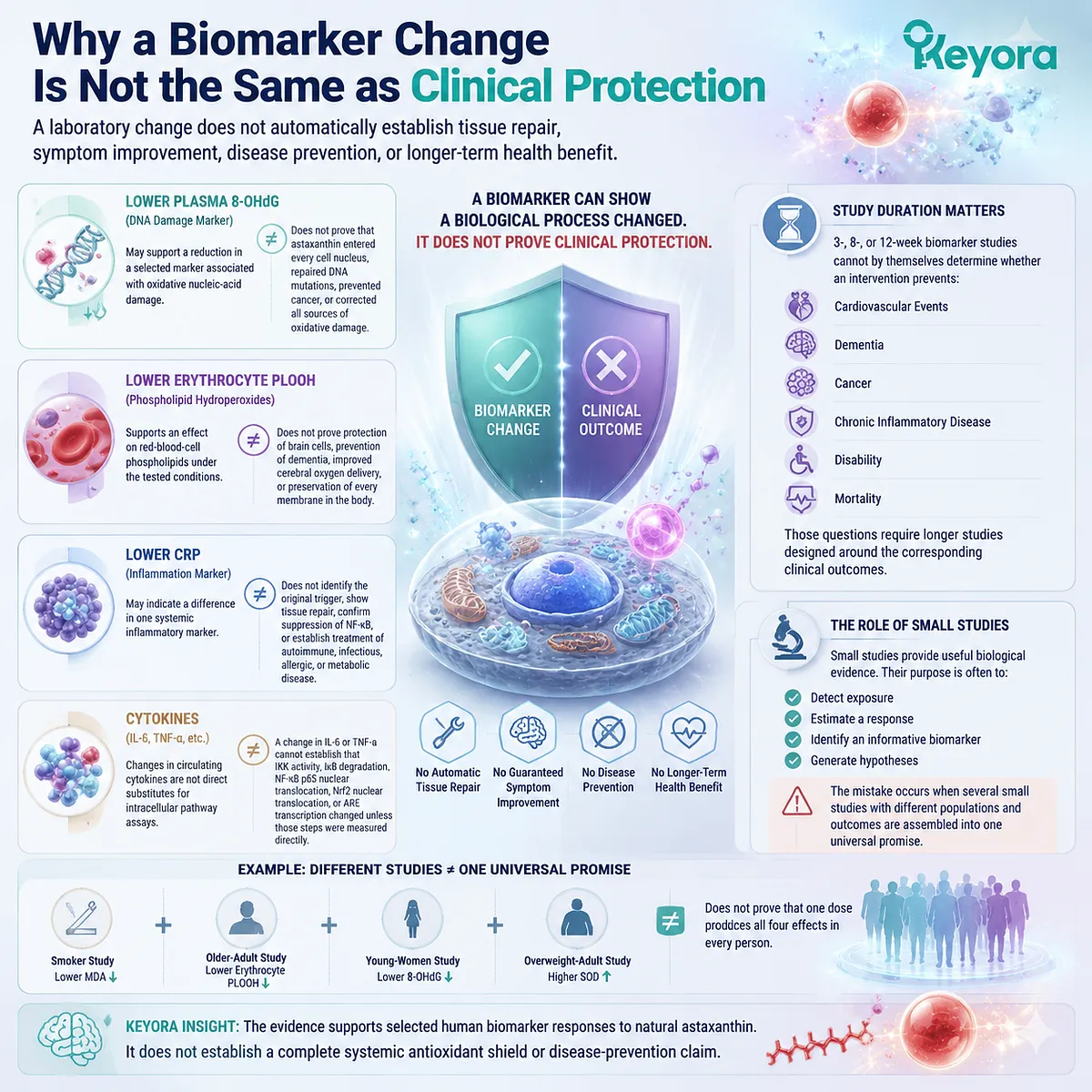
A laboratory change does not automatically establish tissue repair, symptom improvement, disease prevention, or longer-term health benefit
A biomarker can provide evidence that a biological process changed. It does not automatically show that a person felt better, functioned better, avoided disease, or lived longer.
Lower plasma 8-OHdG may support a reduction in a selected marker associated with oxidative nucleic-acid damage. It does not demonstrate that Astaxanthin entered every cell nucleus, repaired existing DNA mutations, prevented cancer, or corrected every source of oxidative damage.
Lower erythrocyte PLOOH supports an effect involving red-blood-cell phospholipids under the tested conditions. It does not prove protection of brain cells, prevention of dementia, improved cerebral oxygen delivery, or preservation of every membrane in the body.
Lower CRP may indicate a difference in one systemic inflammatory marker. It does not identify the original trigger, show that injured tissue was repaired, confirm suppression of NF-kB, or establish treatment of autoimmune, infectious, allergic, or metabolic disease.
Cytokine measurements are also not direct substitutes for intracellular pathway assays. A change in circulating IL-6 or TNF-alpha cannot establish that human IKK activity, IκB degradation, NF-kB p65 nuclear translocation, Nrf2 nuclear translocation, or antioxidant response element transcription changed unless those pathway steps were measured directly.
Study duration matters. Three-, eight-, or twelve-week biomarker studies cannot by themselves determine whether an intervention prevents cardiovascular events, dementia, cancer, chronic inflammatory disease, disability, or mortality. Those questions require longer studies designed around the corresponding clinical outcomes.
Small studies can still provide useful biological evidence. Their purpose is often to detect exposure, estimate a response, identify an informative biomarker, or generate hypotheses. The mistake occurs when several small studies with different populations and outcomes are assembled into one universal promise.
For example:
A smoker study showing lower MDA
-
an older-adult study showing lower erythrocyte PLOOH
-
a young-women study showing lower 8-OHdG
-
an overweight-adult study showing higher SOD
does not prove that one dose produces all four effects in every person.
The evidence supports selected human biomarker responses to natural Astaxanthin. It does not establish a complete systemic antioxidant shield or disease-prevention claim.
Use the Keyora Material – Design – Endpoint Check
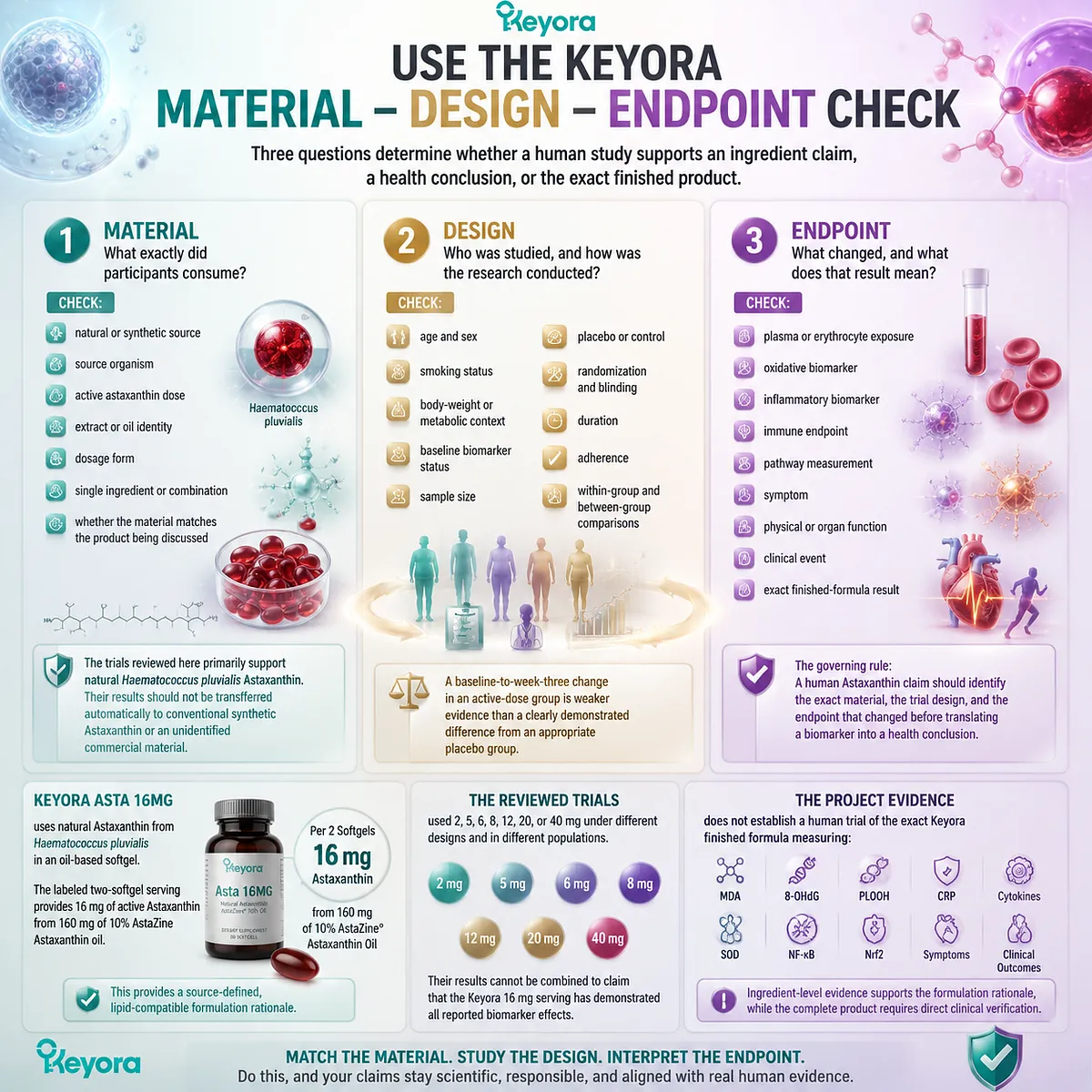
Three questions determine whether a human study supports an ingredient claim, a health conclusion, or the exact finished product
The Keyora Material – Design – Endpoint Check provides a practical way to interpret Astaxanthin human research.
1. Material
What exactly did participants consume?
Check:
-
natural or synthetic source
-
source organism
-
active Astaxanthin dose
-
extract or oil identity
-
dosage form
-
single ingredient or combination
-
whether the material matches the product being discussed
The trials reviewed here primarily support natural Haematococcus pluvialis Astaxanthin. Their results should not be transferred automatically to conventional synthetic Astaxanthin or an unidentified commercial material.
2. Design
Who was studied, and how was the research conducted?
Check:
-
age and sex
-
smoking status
-
body-weight or metabolic context
-
baseline biomarker status
-
sample size
-
placebo or control
-
randomization and blinding
-
duration
-
adherence
-
within-group and between-group comparisons
A baseline-to-week-three change in an active-dose group is weaker evidence than a clearly demonstrated difference from an appropriate placebo group.
3. Endpoint
What changed, and what does that result mean?
Separate:
-
plasma or erythrocyte exposure
-
oxidative biomarker
-
inflammatory biomarker
-
immune endpoint
-
pathway measurement
-
symptom
-
physical or organ function
-
clinical event
-
exact finished-formula result
The governing rule is:
A human Astaxanthin claim should identify the exact material, the trial design, and the endpoint that changed before translating a biomarker into a health conclusion.
Keyora Asta 16MG uses natural Astaxanthin from Haematococcus pluvialis in an oil-based softgel. The labeled two-softgel serving provides 16 mg of active Astaxanthin from 160 mg of 10% AstaZine Astaxanthin oil. This provides a source-defined, lipid-compatible formulation rationale.
However, the reviewed trials used 2, 5, 6, 8, 12, 20, or 40 mg under different designs and in different populations. Their results cannot be combined to claim that the Keyora 16 mg serving has demonstrated all reported biomarker effects.
The project evidence does not establish a human trial of the exact Keyora finished formula measuring MDA, 8-OHdG, PLOOH, CRP, cytokines, SOD, NF-kB, Nrf2, symptoms, or clinical outcomes. Ingredient-level evidence supports the formulation rationale, while the complete product requires direct clinical verification.
Closing Summary
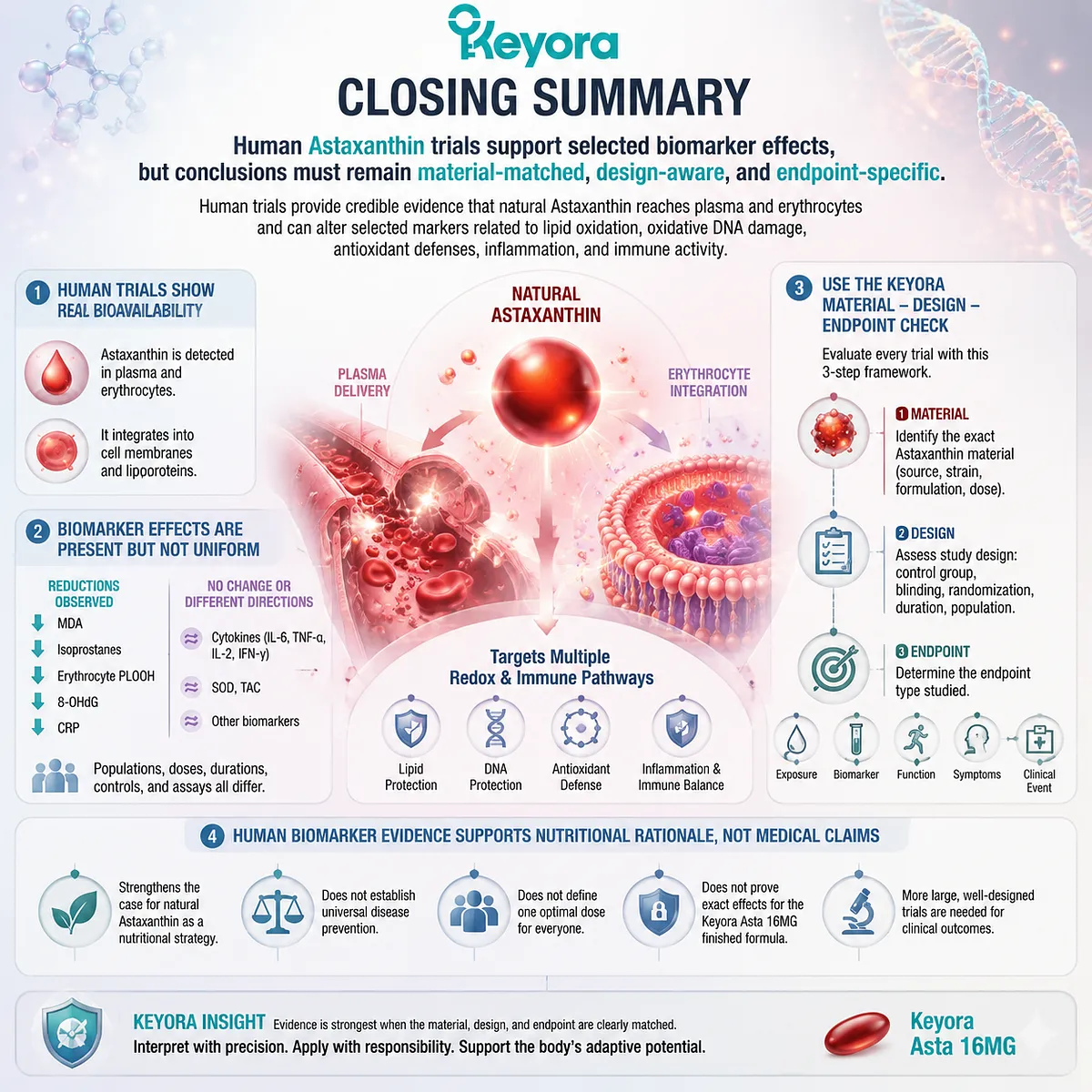
Human Astaxanthin trials support selected biomarker effects, but conclusions must remain material-matched, design-aware, and endpoint-specific
Human trials provide credible evidence that natural Astaxanthin reaches plasma and erythrocytes and can alter selected markers related to lipid oxidation, oxidative DNA damage, antioxidant defenses, inflammation, and immune activity.
The findings are not uniform. Some trials reported lower MDA, isoprostanes, erythrocyte PLOOH, 8-OHdG, or CRP, while other markers were unchanged or moved in different directions. Populations, doses, durations, controls, and assays also differed.
Use the Keyora Material – Design – Endpoint Check.
Identify the exact Astaxanthin material, evaluate whether the trial included an appropriate control, and determine whether the endpoint concerned exposure, a biomarker, function, symptoms, or a clinical event.
Human biomarker evidence strengthens the nutritional rationale for natural Astaxanthin. It does not establish universal disease prevention, one optimal dose for everyone, or clinical proof of the exact Keyora Asta 16MG finished formula.
This article is for educational and informational purposes only. It does not provide medical advice, diagnosis, treatment, cure, prevention, disease outcome claims, hormone restoration claims, fertility outcome claims, or formula-specific clinical efficacy claims.