
How Is Astaxanthin Different From Vitamin C and Vitamin E?
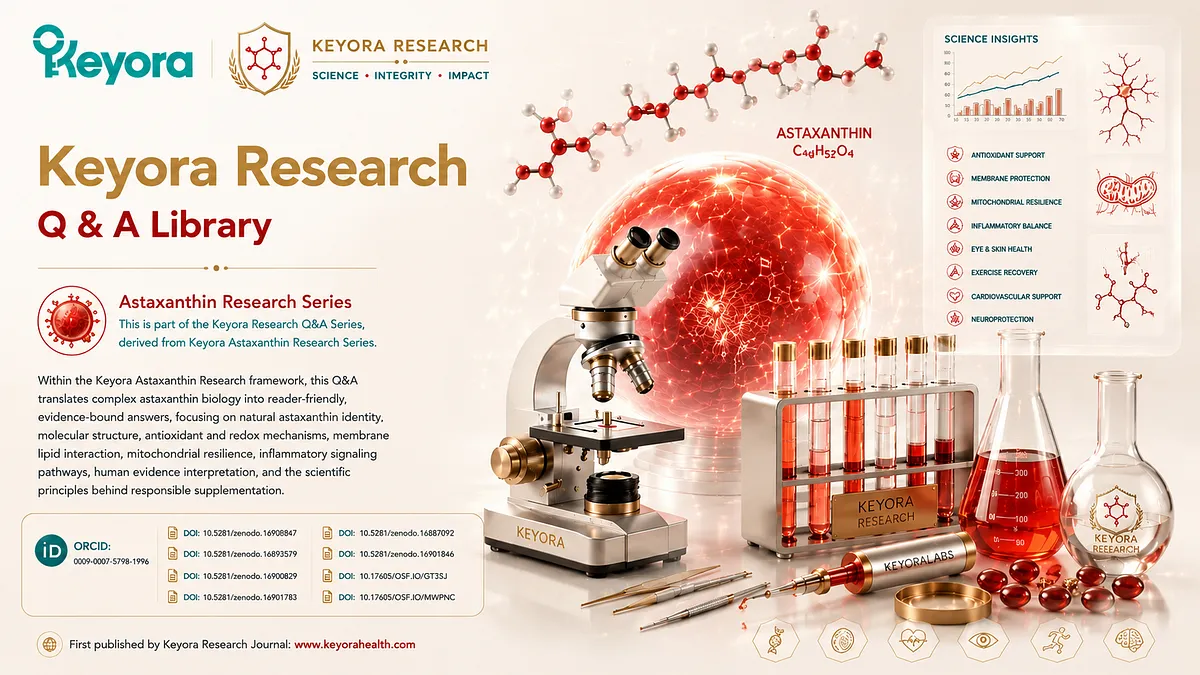
Keyora Research Q&A Library
This is part of the Keyora Research Q&A Series, derived from Keyora Astaxanthin Research Journal Series.
Within the Keyora Astaxanthin Researcn framework, this Q&A translates complex astaxanthin biology into reader-friendly, evidence-bound answers, focusing on natural astaxanthin identity, molecular structure, antioxidant and redox mechanisms, membrane lipid interaction, mitochondrial resilience, inflammatory signaling pathways, human evidence interpretation, and the scientific principles behind responsible supplementation.
First published by Keyora Research Journal: www.keyorahealth.com
Direct Answer
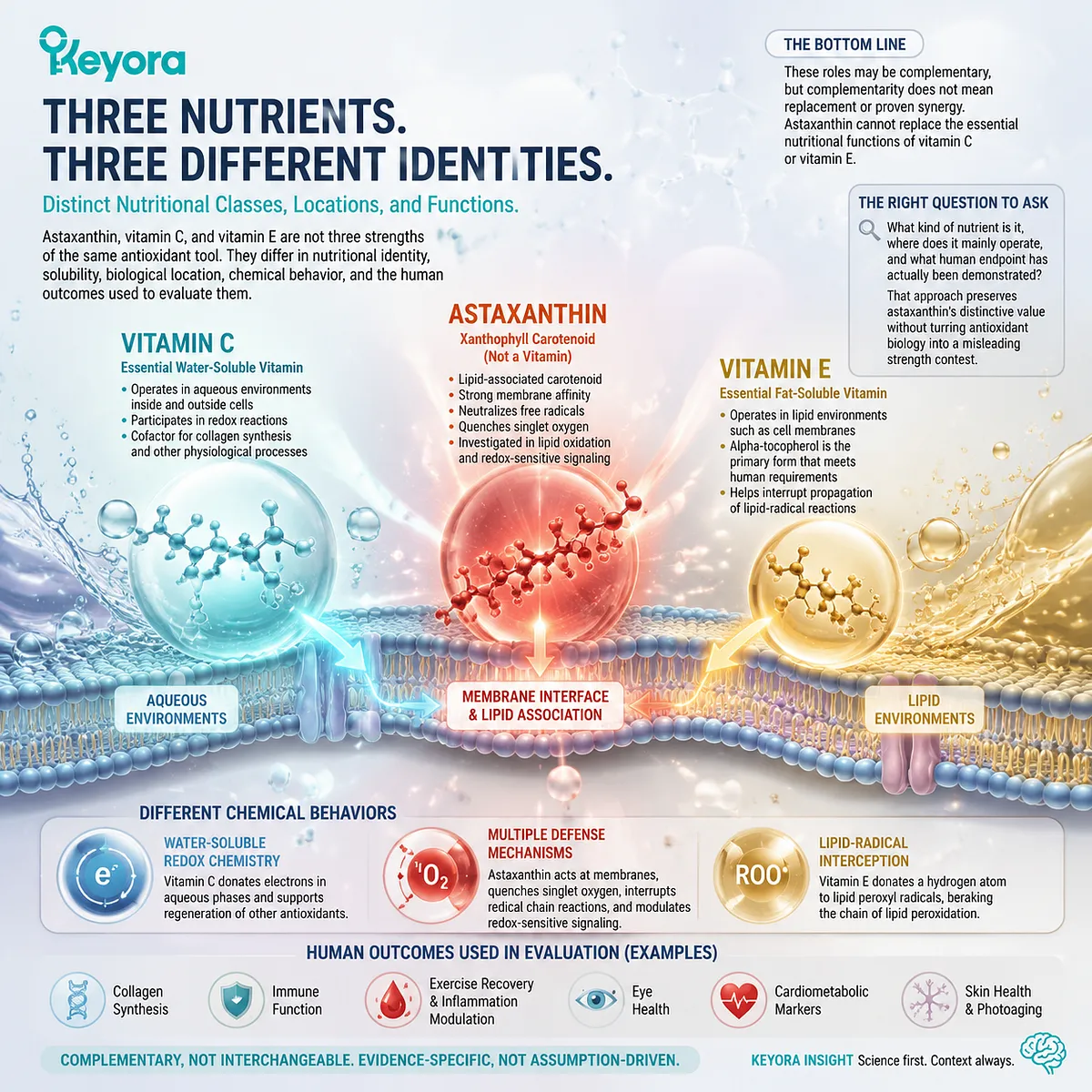
Astaxanthin, vitamin C, and vitamin E are not three strengths of the same antioxidant tool. They differ in nutritional identity, solubility, biological location, chemical behavior, and the human outcomes used to evaluate them.
Vitamin C is an essential water-soluble vitamin. It functions in extracellular and intracellular aqueous environments, participates in redox reactions, and serves as a cofactor for collagen synthesis and other established physiological processes.
Vitamin E is a family of essential fat-soluble compounds, with alpha-tocopherol being the form recognized to meet human requirements. It is strongly associated with lipid environments and has a classic role in limiting propagation of lipid-radical reactions.
Astaxanthin is different. It is a lipid-associated xanthophyll carotenoid rather than a vitamin, and it does not have vitamin A activity. Its structure supports membrane association, selected radical interactions, singlet oxygen quenching, and investigation of lipid oxidation and redox-sensitive signaling.
These roles may be complementary, but complementarity does not mean replacement or proven synergy.
Astaxanthin cannot replace the essential nutritional functions of vitamin C or vitamin E. Likewise, one laboratory assay cannot establish that any of the three is universally superior.
The useful comparison is:
What kind of nutrient is it, where does it mainly operate, and what human endpoint has actually been demonstrated?
That approach preserves astaxanthin’s distinctive value without turning antioxidant biology into a misleading strength contest.
Vitamin C, Vitamin E, and Astaxanthin Are Not the Same Type of Nutrient
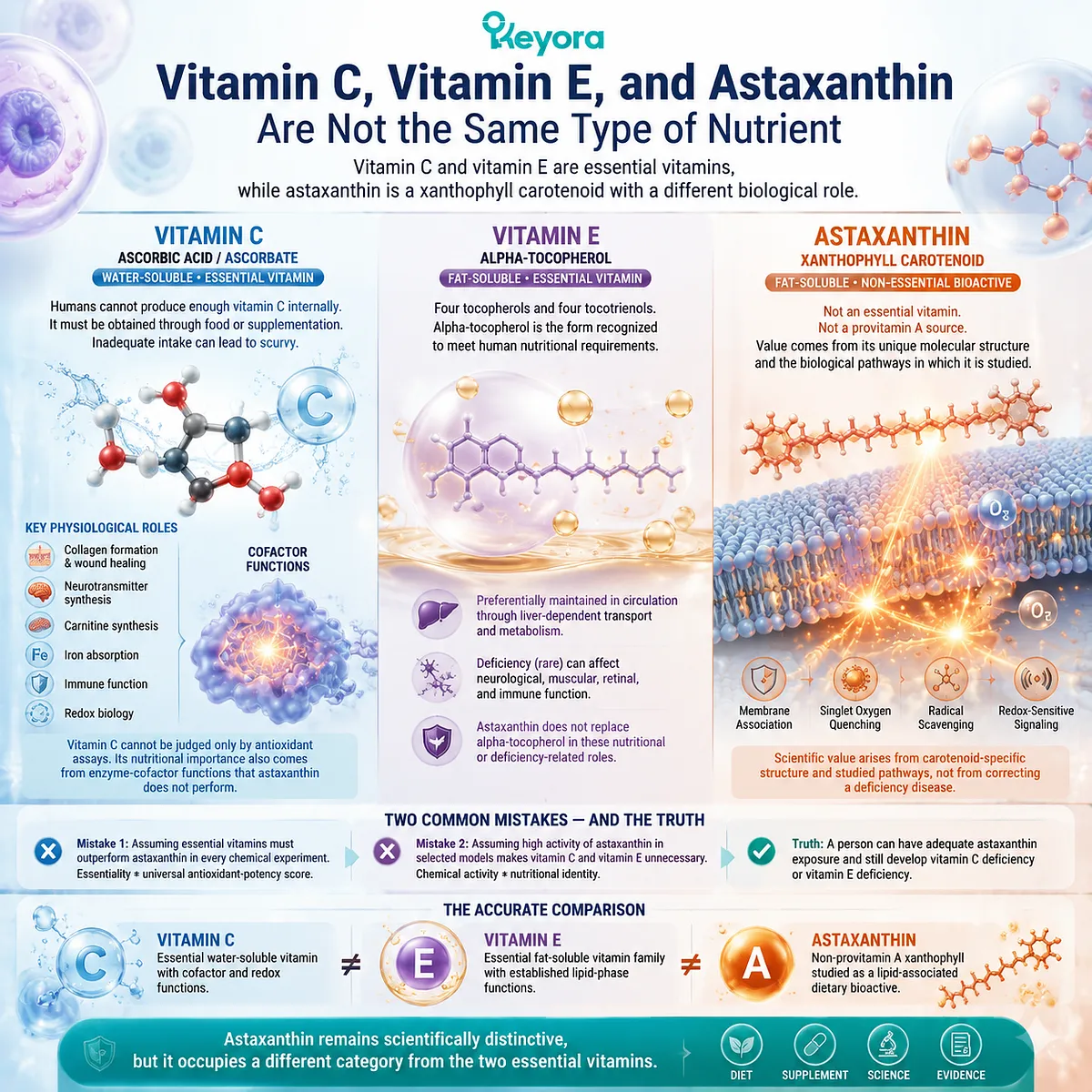
Vitamin C and vitamin E are essential vitamins, while astaxanthin is a xanthophyll carotenoid with a different biological role
Vitamin C is also called ascorbic acid or ascorbate, depending on its chemical state. Humans cannot produce enough vitamin C internally, so it must be obtained through food or supplementation. Inadequate intake can lead to scurvy, reflecting vitamin C’s essential roles in collagen formation, wound healing, neurotransmitter synthesis, carnitine synthesis, iron absorption, immune function, and redox biology.
This means vitamin C cannot be judged only by how strongly it reacts in an antioxidant assay. Its nutritional importance also comes from enzyme-cofactor functions that astaxanthin does not perform.
Vitamin E is also essential, but it is chemically different from vitamin C. The term vitamin E includes four tocopherols and four tocotrienols. Alpha-tocopherol is the form recognized to meet human nutritional requirements and is preferentially maintained in circulation through liver-dependent transport and metabolism.
Vitamin E deficiency is uncommon in healthy people, but it can occur in severe fat-malabsorption or inherited transport disorders. Deficiency may affect neurological, muscular, retinal, and immune function. Astaxanthin does not replace alpha-tocopherol in these nutritional or deficiency-related roles.
Astaxanthin is not an essential vitamin. It is an oxygen-containing carotenoid classified as a xanthophyll and does not serve as a provitamin A source. Its scientific value comes from its carotenoid-specific molecular structure and the biological pathways in which that structure has been studied, not from correcting a recognized astaxanthin-deficiency disease.
This distinction prevents two opposite mistakes.
The first mistake is assuming that essential vitamins must outperform astaxanthin in every chemical experiment. Essentiality describes whether the body requires a nutrient for established physiological functions. It is not a universal antioxidant-potency score.
The second mistake is assuming that high activity by astaxanthin in a selected membrane or singlet oxygen model makes vitamin C and vitamin E unnecessary. Chemical activity cannot replace nutritional identity.
A person can therefore have adequate astaxanthin exposure while still developing vitamin C deficiency if vitamin C intake is insufficient. Astaxanthin also cannot correct a medically significant vitamin E deficiency caused by fat malabsorption or an inherited transport disorder.
The accurate comparison is:
-
Vitamin C is an essential water-soluble vitamin with cofactor and redox functions
-
Vitamin E is an essential fat-soluble vitamin family with established lipid-phase functions
-
Astaxanthin is a non-provitamin A xanthophyll studied as a lipid-associated dietary bioactive
Astaxanthin remains scientifically distinctive, but it occupies a different category from the two essential vitamins.
Their Redox Roles Depend on Chemical Environment and Location
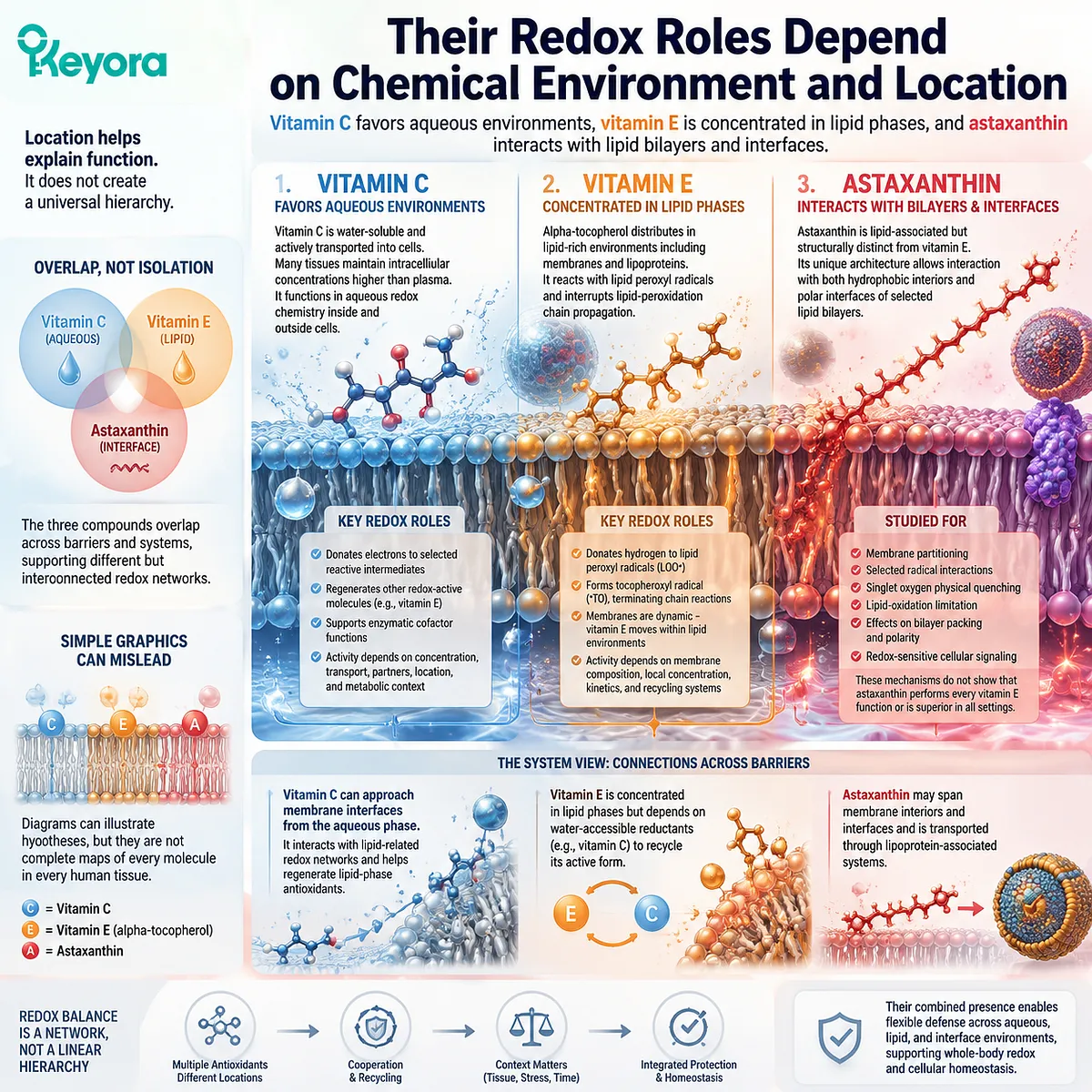
Vitamin C favors aqueous environments, vitamin E is concentrated in lipid phases, and astaxanthin interacts with lipid bilayers and interfaces
Vitamin C is water-soluble, but this does not mean it exists only in blood or outside cells. The body uses specific transport systems to absorb and distribute vitamin C, and many tissues maintain intracellular concentrations that are higher than those found in plasma. Vitamin C can therefore participate in aqueous redox chemistry both inside and outside cells.
Vitamin C may donate electrons to selected reactive intermediates and participate in the restoration of other redox-active molecules. Its biological behavior still depends on concentration, transport, reaction partners, cellular location, and the surrounding metabolic system.
Vitamin E is distributed through lipid-rich environments, including membranes and lipoproteins. Alpha-tocopherol can react with lipid peroxyl radicals and help interrupt propagation of lipid-peroxidation chains. This makes vitamin E especially relevant when oxidation is occurring within a lipid phase.
That description does not mean vitamin E protects only one side of a membrane or remains fixed at one point. Membranes are dynamic, and alpha-tocopherol can move within lipid environments. Its activity depends on membrane composition, local concentration, reaction kinetics, and the systems available to process the resulting tocopheroxyl intermediate.
Astaxanthin is also lipid-associated, but it is not simply another version of vitamin E.
Astaxanthin contains a long conjugated central chain with oxygen-containing terminal regions. This architecture supports interaction with both the hydrophobic interior and the more polar interfaces of selected lipid bilayers. It has been studied for:
-
membrane partitioning
-
selected radical interactions
-
singlet oxygen physical quenching
-
lipid-oxidation limitation
-
effects on bilayer packing and polarity
-
redox-sensitive cellular signaling
Its membrane relevance therefore extends beyond one classic chain-breaking reaction. At the same time, these mechanisms do not show that astaxanthin performs every vitamin E function or that it is superior in every lipid environment.
The three compounds also overlap rather than occupying perfectly isolated zones.
Vitamin C can approach membrane interfaces and interact with lipid-related redox networks from the aqueous phase. Vitamin E is concentrated in lipid phases but participates in reactions linked to water-accessible reductants. Astaxanthin may occupy membrane interiors and interfaces while also being transported through lipoprotein-associated systems.
This is why simple graphics can be helpful but misleading. A diagram that places vitamin C outside a membrane, vitamin E on one surface, and astaxanthin across the entire bilayer may illustrate a hypothesis, but it should not be interpreted as a complete map of every molecule in every human tissue.
Location helps explain function. It does not create a universal hierarchy.
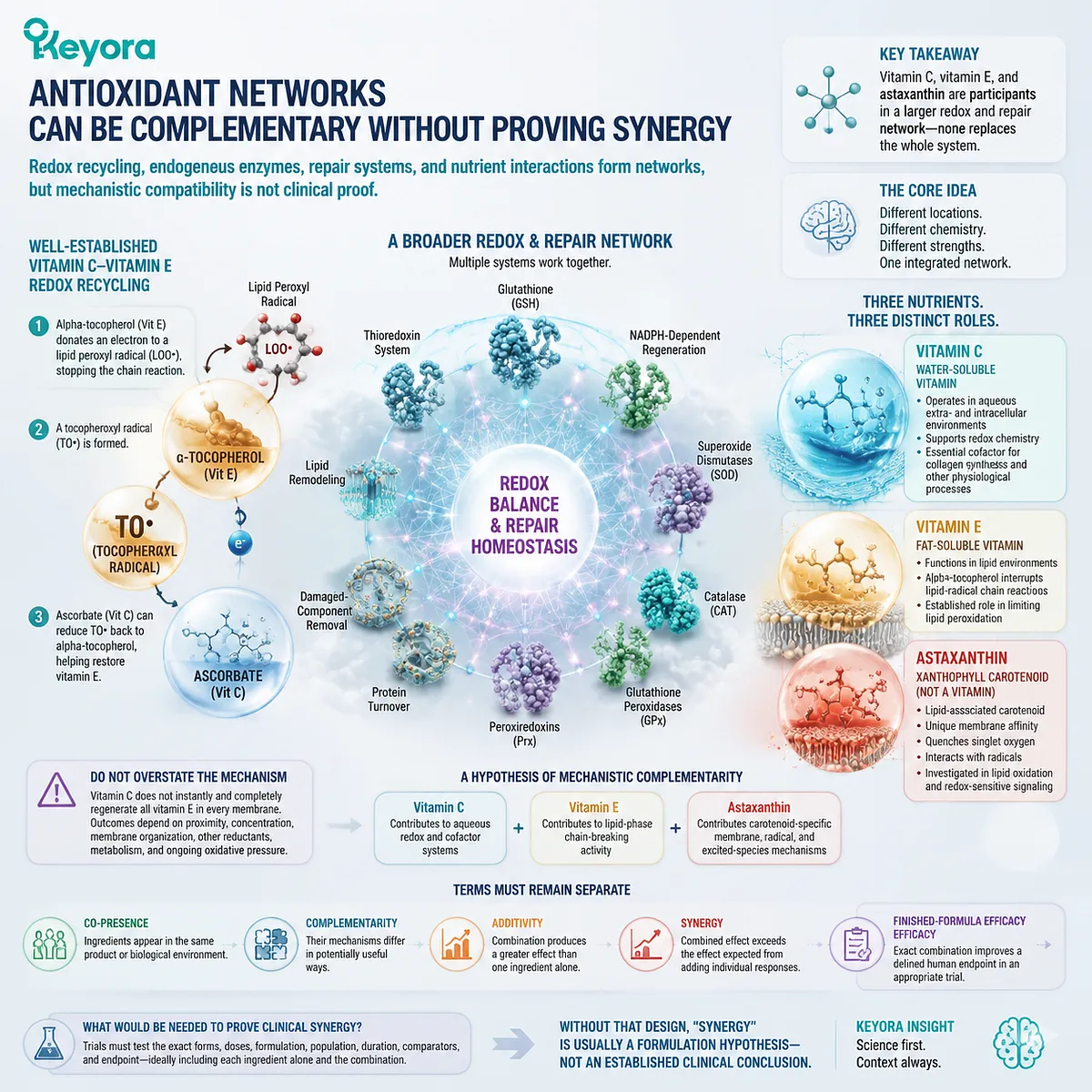
Antioxidant Networks Can Be Complementary Without Proving Synergy
Redox recycling, endogenous enzymes, repair systems, and nutrient interactions form networks, but mechanistic compatibility is not clinical proof
Antioxidant-related molecules rarely operate in complete isolation. When alpha-tocopherol reacts with a lipid peroxyl radical, it can form a tocopheroxyl radical. In suitable experimental and biological environments, ascorbate can reduce this intermediate and help restore alpha-tocopherol. This vitamin C and vitamin E relationship is a well-established part of antioxidant-network chemistry.
That mechanism should not be overstated.
It does not mean that vitamin C instantly and completely regenerates every vitamin E molecule in every membrane. The result depends on molecular proximity, concentration, membrane organization, other reductants, metabolic regeneration, and the rate at which oxidation continues.
Other systems also contribute. These include:
-
glutathione
-
thioredoxin
-
NADPH-dependent regeneration
-
superoxide dismutases
-
catalase
-
glutathione peroxidases
-
peroxiredoxins
-
lipid remodeling
-
protein turnover
-
damaged-component removal
Vitamin C, vitamin E, and astaxanthin are therefore participants within a broader redox and repair network. None replaces the whole system.
Astaxanthin may provide a distinct support layer because its carotenoid structure allows selected energy-transfer and redox reactions within lipid-associated environments. It may be positioned near membrane lipids that are not encountered in the same way by a predominantly aqueous molecule.
This supports a hypothesis of mechanistic complementarity:
-
Vitamin C contributes to aqueous redox and cofactor systems
-
Vitamin E contributes to lipid-phase chain-breaking activity
-
Astaxanthin contributes carotenoid-specific membrane, radical, and excited-species mechanisms
Mechanistic complementarity is not the same as clinical synergy.
These terms must remain separate:
Co-presence means that ingredients appear in the same product or biological environment.
Complementarity means that their proposed mechanisms differ in potentially useful ways.
Additivity means that a combination produces a greater effect than one ingredient alone.
Synergy means that the combined effect exceeds the effect expected from adding the individual responses.
Finished-formula efficacy means that the exact combination improves a defined human endpoint in an appropriate trial.
A molecular diagram can support complementarity. A chemical experiment can support interaction. Neither proves synergy in people.
To claim clinical synergy, research would need to test the exact ingredient forms, doses, formulation, population, duration, comparators, and endpoint. Ideally, the trial would include the individual ingredients and the combination, allowing the interaction itself to be evaluated.
Without that design, “synergy” is usually a formulation hypothesis rather than an established clinical conclusion.
Use the Keyora Identity – Compartment – Endpoint Check
Three questions replace one-dimensional antioxidant rankings with a practical biological and evidence-based comparison
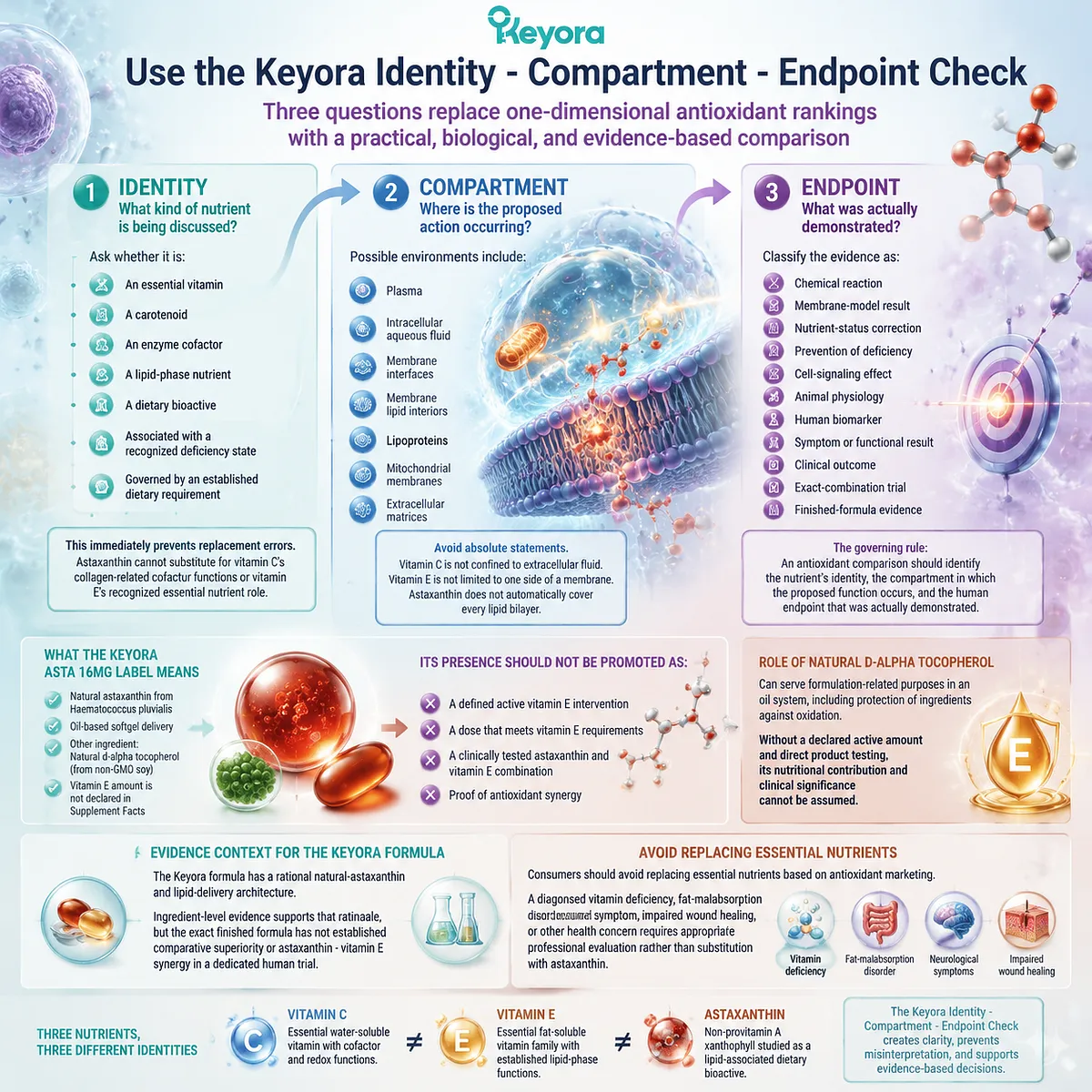
The Keyora Identity – Compartment – Endpoint Check provides a practical way to compare astaxanthin, vitamin C, and vitamin E.
1. Identity
What kind of nutrient is being discussed?
Ask whether it is:
-
an essential vitamin
-
a carotenoid
-
an enzyme cofactor
-
a lipid-phase nutrient
-
a dietary bioactive
-
associated with a recognized deficiency state
-
governed by an established dietary requirement
This immediately prevents replacement errors. Astaxanthin cannot substitute for vitamin C’s collagen-related cofactor functions or vitamin E’s recognized essential nutrient role.
2. Compartment
Where is the proposed action occurring?
Possible environments include:
-
plasma
-
intracellular aqueous fluid
-
membrane interfaces
-
membrane lipid interiors
-
lipoproteins
-
mitochondrial membranes
-
extracellular matrices
Avoid absolute statements. Vitamin C is not confined to extracellular fluid. Vitamin E is not limited to one side of a membrane. Astaxanthin does not automatically cover every lipid bilayer.
3. Endpoint
What was actually demonstrated?
Classify the evidence as:
-
chemical reaction
-
membrane-model result
-
nutrient-status correction
-
prevention of deficiency
-
cell-signaling effect
-
animal physiology
-
human biomarker
-
symptom or functional result
-
clinical outcome
-
exact-combination trial
-
finished-formula evidence
The governing rule is:
An antioxidant comparison should identify the nutrient’s biological identity, the compartment in which the proposed function occurs, and the human endpoint that was actually demonstrated.
This method also clarifies the current Keyora label.
Keyora Asta 16MG uses natural astaxanthin from Haematococcus pluvialis in an oil-based softgel context. The label lists natural d-alpha tocopherol from non-GMO soy under Other Ingredients rather than declaring a quantified vitamin E amount in Supplement Facts.
Its presence should therefore not be promoted as:
-
a defined active vitamin E intervention
-
a dose that meets vitamin E requirements
-
a clinically tested astaxanthin and vitamin E combination
-
proof of antioxidant synergy
Natural d-alpha tocopherol can serve formulation-related purposes in an oil system, including protection of ingredients against oxidation. Without a declared active amount and direct product testing, its nutritional contribution and clinical significance cannot be assumed.
The Keyora formula has a rational natural-astaxanthin and lipid-delivery architecture. Ingredient-level evidence supports that rationale, but the exact finished formula has not established comparative superiority or astaxanthin – vitamin E synergy in a dedicated human trial.
Consumers should also avoid replacing essential nutrients based on antioxidant marketing. A diagnosed vitamin deficiency, fat-malabsorption disorder, persistent neurological symptom, impaired wound healing, or other health concern requires appropriate professional evaluation rather than substitution with astaxanthin.
Closing Summary
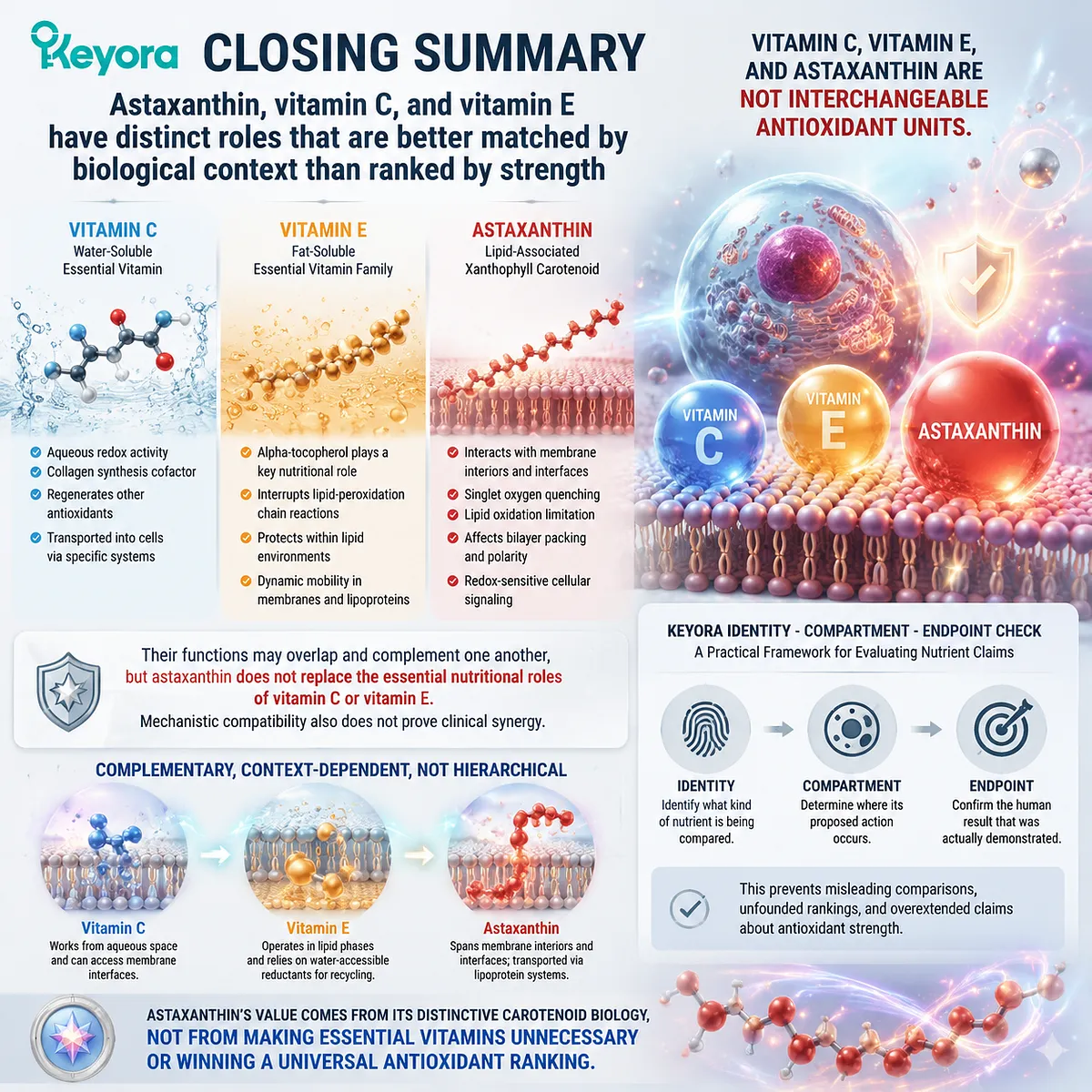
Astaxanthin, vitamin C, and vitamin E have distinct roles that are better matched by biological context than ranked by strength
Vitamin C, vitamin E, and astaxanthin are not interchangeable antioxidant units.
Vitamin C is an essential water-soluble vitamin with aqueous redox, collagen-related cofactor, and other physiological functions. Vitamin E is an essential fat-soluble vitamin family, with alpha-tocopherol playing a recognized nutritional and lipid-phase role. Astaxanthin is a lipid-associated xanthophyll carotenoid studied for membrane interaction, selected reactive-species chemistry, singlet oxygen quenching, lipid oxidation, and redox-sensitive signaling.
Their functions may overlap and complement one another, but astaxanthin does not replace the essential nutritional roles of vitamin C or vitamin E. Mechanistic compatibility also does not prove clinical synergy.
Use the Keyora Identity – Compartment – Endpoint Check. Identify what kind of nutrient is being compared, determine where its proposed action occurs, and confirm the human result that was actually demonstrated.
Astaxanthin’s value comes from its distinctive carotenoid biology, not from making essential vitamins unnecessary or winning a universal antioxidant ranking.
This article is for educational and informational purposes only. It does not provide medical advice, diagnosis, treatment, cure, prevention, disease outcome claims, hormone restoration claims, fertility outcome claims, or formula-specific clinical efficacy claims.