
Is Astaxanthin Really the Strongest Antioxidant?
Keyora Research Q&A Library
This is part of the Keyora Research Q&A Series, derived from Keyora Astaxanthin Research Journal Series.
Within the Keyora Astaxanthin Researcn framework, this Q&A translates complex astaxanthin biology into reader-friendly, evidence-bound answers, focusing on natural astaxanthin identity, molecular structure, antioxidant and redox mechanisms, membrane lipid interaction, mitochondrial resilience, inflammatory signaling pathways, human evidence interpretation, and the scientific principles behind responsible supplementation.
First published by Keyora Research Journal: www.keyorahealth.com
Direct Answer
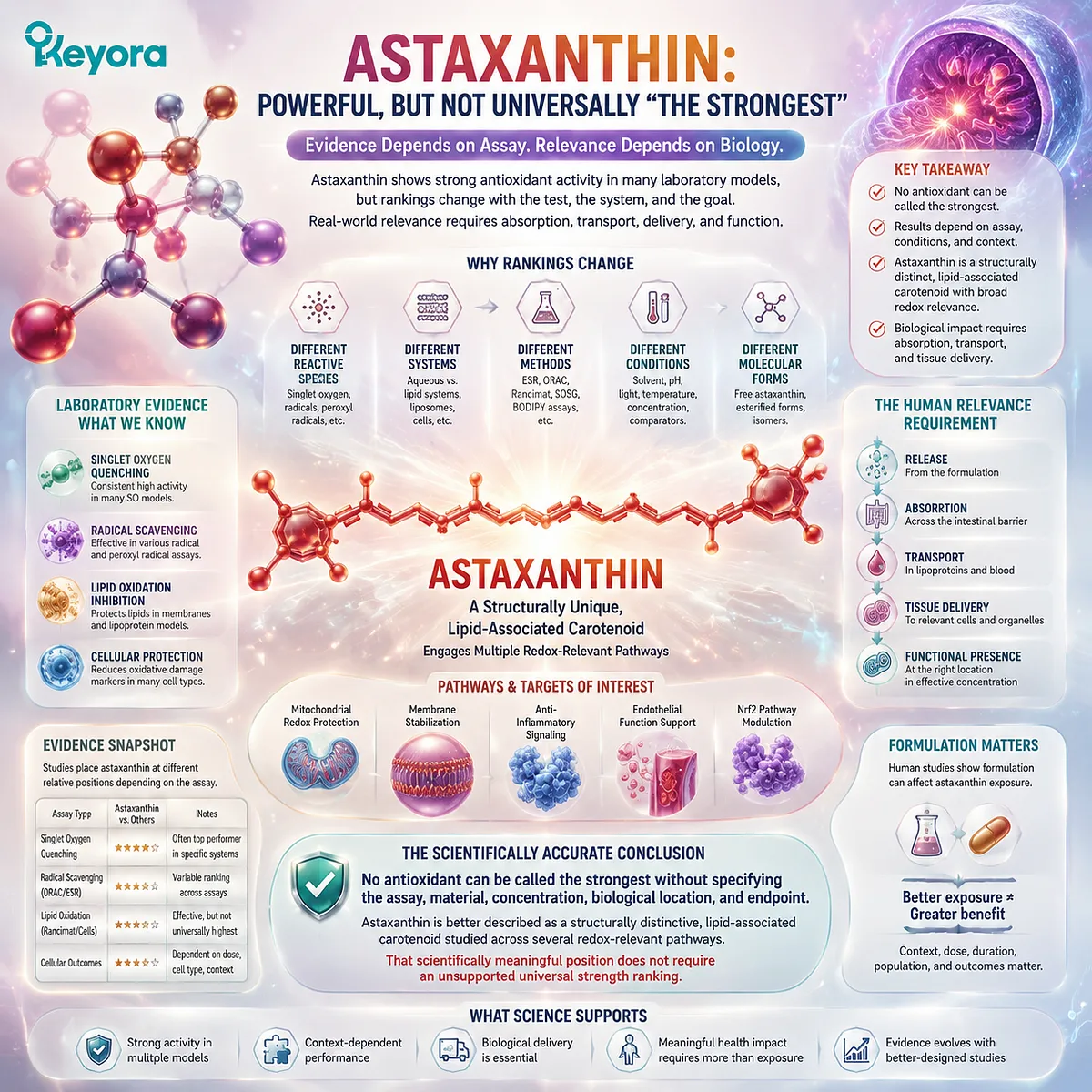
Astaxanthin cannot be scientifically declared the strongest antioxidant in the human body. It has shown substantial activity in selected laboratory experiments involving singlet oxygen, radicals, and oxidation within lipid models. However, antioxidant activity is not one universal property that can be measured with a single test.
Each assay asks a narrower question. One experiment may measure singlet oxygen quenching, another may examine a stable radical, and another may track lipid oxidation inside a model membrane. The resulting ranking can change with the reactive species, solvent, concentration, comparator, molecular form, and measurement method. Primary studies have placed astaxanthin at different relative positions when different singlet oxygen systems were used, while membrane experiments have produced another pattern of activity.
Human relevance adds further requirements. Astaxanthin must be released from the formulation, absorbed, transported, delivered to a relevant tissue, and present at a useful molecular location. Human pharmacokinetic research confirms that formulation can affect astaxanthin exposure, but higher exposure alone does not establish greater clinical benefit.
The accurate conclusion is:
No antioxidant can be called the strongest without specifying the assay, material, concentration, biological location, and endpoint.
Astaxanthin is better described as a structurally distinctive, lipid-associated carotenoid studied across several redox-relevant pathways. That scientifically meaningful position does not require an unsupported universal strength ranking.
Why “Strongest Antioxidant” Has No Single Scientific Meaning
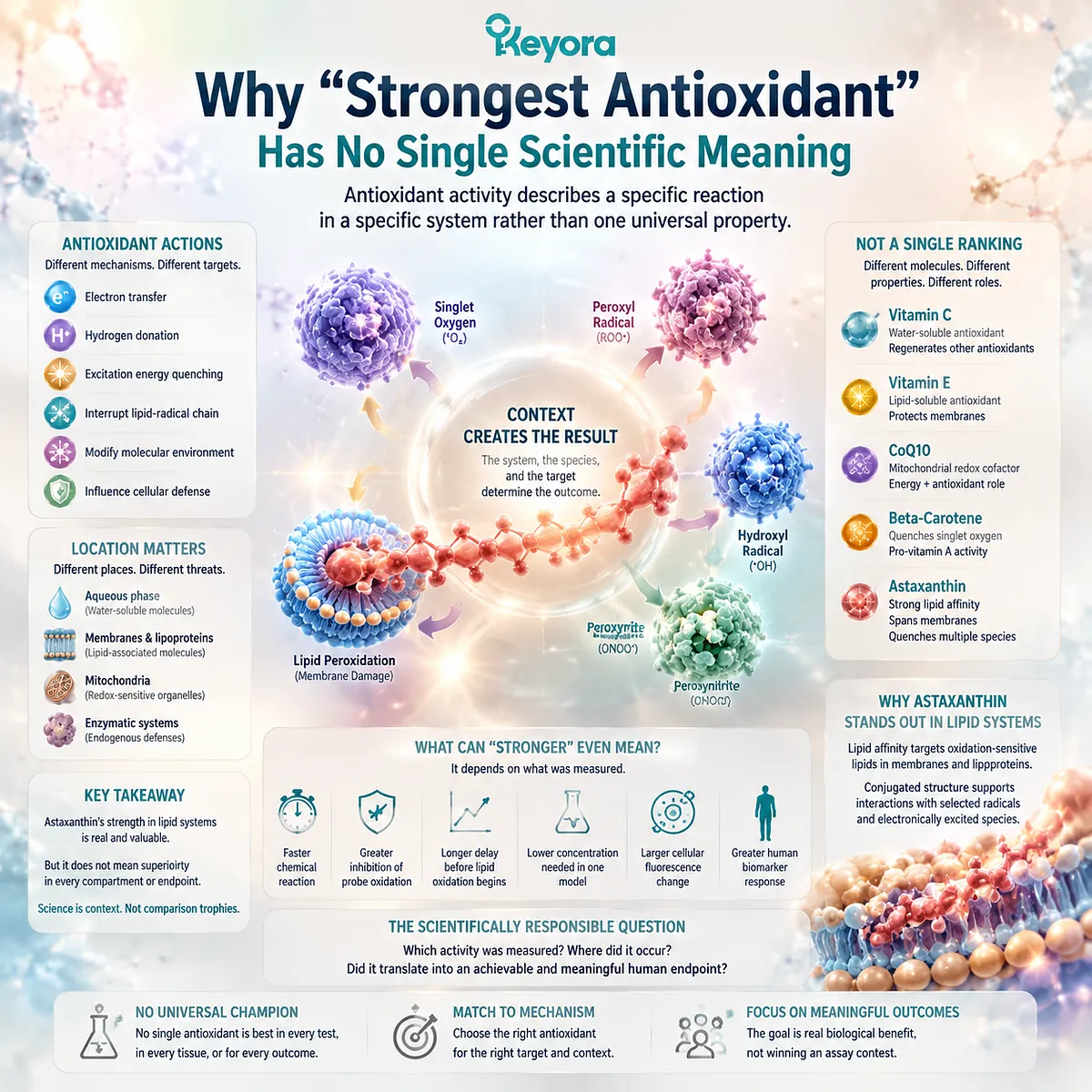
Antioxidant activity describes a specific reaction in a specific system rather than one universal property
The term antioxidant covers several different actions. A compound may transfer an electron, donate hydrogen, quench excitation energy, interrupt a lipid-radical chain, alter the molecular environment around a reactive species, or influence cellular defense signaling.
These mechanisms are not equivalent. A molecule that performs well against singlet oxygen may not show the same relative performance against a peroxyl radical, hydroxyl radical, peroxynitrite, or membrane oxidation initiated through a metal-dependent system.
The biological location also matters. Water-compatible molecules, membrane-associated molecules, lipoprotein components, endogenous enzymes, and mitochondrial redox factors do not necessarily encounter the same reactive species or protect the same targets.
Vitamin C, vitamin E, CoQ10, beta-carotene, and astaxanthin therefore cannot be reduced to one straight ranking. They differ in solubility, metabolism, regeneration, molecular location, and physiological role. Saying that one molecule produced a larger result in one assay does not show that the others have become unnecessary.
Astaxanthin’s lipid affinity is important because oxidation-sensitive lipids are concentrated in membranes and lipoproteins. Its conjugated structure also supports interactions with selected radicals and electronically excited species. These properties provide a strong reason to study astaxanthin in lipid and redox systems.
They do not establish superiority in every compartment.
Even the term “stronger” is incomplete unless the comparison explains what was measured. It could mean:
-
a faster chemical reaction
-
greater inhibition of probe oxidation
-
a longer delay before lipid oxidation begins
-
a lower concentration needed in one model
-
a larger cellular fluorescence change
-
a greater human biomarker response
Each outcome has a different meaning.
The scientifically responsible question is not whether astaxanthin wins one universal antioxidant contest. The useful question is which activity was measured, where that activity occurred, and whether it translated into an achievable and meaningful human endpoint.
Why Laboratory Rankings Change With the Test
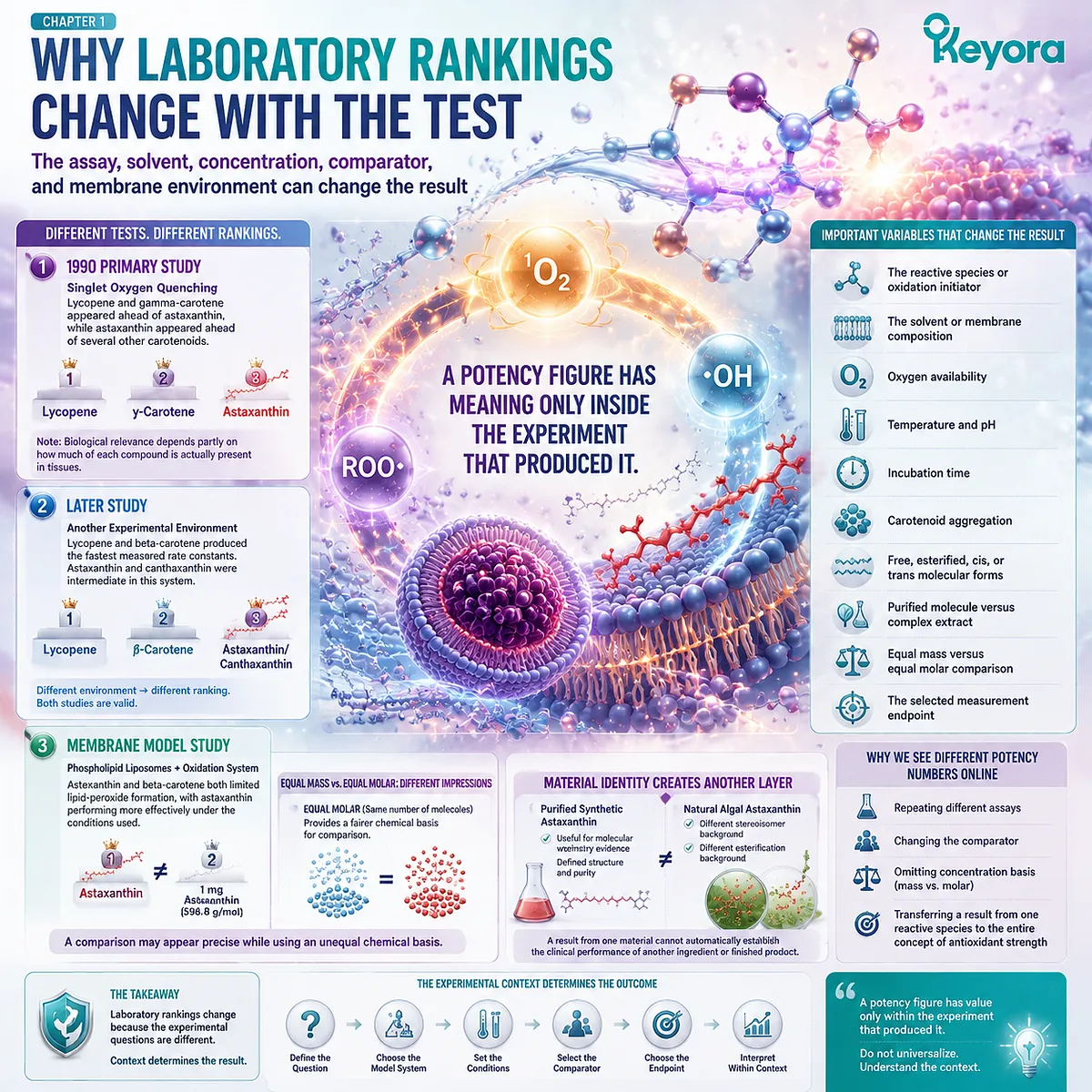
The assay, solvent, concentration, comparator, and membrane environment can change the result
One frequently cited area is singlet oxygen quenching. In a primary study published in 1990, the tested carotenoids produced a specific ranking in which lycopene and gamma-carotene appeared ahead of astaxanthin, while astaxanthin appeared ahead of several other carotenoids. The investigators also emphasized that biological relevance depends partly on how much of each compound is actually present in tissues.
A later study using another experimental environment reported a different pattern. Lycopene and beta-carotene produced the fastest measured rate constants, while astaxanthin and canthaxanthin were intermediate in that system. This does not invalidate either study. It demonstrates that the experimental environment can change the observed ranking.
A membrane model asks another question. In phospholipid liposomes exposed to an oxidation-promoting system, astaxanthin and beta-carotene both limited lipid-peroxide formation, with astaxanthin performing more effectively under the conditions used. This result supports membrane-related antioxidant activity, but it does not create a universal ranking across every reactive species or biological tissue.
Important variables include:
-
the reactive species or oxidation initiator
-
the solvent or membrane composition
-
oxygen availability
-
temperature and pH
-
incubation time
-
carotenoid aggregation
-
free, esterified, cis, or trans molecular forms
-
purified molecule versus complex extract
-
equal mass versus equal molar comparison
-
the selected measurement endpoint
Equal mass and equal molar comparisons can also produce different impressions. Molecules have different molecular weights, so one milligram of each comparator does not necessarily contain the same number of molecules. A comparison may appear precise while using an unequal chemical basis.
Material identity creates another layer. Purified synthetic astaxanthin can provide useful molecular chemistry evidence, while natural algal material may contain a different stereoisomer and esterification background. A result from one material cannot automatically establish the clinical performance of another ingredient or finished supplement.
This is why different websites may display different potency numbers. They may be repeating different assays, changing the comparator, omitting the concentration basis, or transferring a result from one reactive species to the entire concept of antioxidant strength.
A potency figure has meaning only inside the experiment that produced it.
Why Human Antioxidant Function Depends on More Than Chemical Potency
Absorption, metabolism, tissue exposure, molecular location, and endogenous defenses determine biological relevance
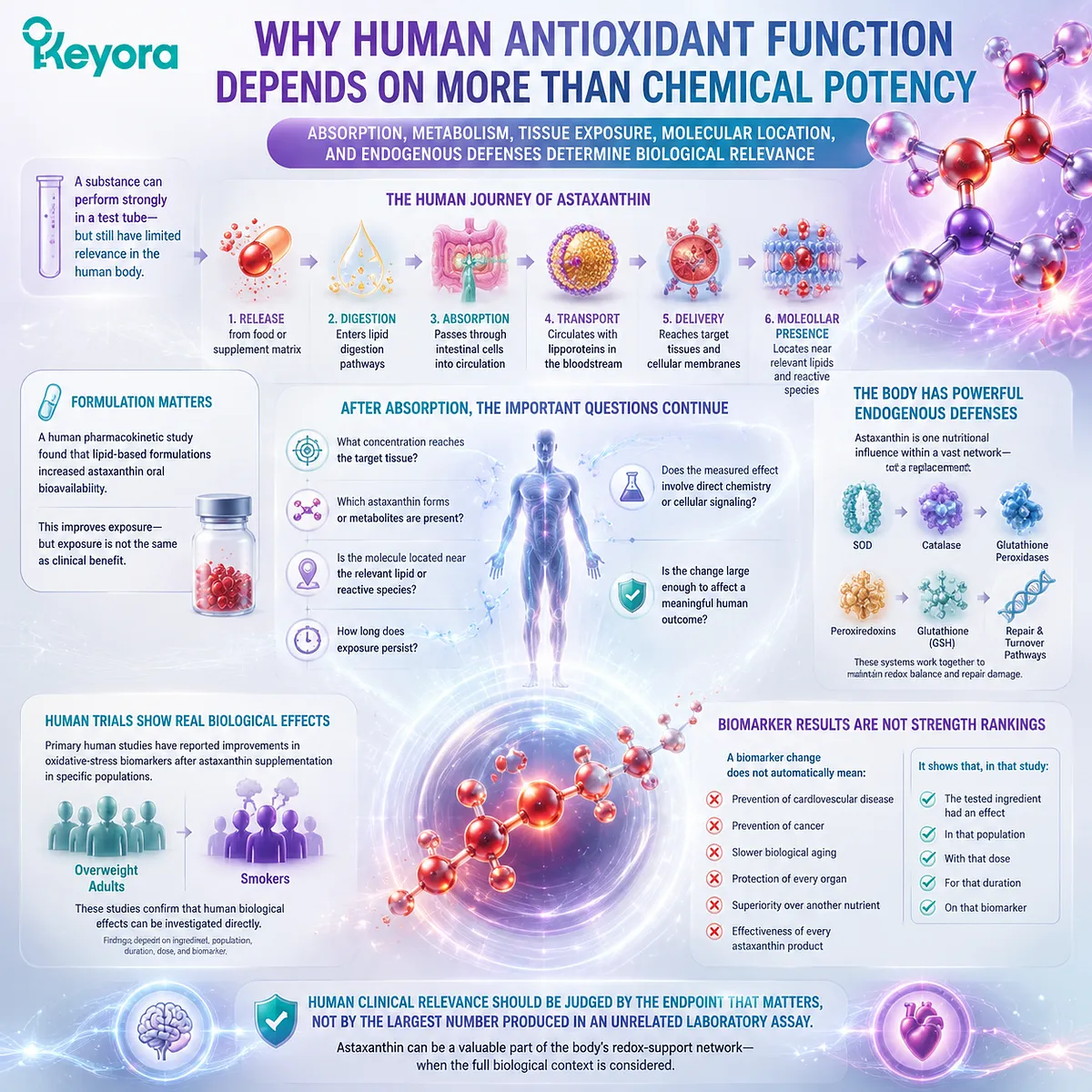
A substance can perform strongly in a test tube and still have limited relevance after oral consumption. Human use requires a sequence of successful steps.
Astaxanthin must first be released from its food or supplement matrix. It must enter lipid digestion pathways, become available for intestinal absorption, circulate through lipoprotein-associated transport, and reach the tissue where the proposed action matters.
A human pharmacokinetic study found that incorporating astaxanthin into lipid-based formulations increased its oral bioavailability. This supports the importance of formulation, but the study measured exposure rather than symptom improvement, organ protection, or disease prevention.
Once absorbed, the important questions continue:
-
What concentration reaches the target tissue?
-
Which astaxanthin forms or metabolites are present?
-
Is the molecule located near the relevant lipid or reactive species?
-
How long does exposure persist?
-
Does the measured effect involve direct chemistry or cellular signaling?
-
Is the change large enough to affect a meaningful human outcome?
The body also contains extensive endogenous redox systems. Superoxide dismutases, catalase, glutathione peroxidases, peroxiredoxins, glutathione, thioredoxin, repair pathways, and molecular turnover all contribute to redox regulation. Astaxanthin can be studied as one nutritional influence within this network, but it does not replace the network.
Primary human trials have reported changes in selected oxidative-stress biomarkers after astaxanthin supplementation in particular populations, including overweight adults and smokers. These studies show that human biological effects can be investigated directly, but their findings remain specific to the tested ingredient, population, duration, dose, and biomarker.
A biomarker result is not an antioxidant strength ranking. It also does not automatically establish:
-
prevention of cardiovascular disease
-
prevention of cancer
-
slower biological aging
-
protection of every organ
-
superiority over another nutrient
-
effectiveness of every astaxanthin product
Human clinical relevance should be judged by the endpoint that matters, not by the largest number produced in an unrelated laboratory assay.
Use the Keyora Assay – Exposure – Endpoint Check
Three questions turn antioxidant comparisons into an evidence audit rather than a marketing ranking
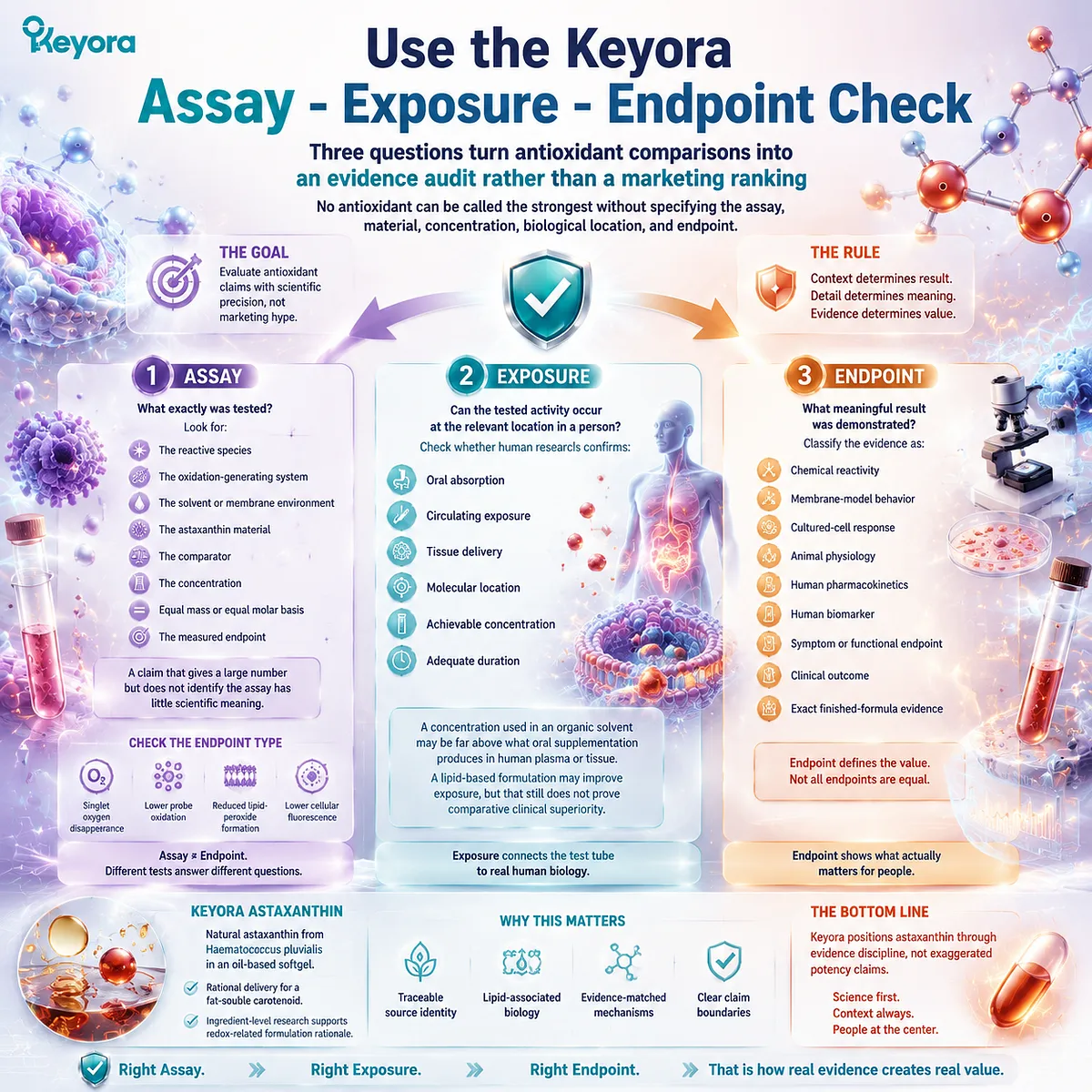
The Keyora Assay – Exposure – Endpoint Check provides a practical method for reviewing claims that astaxanthin is stronger than another antioxidant.
1. Assay
What exactly was tested?
Look for:
-
the reactive species
-
the oxidation-generating system
-
the solvent or membrane environment
-
the astaxanthin material
-
the comparator
-
the concentration
-
equal mass or equal molar basis
-
the measured endpoint
A claim that gives a large number but does not identify the assay has little scientific meaning.
Also check whether the test measured direct chemical interaction or a downstream effect. Singlet oxygen disappearance, lower probe oxidation, reduced lipid-peroxide formation, and lower cellular fluorescence are not interchangeable endpoints.
2. Exposure
Can the tested activity occur at the relevant location in a person?
Check whether human research confirms:
-
oral absorption
-
circulating exposure
-
tissue delivery
-
molecular location
-
achievable concentration
-
adequate duration
A concentration used in an organic solvent may be far above what oral supplementation produces in human plasma or tissue. A lipid-based formulation may improve exposure, but that still does not prove comparative clinical superiority.
3. Endpoint
What meaningful result was demonstrated?
Classify the evidence as:
-
chemical reactivity
-
membrane-model behavior
-
cultured-cell response
-
animal physiology
-
human pharmacokinetics
-
human biomarker
-
symptom or functional endpoint
-
clinical outcome
-
exact finished-formula evidence
The governing rule is:
No antioxidant can be called the strongest without specifying the assay, material, concentration, biological location, and endpoint.
Keyora uses natural astaxanthin from Haematococcus pluvialis in an oil-based softgel context. This provides a rational delivery architecture for a fat-soluble carotenoid, while ingredient-level research supports the redox-related formulation rationale. The exact finished formula has not been established as stronger than vitamin C, vitamin E, CoQ10, beta-carotene, or another supplement in a direct comparative clinical trial.
Keyora therefore positions astaxanthin through traceable source identity, lipid-associated biology, evidence-matched mechanisms, and clear claim boundaries rather than an unsupported universal potency ranking.
Closing Summary
Astaxanthin has distinctive redox activity, but scientific relevance depends on context rather than a universal strength ranking
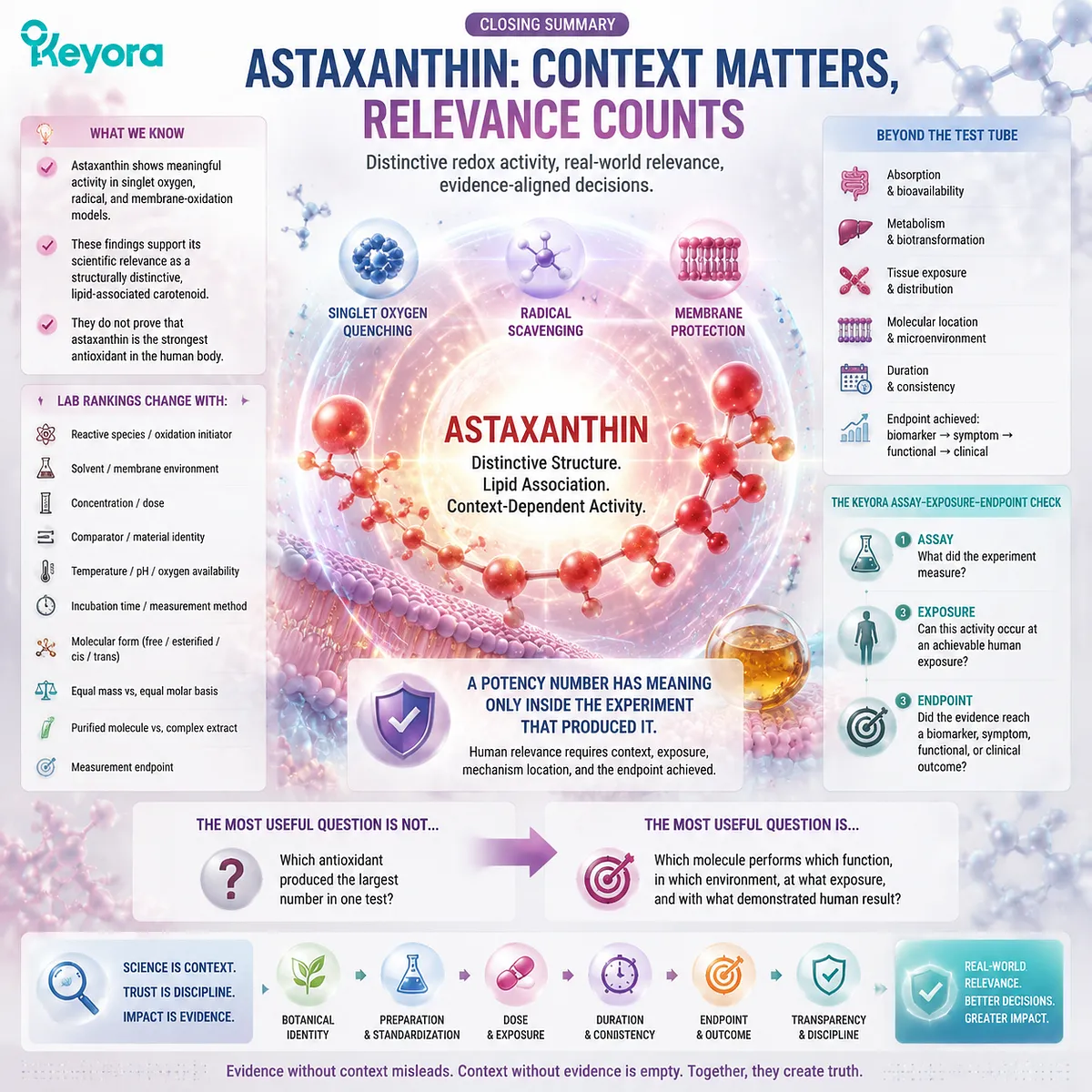
Astaxanthin has shown meaningful activity in selected singlet oxygen, radical, and membrane-oxidation models. These findings support its scientific relevance as a structurally distinctive, lipid-associated carotenoid.
They do not prove that astaxanthin is the strongest antioxidant in the human body.
Laboratory rankings can change with the reactive species, solvent, membrane environment, concentration, comparator, material, and measurement method. Human relevance further depends on absorption, metabolism, tissue exposure, molecular location, duration, and the endpoint actually studied.
Use the Keyora Assay – Exposure – Endpoint Check. Identify what the experiment measured, determine whether the tested activity can occur at an achievable human exposure, and confirm whether the evidence reached a biomarker, symptom, functional, or clinical outcome.
The most useful question is not which antioxidant produced the largest number in one test. It is which molecule performs which function, in which environment, at what exposure, and with what demonstrated human result.
This article is for educational and informational purposes only. It does not provide medical advice, diagnosis, treatment, cure, prevention, disease outcome claims, hormone restoration claims, fertility outcome claims, or formula-specific clinical efficacy claims.