
How Does Astaxanthin Interact With ROS and RNS?
Keyora Research Q&A Library
This is part of the Keyora Research Q&A Series, derived from Keyora Astaxanthin Research Journal Series.
Within the Keyora Astaxanthin Researcn framework, this Q&A translates complex astaxanthin biology into reader-friendly, evidence-bound answers, focusing on natural astaxanthin identity, molecular structure, antioxidant and redox mechanisms, membrane lipid interaction, mitochondrial resilience, inflammatory signaling pathways, human evidence interpretation, and the scientific principles behind responsible supplementation.
First published by Keyora Research Journal: www.keyorahealth.com
Direct Answer
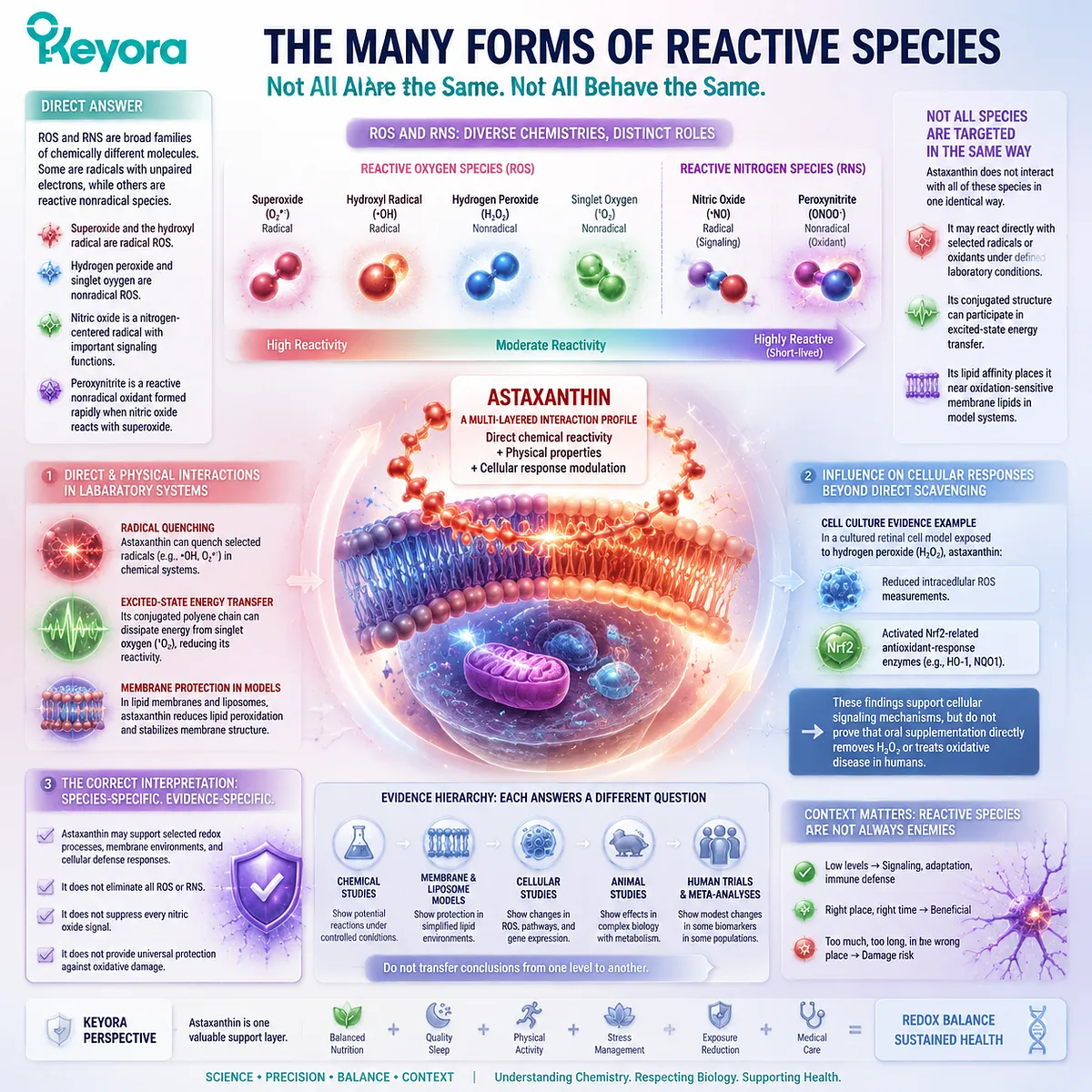
Reactive oxygen species, or ROS, and reactive nitrogen species, or RNS, are broad families of chemically different molecules.
Some are radicals with unpaired electrons, while others are reactive nonradical species.
Superoxide and the hydroxyl radical are radical ROS.
Hydrogen peroxide and singlet oxygen are nonradical ROS.
Nitric oxide is a nitrogen-centered radical with important signaling functions, while peroxynitrite is a reactive nonradical oxidant formed rapidly when nitric oxide reacts with superoxide.
Astaxanthin does not interact with all of these species in one identical way.
Under defined laboratory conditions, it may react directly with selected radicals or oxidants. Its conjugated molecular structure can also participate in excited-state energy transfer, while its lipid affinity places it near oxidation-sensitive membrane lipids in model systems.
Astaxanthin may additionally influence cellular responses rather than acting only through direct scavenging.
In a cultured retinal cell model exposed to hydrogen peroxide, astaxanthin affected intracellular ROS measurements and activated Nrf2-related antioxidant-response enzymes. That finding supports a cellular signaling mechanism, but it does not prove that oral supplementation directly removes hydrogen peroxide or treats oxidative disease in humans.
The correct interpretation is species-specific and evidence-specific.
Astaxanthin may support selected redox processes, membrane environments, and cellular defense responses, but it does not eliminate all ROS or RNS, suppress every nitric oxide signal, or provide universal protection against oxidative damage.
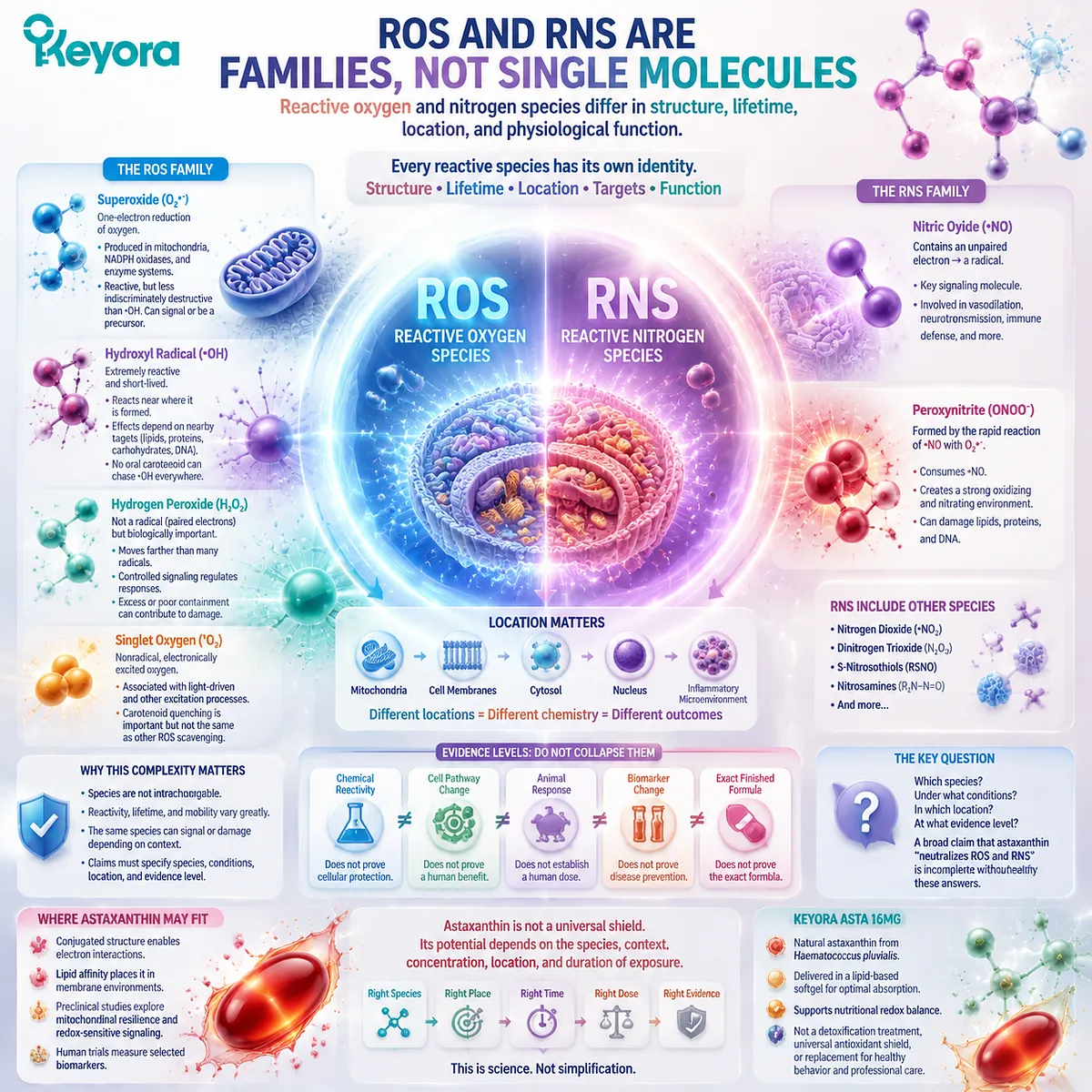
ROS and RNS Are Families, Not Single Molecules
Reactive oxygen and nitrogen species differ in structure, lifetime, location, and physiological function
The terms ROS and RNS are useful categories, but they can become misleading when written as though each describes one substance. Every reactive species has its own electronic structure, reaction partners, lifetime, mobility, and preferred biological targets.
Superoxide is produced when molecular oxygen receives one electron. It can arise through mitochondrial electron transfer, NADPH oxidases, and other enzyme systems. Superoxide is reactive, but it is less indiscriminately destructive than the hydroxyl radical and can participate in signaling or serve as a precursor to other species.
The hydroxyl radical is extremely reactive and short-lived. It tends to react close to the location where it is formed, which means its effects depend heavily on whether a nearby target is a membrane lipid, protein, carbohydrate, or nucleic acid. An orally consumed carotenoid should not be described as circulating through every tissue and intercepting every hydroxyl radical before a reaction occurs.
Hydrogen peroxide is not a radical because its electrons are paired. It is nevertheless biologically important because it can move farther than many short-lived radicals and modify selected protein targets. Controlled hydrogen peroxide signaling helps cells regulate responses, while excessive or poorly contained exposure can contribute to damage.
Singlet oxygen is another nonradical ROS. It is an electronically excited state of oxygen associated with light-driven and other excitation processes. Carotenoid quenching of singlet oxygen is an important research area, but it requires its own explanation and cannot be treated as identical to superoxide or hydroxyl-radical scavenging.
The nitrogen-related family is equally diverse. Nitric oxide contains an unpaired electron and is therefore a radical, but it has major physiological roles. Peroxynitrite is a different species created through the rapid reaction of nitric oxide with superoxide. The formation of peroxynitrite can simultaneously reduce available nitric oxide and create a stronger oxidizing and nitrating environment.
A broad claim that astaxanthin “neutralizes ROS and RNS” therefore omits the most important questions: which species, under what conditions, in which biological location, and at what evidence level?
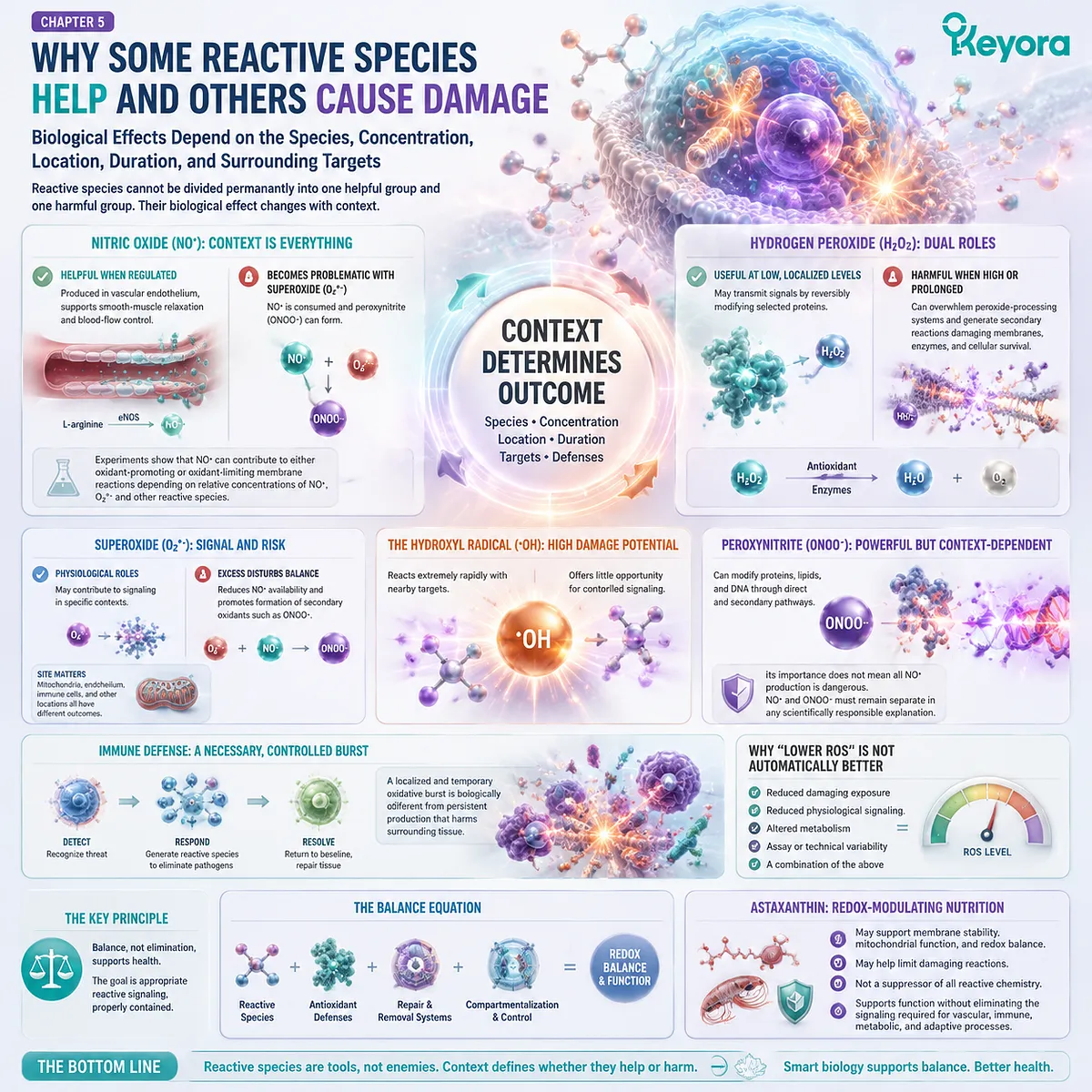
Why Some Reactive Species Help and Others Cause Damage
Biological effects depend on the species, concentration, location, duration, and surrounding targets
Reactive species cannot be divided permanently into one helpful group and one harmful group. Their biological effect changes with context.
Nitric oxide illustrates this clearly. When produced in a regulated vascular environment, it supports signaling related to smooth-muscle relaxation and blood-flow control. Its interaction with superoxide changes the situation because nitric oxide can be consumed and peroxynitrite can form. Experiments have shown that nitric oxide can contribute to either oxidant-promoting or oxidant-limiting membrane reactions depending on the relative concentrations of nitric oxide, superoxide, and other reactive species.
Hydrogen peroxide also has dual roles. A limited, localized increase may transmit a signal by reversibly modifying selected proteins. Higher or prolonged exposure can overwhelm peroxide-processing systems and generate secondary reactions that affect membranes, enzymes, and cellular survival.
Superoxide may contribute to physiological signaling, but excessive production can disturb nitric oxide availability and support the formation of secondary oxidants. The hydroxyl radical offers much less opportunity for controlled signaling because it reacts so rapidly with nearby targets.
Peroxynitrite can modify proteins, lipids, and other biological molecules through direct and secondary reaction pathways. Its importance does not mean that all nitric oxide production is dangerous. Nitric oxide and peroxynitrite must remain separate in any scientifically responsible explanation.
The same rule applies to immune defense. Immune cells deliberately generate reactive species to help respond to microorganisms. A localized and temporary oxidative burst is biologically different from persistent production that affects surrounding tissue.
This is why “lower ROS” cannot automatically be treated as a universal health objective. A measured decline may represent reduced damaging exposure, reduced physiological signaling, altered metabolism, a technical feature of the assay, or some combination of these factors.
Astaxanthin should therefore be understood as a possible redox-modulating nutrient rather than a suppressor of all reactive chemistry. Its value depends on whether it limits damaging reactions without being falsely presented as eliminating the signaling processes required for normal vascular, immune, metabolic, and adaptive functions.
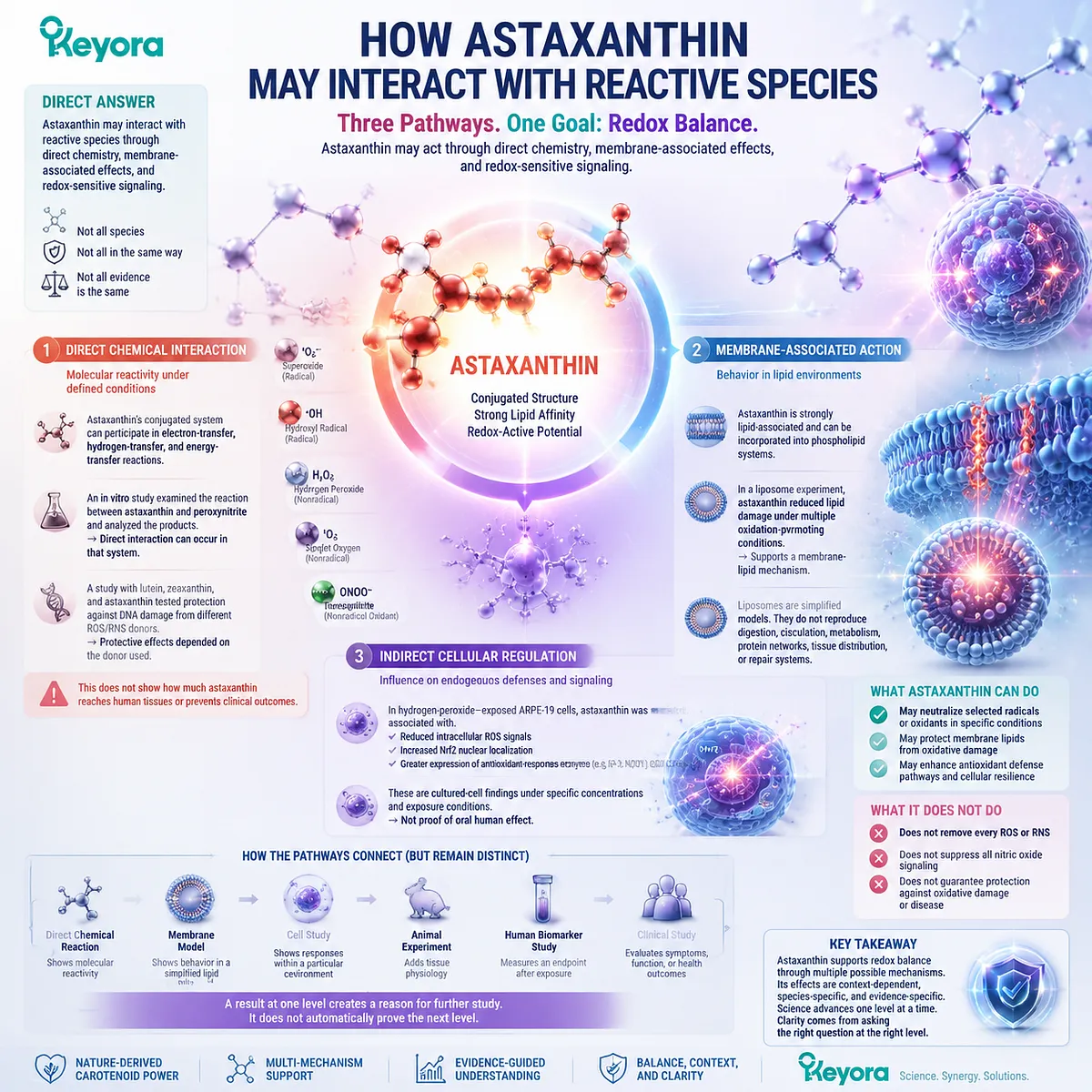
How Astaxanthin May Interact With Reactive Species
Astaxanthin may act through direct chemistry, membrane-associated effects, and redox-sensitive signaling
The first possible pathway is direct chemical interaction. Astaxanthin’s conjugated structure can participate in electron-related, hydrogen-transfer, and energy-transfer reactions under selected experimental conditions. The rate and outcome depend on the reactive species, solvent, astaxanthin concentration, oxygen environment, isomeric form, and surrounding lipids.
An in vitro investigation specifically examined the reaction between astaxanthin and peroxynitrite and analyzed the resulting reaction products. This establishes that direct chemical interaction can occur in that experimental system. It does not establish how much orally consumed astaxanthin reaches a particular human tissue, whether it encounters peroxynitrite at a sufficient concentration, or whether the reaction prevents a clinical outcome.
Another laboratory study examined lutein, zeaxanthin, and astaxanthin against DNA damage generated by different reactive oxygen and nitrogen species donors. The protective results depended on which donor was used, reinforcing that carotenoid activity is not identical across every reactive system.
The second pathway is membrane-associated action. Astaxanthin is strongly lipid-associated, so it can be incorporated into simplified phospholipid systems. In a liposome experiment, astaxanthin reduced lipid damage initiated through several oxidation-promoting conditions. This supports a membrane-lipid mechanism, but liposomes do not reproduce human digestion, circulation, cellular metabolism, protein networks, tissue distribution, or repair systems.
The third pathway is indirect cellular regulation. Astaxanthin may influence endogenous enzymes and redox-sensitive signaling rather than reacting personally with each oxidant molecule. In hydrogen-peroxide-exposed ARPE-19 cells, astaxanthin was associated with reduced intracellular ROS signals, increased Nrf2 nuclear localization, and greater expression of several antioxidant-response enzymes. These were cultured-cell findings using specific concentrations and exposure conditions, not proof of an oral human effect.
These pathways must remain separate:
-
Direct chemical reaction shows molecular reactivity
-
A membrane model shows behavior in a simplified lipid environment
-
A cell study shows responses within a particular cell system
-
An animal experiment adds tissue physiology
-
A human biomarker study measures an endpoint after exposure
-
A clinical study evaluates symptoms, function, or health outcomes
A result at one level creates a reason for further study. It does not automatically prove the next level.
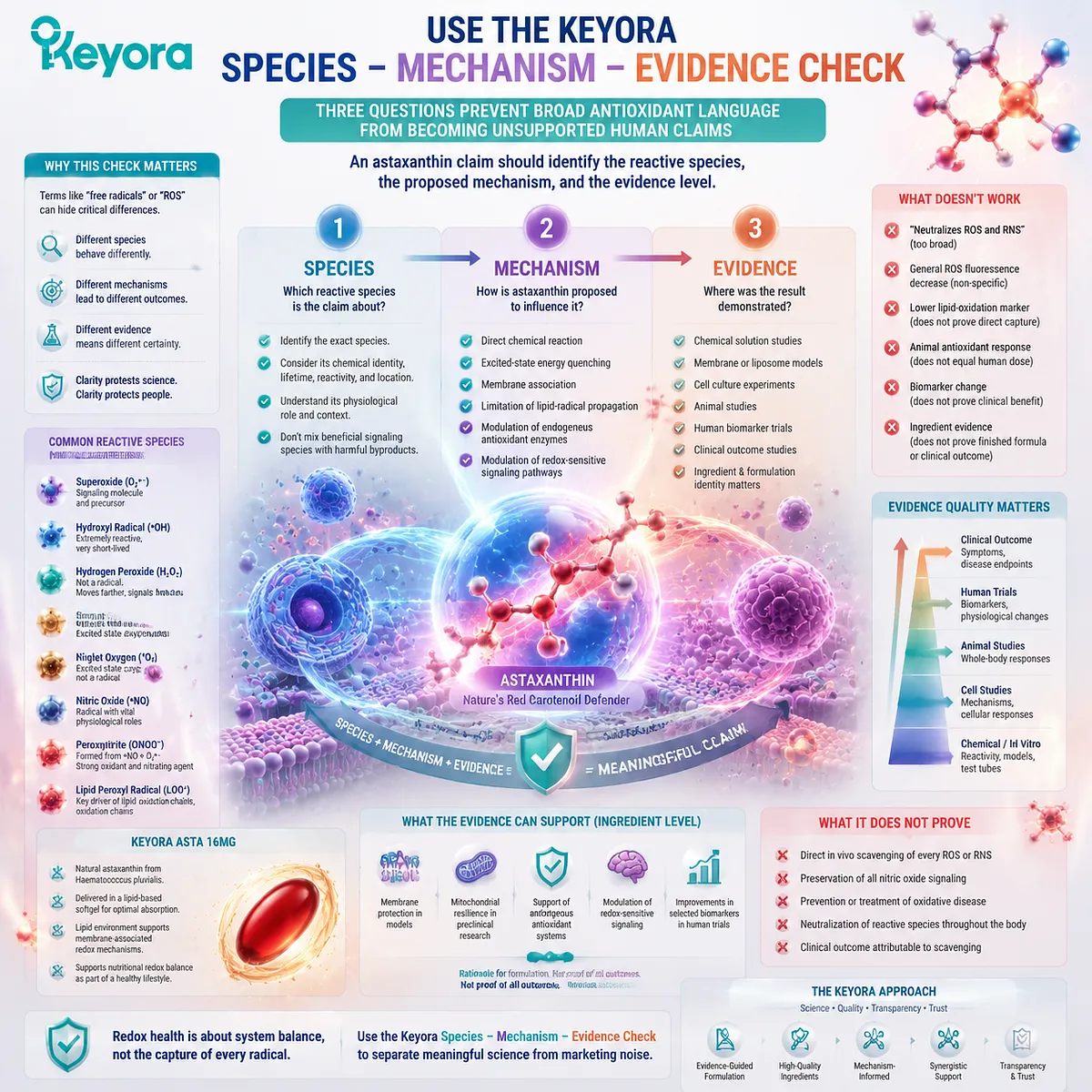
Use the Keyora Species – Mechanism – Evidence Check
Three questions prevent broad antioxidant language from becoming unsupported human claims
The Keyora Species – Mechanism – Evidence Check provides a practical way to evaluate statements about astaxanthin, ROS, and RNS.
1. Species
Identify the exact reactive species.
Is the claim about superoxide, hydroxyl radical, hydrogen peroxide, nitric oxide, peroxynitrite, singlet oxygen, or a lipid peroxyl radical? A label that says only “free radicals” or “ROS” may be hiding important chemical differences.
The species also needs biological context. Nitric oxide involved in vascular signaling should not be interpreted in the same way as peroxynitrite formed during a disturbed superoxide and nitric oxide balance.
2. Mechanism
Determine how astaxanthin is proposed to influence the species or its consequences.
Possible mechanisms include:
-
direct chemical reaction
-
excited-state energy quenching
-
membrane association
-
limitation of lipid-radical propagation
-
changes in endogenous antioxidant enzymes
-
modulation of redox-sensitive signaling
A decrease in a general ROS-sensitive fluorescent signal does not identify which exact species changed. A lower lipid-oxidation marker does not prove that astaxanthin directly captured the initiating oxidant.
3. Evidence
Identify where the result was demonstrated.
Was it a chemical solution, membrane model, cultured cell, animal, human biomarker trial, or clinical outcome study? Was the study material natural algal astaxanthin, a purified reference material, an esterified preparation, a synthetic material, or an inadequately described ingredient?
The governing rule is:
An astaxanthin claim should identify the reactive species, the proposed mechanism, and the evidence level instead of treating all ROS and RNS as one target.
Keyora uses natural astaxanthin from Haematococcus pluvialis in a lipid-based softgel context. The lipid environment is compatible with studying membrane-associated redox mechanisms, but the exact Keyora finished formula has not established direct in vivo scavenging of every ROS or RNS or a clinical endpoint attributable to such scavenging.
Ingredient-level research can support the formulation rationale. It cannot prove that the complete formula neutralizes reactive species throughout the body, preserves every nitric oxide signal, prevents oxidative disease, or produces a finished-formula clinical outcome.
Closing Summary
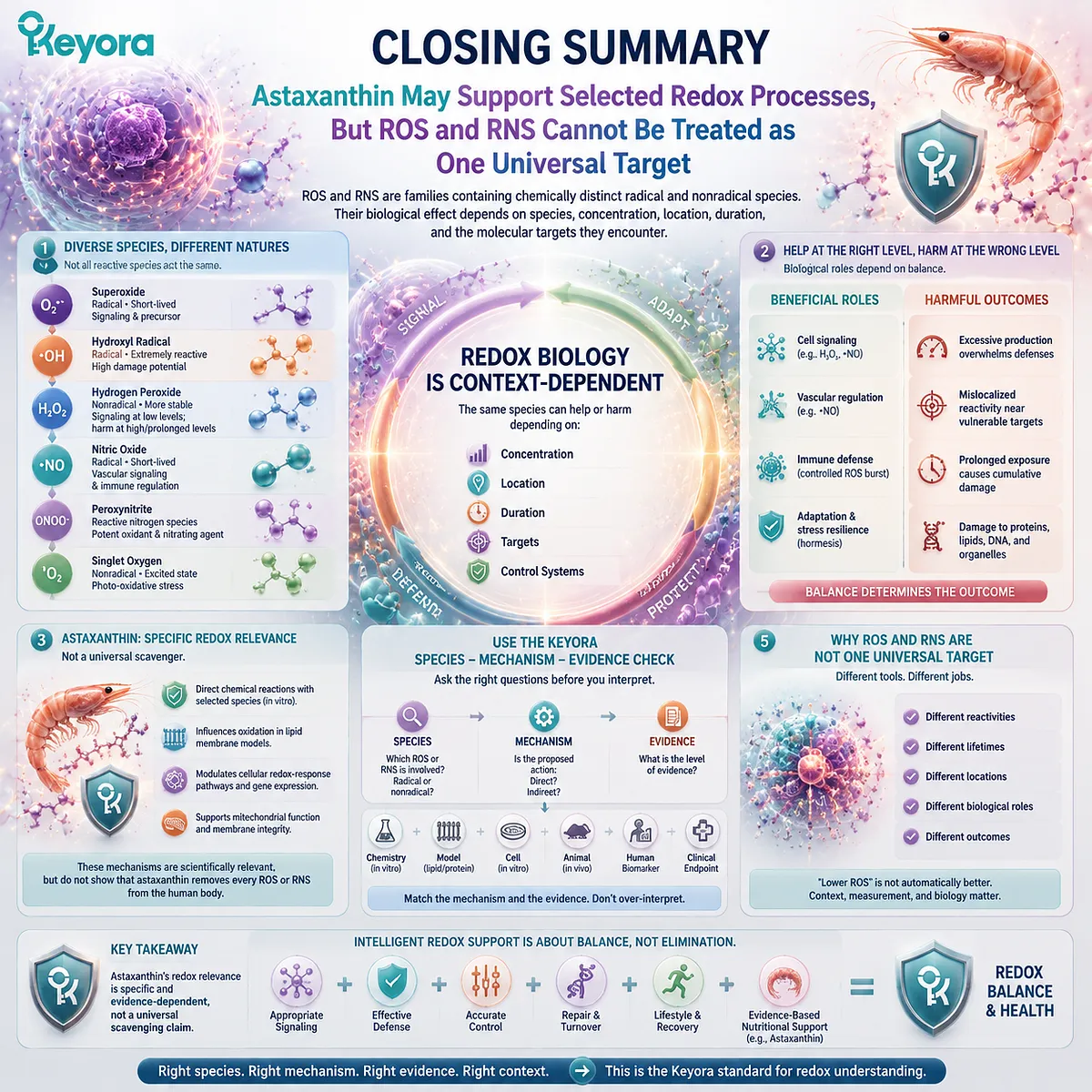
Astaxanthin may support selected redox processes, but ROS and RNS cannot be treated as one universal target
ROS and RNS are families containing chemically distinct radical and nonradical species. Superoxide, hydroxyl radical, hydrogen peroxide, nitric oxide, peroxynitrite, and singlet oxygen differ in structure, location, lifetime, and biological function.
Some reactive species support normal signaling, vascular regulation, immunity, and adaptation. Others can contribute to molecular damage when their production, location, or duration exceeds biological control.
Astaxanthin may interact with selected species through direct chemical reactions, may influence oxidation within lipid membrane models, and may affect cellular redox-response pathways. These mechanisms are scientifically relevant, but they do not show that astaxanthin removes every ROS or RNS from the human body.
Use the Keyora Species – Mechanism – Evidence Check.
Identify the species, define whether the proposed action is direct or indirect, and confirm whether the result came from chemistry, a model, a cell, an animal, a human biomarker, or a clinical endpoint.
Astaxanthin’s redox relevance is specific and evidence-dependent, not a universal scavenging claim.
This article is for educational and informational purposes only. It does not provide medical advice, diagnosis, treatment, cure, prevention, disease outcome claims, hormone restoration claims, fertility outcome claims, or formula-specific clinical efficacy claims.