
What Is Oxidative Stress and How Does Astaxanthin Relate to It?
Keyora Research Q&A Library
This is part of the Keyora Research Q&A Series, derived from Keyora Astaxanthin Research Journal Series.
Within the Keyora Astaxanthin Researcn framework, this Q&A translates complex astaxanthin biology into reader-friendly, evidence-bound answers, focusing on natural astaxanthin identity, molecular structure, antioxidant and redox mechanisms, membrane lipid interaction, mitochondrial resilience, inflammatory signaling pathways, human evidence interpretation, and the scientific principles behind responsible supplementation.
First published by Keyora Research Journal: www.keyorahealth.com
Direct Answer
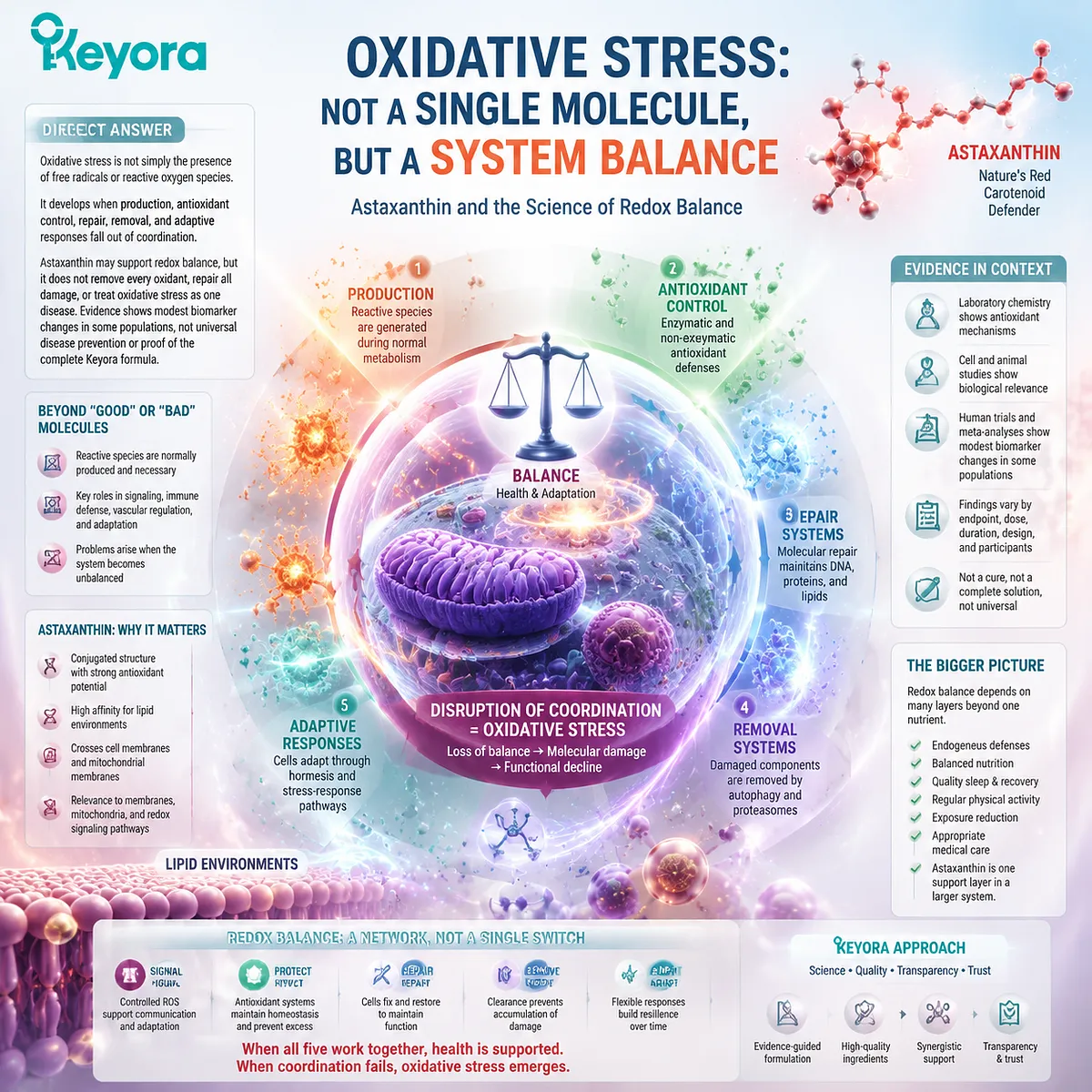
Oxidative stress is not simply the presence of free radicals or reactive oxygen species. These compounds are produced during normal metabolism and participate in signaling, immune defense, vascular regulation, and adaptation.
Oxidative stress develops when reactive species production, antioxidant control, molecular repair, damaged component removal, and adaptive responses no longer remain appropriately coordinated.
Modern redox biology therefore distinguishes controlled physiological signaling from oxidative conditions that contribute to molecular damage.
Astaxanthin relates to oxidative stress because its conjugated molecular structure and affinity for lipid environments make it relevant to selected reactive species, oxidation sensitive membrane lipids, mitochondrial redox conditions, and redox sensitive cellular signaling.
These mechanisms explain why astaxanthin is studied as a nutritional factor that may support redox balance.
This does not mean that astaxanthin removes every oxidant, repairs all oxidative damage, or treats oxidative stress as though it were one disease.
Laboratory chemistry, membrane models, cellular signaling studies, animal experiments, human biomarkers, and clinical outcomes answer different scientific questions.
Human trials and meta analyses have reported modest changes in selected oxidative and inflammatory biomarkers in some populations, but findings vary by endpoint, study design, dose, duration, and participant characteristics. The evidence does not establish universal disease prevention or prove the complete Keyora formula.
Astaxanthin is best understood as one possible support layer within a much larger system that also depends on endogenous defenses, recovery, sleep, nutrition, physical activity, exposure reduction, and appropriate medical care.
What Oxidative Stress Actually Means
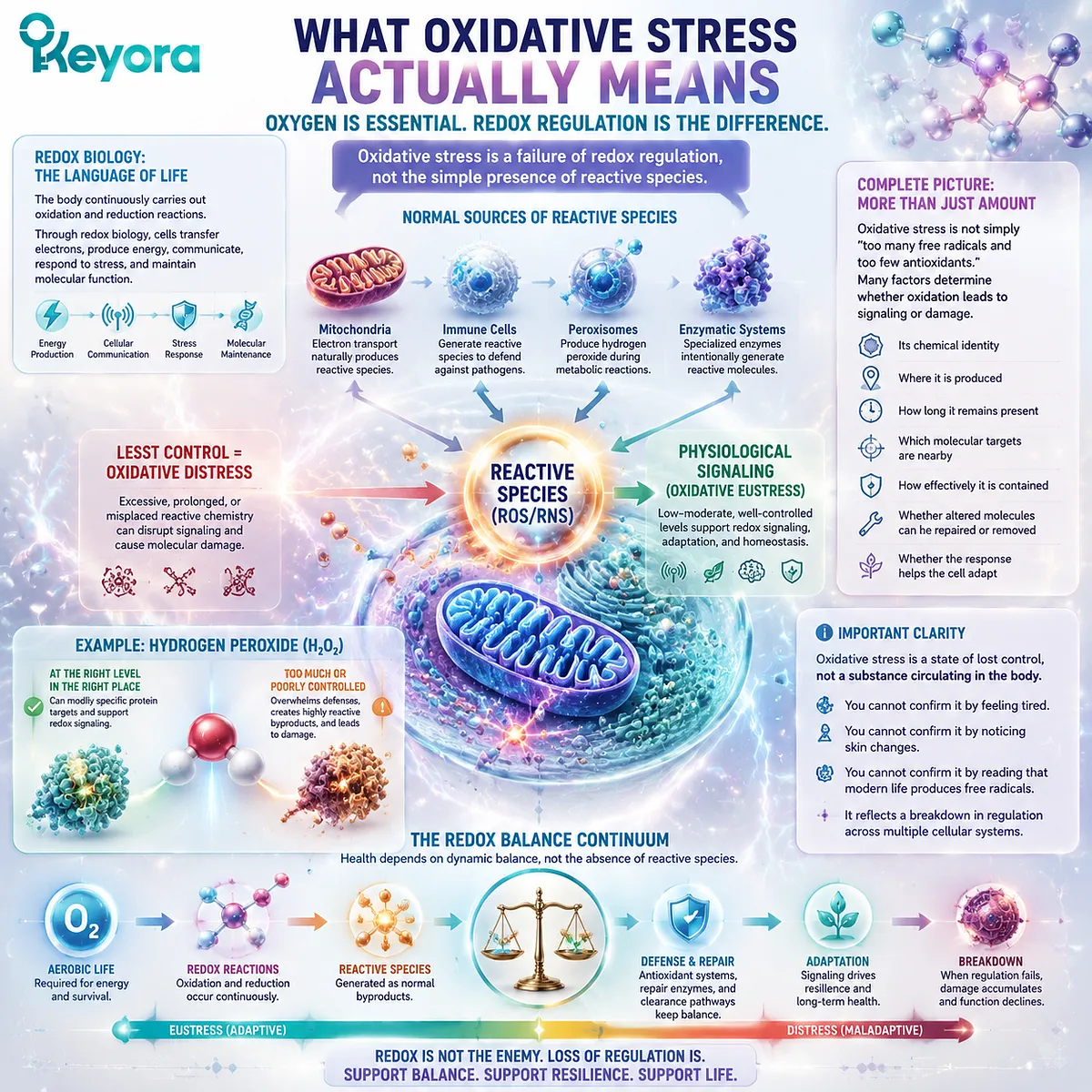
Oxidative stress is a failure of redox regulation rather than the simple presence of reactive species
The body continuously carries out oxidation and reduction reactions.
Together, these reactions form redox biology, a system through which cells transfer electrons, produce energy, communicate, respond to stress, and maintain molecular function.
Reactive oxygen species are normal products of aerobic life.
Mitochondria, immune cells, peroxisomes, and specialized enzymes can generate them.
Some reactive species act locally as signaling molecules, while others may modify nearby lipids, proteins, or nucleic acids when their production becomes excessive or poorly controlled.
This is why the older statement that oxidative stress means “too many free radicals and too few antioxidants” is incomplete. The amount of a reactive species matters, but so do:
-
its chemical identity
-
where it is produced
-
how long it remains present
-
which molecular targets are nearby
-
how effectively it is contained
-
whether altered molecules can be repaired or removed
-
whether the response helps the cell adapt
The term oxidative eustress has been used for regulated oxidant activity that supports physiological redox signaling.
Oxidative distress describes conditions in which elevated or misplaced reactive chemistry contributes to disrupted signaling and molecular damage. These concepts are not rigid diagnostic categories, but they help show that oxidation is not automatically harmful.
Hydrogen peroxide provides a useful example.
At controlled concentrations and in specific cellular locations, it can participate in redox signaling by modifying selected protein targets.
When production becomes excessive, removal is inadequate, or highly reactive secondary products form, the result may shift toward damage rather than communication.
Oxidative stress is therefore a state of lost control, not a substance circulating through the body. A person cannot confirm it merely by feeling tired, noticing skin changes, or reading that modern life produces free radicals.
How the Body Controls and Repairs Oxidative Reactions
Antioxidant enzymes, redox buffers, repair systems, and cellular turnover work together to preserve balance
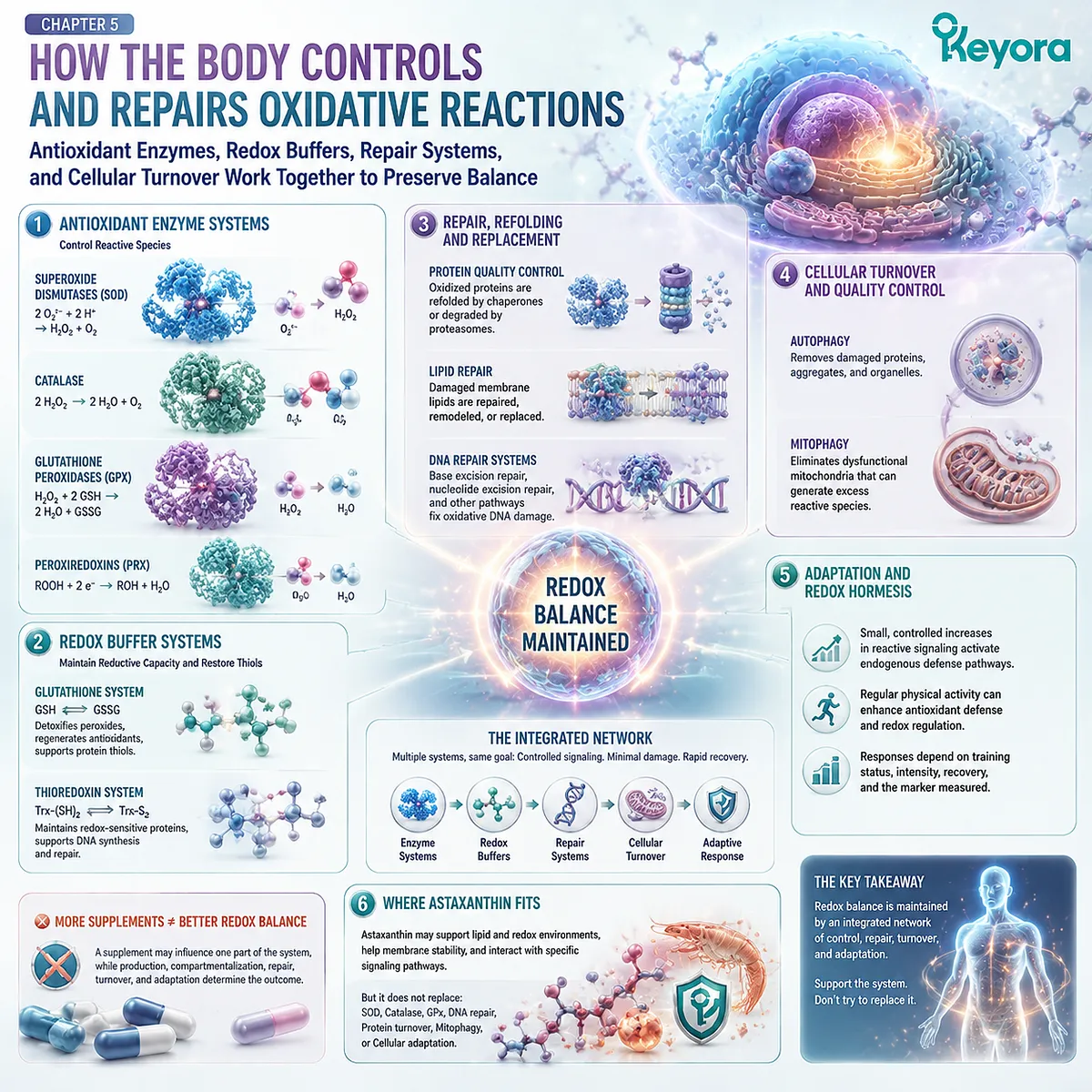
The body does not rely on one antioxidant molecule. It uses interconnected systems that regulate reactive species in different cellular locations.
Superoxide dismutases convert superoxide into hydrogen peroxide.
Catalase, glutathione peroxidases, and peroxiredoxins help process hydrogen peroxide and related peroxides. These enzymes do not simply switch oxidation off. They influence the concentration, timing, and location of reactive species so that signaling can occur without becoming uncontrolled.
Glutathione and thioredoxin systems provide additional redox control. They help maintain protein thiol groups, support peroxide processing, and restore selected molecules after reversible oxidation. Their activity depends on cellular metabolism and regeneration rather than on a fixed reserve that is either present or absent.
Control alone is not enough. Biological molecules are continuously damaged, repaired, replaced, or removed.
Oxidized proteins may be refolded or degraded.
Damaged membrane lipids may be repaired, remodeled, or replaced.
DNA repair systems address selected oxidative modifications.
Autophagy can remove damaged cellular components, while mitophagy helps eliminate mitochondria that no longer maintain adequate quality.
Redox regulation and cellular quality control are therefore closely connected.
Adaptation is another part of the system.
A temporary increase in reactive signaling can stimulate cellular defense responses and prepare tissues for later stress.
Regular physical activity can support aspects of antioxidant defense and redox regulation, although the response depends on training status, exercise intensity, recovery, and the marker being measured.
This explains why adding more antioxidant supplements does not automatically improve redox balance.
A supplement may interact with one part of the system, while production, compartmentalization, repair, turnover, and adaptation continue to determine the final outcome.
Astaxanthin should be positioned within this network. It may support selected lipid and redox environments, but it does not replace superoxide dismutase, catalase, glutathione systems, DNA repair, protein turnover, or mitochondrial quality control.
When Redox Balance Is Lost
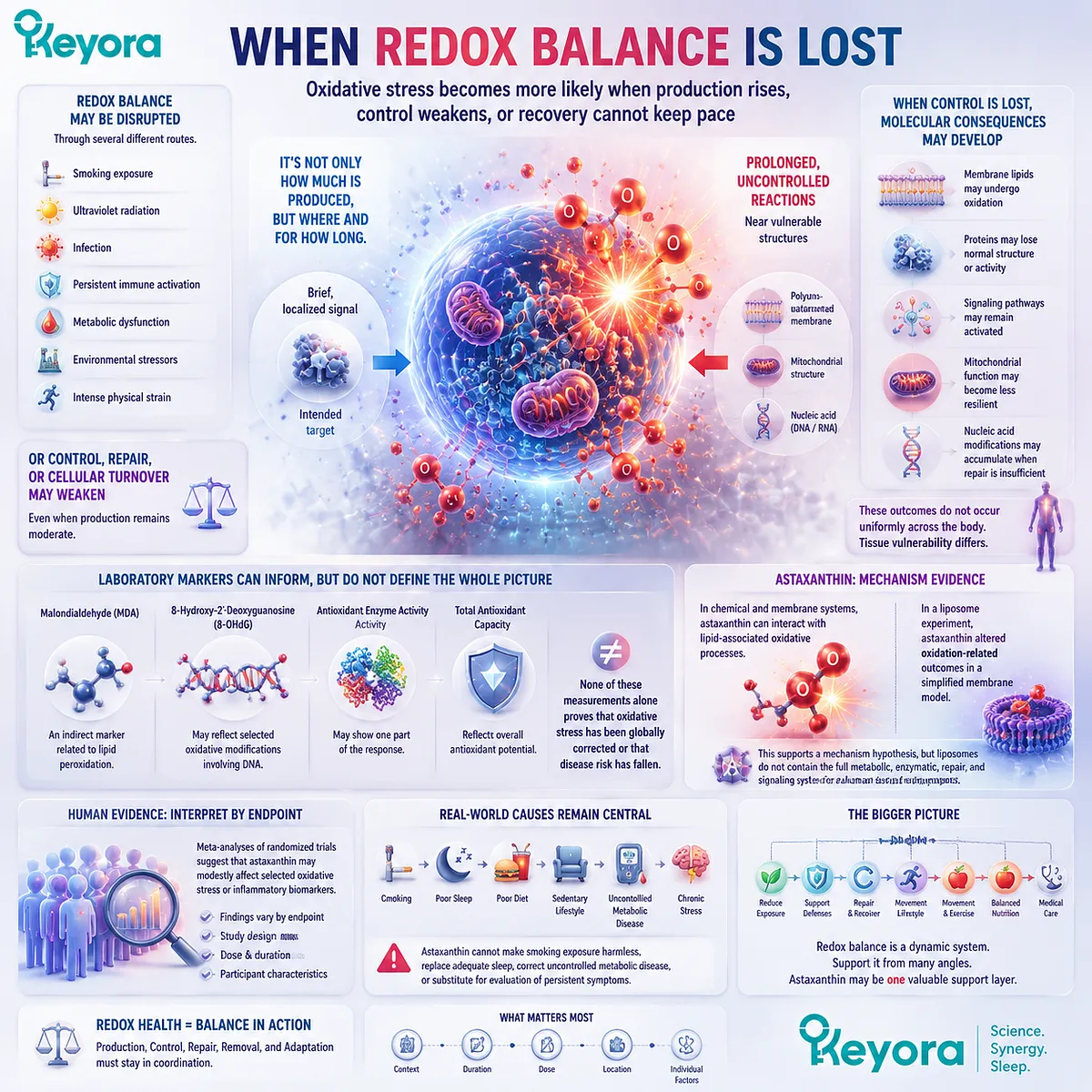
Oxidative stress becomes more likely when production rises, control weakens, or recovery cannot keep pace
Redox balance may be disrupted through several different routes.
Reactive species production may increase because of smoking exposure, ultraviolet radiation, infection, persistent immune activation, metabolic dysfunction, environmental stressors, or unusually intense physical strain.
In other situations, production may remain moderate while antioxidant control, repair capacity, or cellular turnover becomes less effective.
Location also matters.
A brief reactive signal produced beside its intended protein target is different from prolonged reactive chemistry occurring near a polyunsaturated membrane, mitochondrial structure, or nucleic acid.
When control is lost, several molecular consequences may develop:
-
membrane lipids may undergo oxidation
-
proteins may lose normal structure or activity
-
signaling pathways may remain activated
-
mitochondrial function may become less resilient
-
nucleic acid modifications may accumulate when repair is insufficient
These outcomes do not occur uniformly across the body. Tissues differ in oxygen use, lipid composition, antioxidant systems, metabolic demand, blood supply, and repair capacity.
A laboratory marker can provide useful information, but it does not measure the entire redox state of every organ.
Malondialdehyde may be used as an indirect marker related to lipid peroxidation.
8 hydroxy 2 deoxyguanosine may reflect selected oxidative modifications involving DNA.
Antioxidant enzyme activity may show one part of the response.
None of these measurements alone proves that oxidative stress has been globally corrected or that disease risk has fallen.
Astaxanthin has been studied in chemical and membrane systems because it can interact with lipid associated oxidative processes.
In a liposome experiment, astaxanthin altered oxidation related outcomes in a simplified membrane model. This supports a mechanism hypothesis, but liposomes do not contain the full metabolic, enzymatic, repair, and signaling systems of a human tissue.
Human evidence must therefore be interpreted by the exact endpoint.
Meta analyses of randomized trials suggest that astaxanthin may modestly affect selected oxidative stress or inflammatory markers, but the evidence is heterogeneous and does not support a universal claim that supplementation eliminates oxidative stress.
Lifestyle and clinical causes remain central.
Astaxanthin cannot make smoking exposure harmless, replace adequate sleep, correct uncontrolled metabolic disease, or substitute for evaluation of persistent symptoms.
Use the Keyora Production – Control – Recovery Check
Three questions clarify where astaxanthin may support redox biology and where evidence remains limited
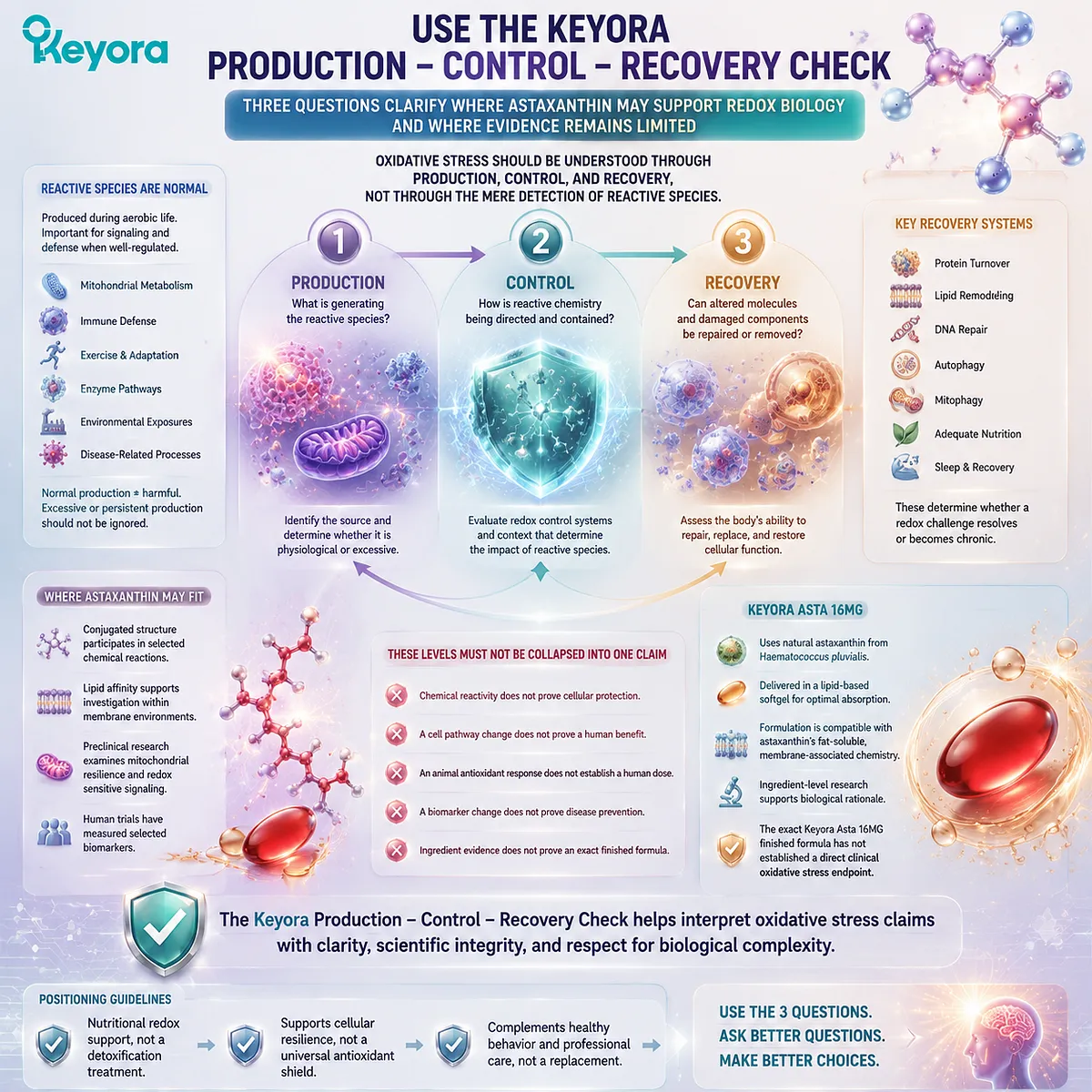
The Keyora Production – Control – Recovery Check provides a practical way to interpret oxidative stress claims.
1. Production
What is generating the reactive species?
The source may be normal mitochondrial metabolism, immune defense, exercise, an enzyme pathway, environmental exposure, or a disease related process. Normal production should not automatically be labeled harmful, while persistent excessive production should not be ignored.
2. Control
How is reactive chemistry being directed and contained?
Consider antioxidant enzymes, glutathione and thioredoxin systems, cellular compartments, reaction partners, exposure duration, and the tissue involved. A supplement represents only one possible influence on this larger network.
3. Recovery
Can altered molecules and damaged cellular components be repaired, removed, or replaced?
Protein turnover, lipid remodeling, DNA repair, autophagy, mitophagy, adequate nutrition, sleep, and recovery all affect whether a temporary redox challenge resolves or persists.
The governing rule is:
Oxidative stress should be understood through production, control, and recovery, not through the mere detection of reactive species.
Astaxanthin may fit at several points. Its conjugated structure can participate in selected chemical reactions. Its lipid affinity supports investigation within membrane environments. Preclinical research has examined mitochondrial resilience and redox sensitive signaling, while human trials have measured selected biomarkers.
These levels must not be collapsed into one claim:
-
chemical reactivity does not prove cellular protection
-
a cell pathway change does not prove a human benefit
-
an animal antioxidant response does not establish a human dose
-
a biomarker change does not prove disease prevention
-
ingredient evidence does not prove an exact finished formula
Keyora uses natural astaxanthin from Haematococcus pluvialis in a lipid based softgel context. This formulation is compatible with astaxanthin’s fat soluble and membrane associated chemistry.
Ingredient level research supports the biological rationale, but the exact Keyora Asta 16MG finished formula has not established a direct clinical oxidative stress endpoint.
The product should therefore be positioned as nutritional redox support rather than a detoxification treatment, universal antioxidant shield, or replacement for healthy behavior and professional care.
Closing Summary
Oxidative stress reflects lost redox control, while astaxanthin provides nutritional support rather than a universal solution
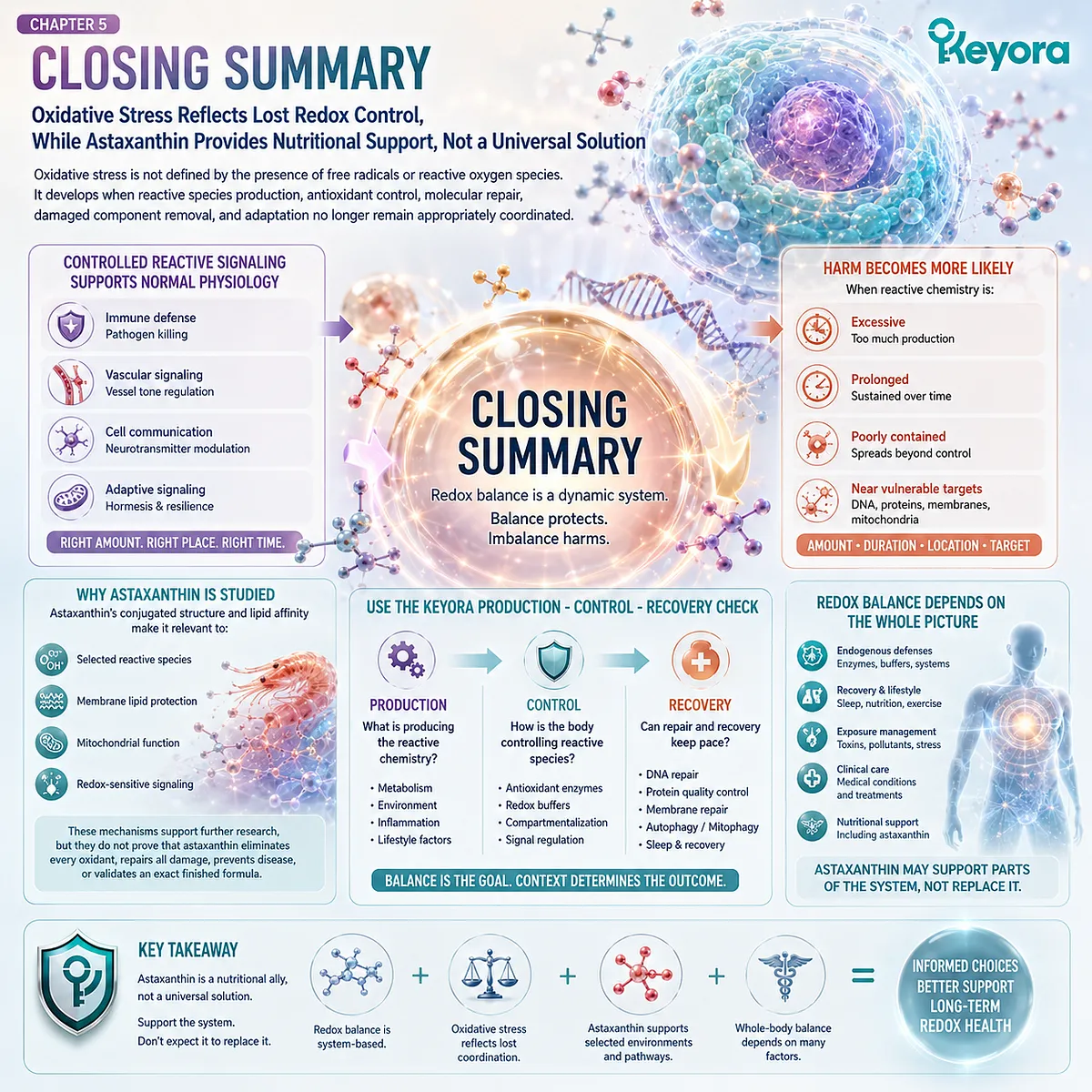
Oxidative stress is not defined by the presence of free radicals or reactive oxygen species. It develops when reactive species production, antioxidant control, molecular repair, damaged component removal, and adaptation no longer remain appropriately coordinated.
Controlled reactive signaling supports normal physiology.
Harm becomes more likely when reactive chemistry is excessive, prolonged, poorly contained, or located beside vulnerable molecular targets.
Astaxanthin is studied because its conjugated structure and lipid affinity make it relevant to selected reactive species, membrane lipids, mitochondrial conditions, and redox sensitive signaling.
These mechanisms support further research, but they do not prove that astaxanthin eliminates every oxidant, repairs all damage, prevents disease, or validates an exact finished formula.
Use the Keyora Production – Control – Recovery Check.
Ask what is producing the reactive chemistry, how the body is controlling it, and whether repair and recovery can keep pace.
Astaxanthin may support parts of this system, but redox balance still depends on endogenous defenses, recovery, lifestyle, exposure management, and appropriate clinical care.
This article is for educational and informational purposes only. It does not provide medical advice, diagnosis, treatment, cure, prevention, disease outcome claims, hormone restoration claims, fertility outcome claims, or formula-specific clinical efficacy claims.