
What Are Free Radicals – and Are They Always Harmful?
Keyora Research Q&A Library
This is part of the Keyora Research Q&A Series, derived from Keyora Astaxanthin Research Journal Series.
Within the Keyora Astaxanthin Researcn framework, this Q&A translates complex astaxanthin biology into reader-friendly, evidence-bound answers, focusing on natural astaxanthin identity, molecular structure, antioxidant and redox mechanisms, membrane lipid interaction, mitochondrial resilience, inflammatory signaling pathways, human evidence interpretation, and the scientific principles behind responsible supplementation.
First published by Keyora Research Journal: www.keyorahealth.com
Direct Answer
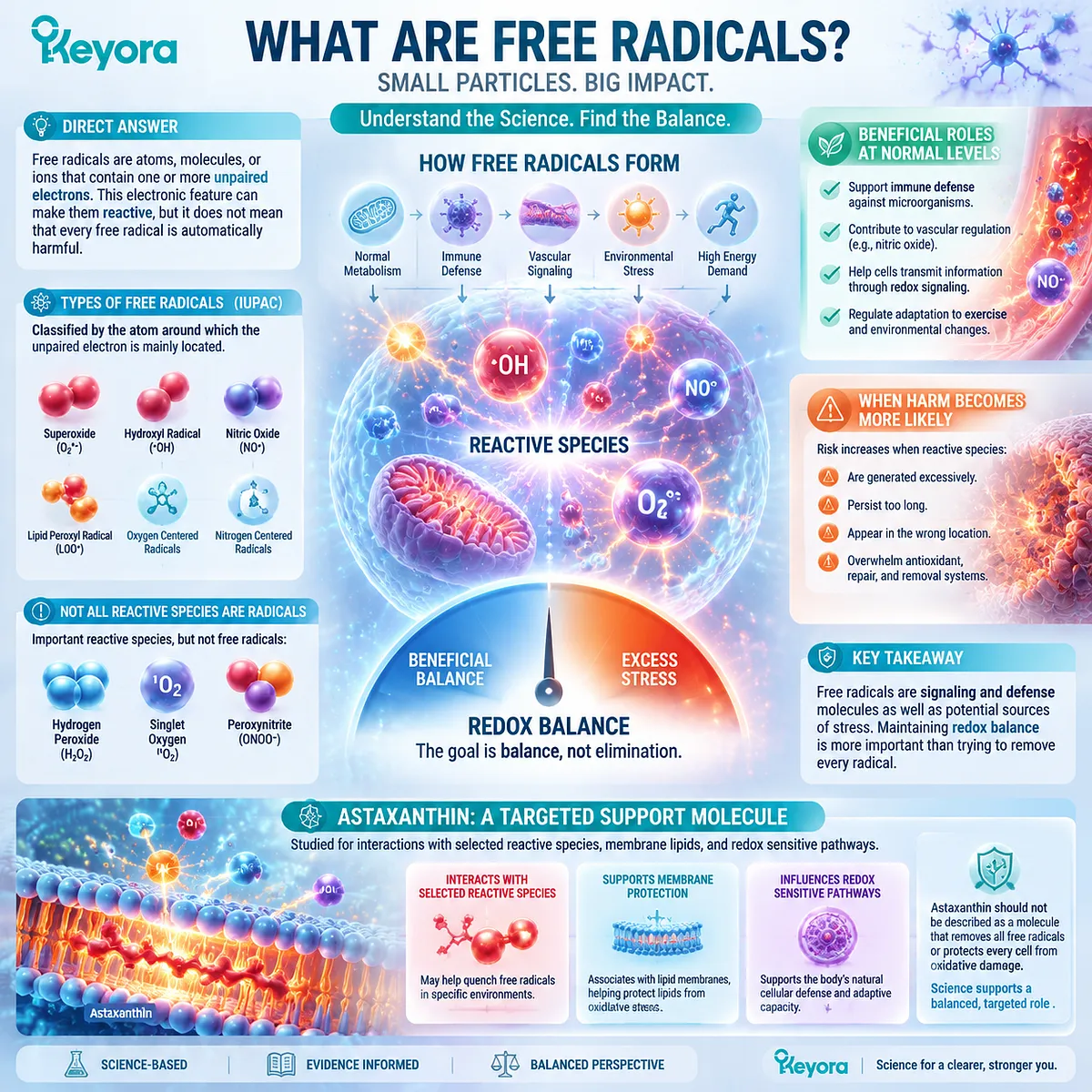
Free radicals are atoms, molecules, or ions that contain one or more unpaired electrons. This electronic feature can make them reactive, but it does not mean that every free radical is automatically harmful.
IUPAC classifies radicals according to the atom around which the unpaired electron is mainly located, including oxygen centered and nitrogen centered radicals.
Examples include superoxide, the hydroxyl radical, nitric oxide, and lipid peroxyl radicals.
However, not every reactive oxygen or nitrogen species is a free radical.
Hydrogen peroxide, singlet oxygen, and peroxynitrite are important reactive species, but they do not belong to the same radical category.
The body produces reactive species during normal metabolism, immune defense, vascular signaling, and adaptation to changing energy demands.
Nitric oxide contributes to vascular regulation, while controlled hydrogen peroxide signaling can modify selected proteins and help cells transmit information.
Human immune cells also generate reactive species during the oxidative burst associated with responses to microorganisms.
Harm becomes more likely when reactive species are generated excessively, persist too long, appear in the wrong cellular location, or overwhelm antioxidant, repair, and removal systems. The goal is therefore not to eliminate every radical. It is to maintain redox balance.
Astaxanthin is studied for interactions with selected reactive species, membrane lipids, and redox sensitive pathways. It should not be described as a molecule that removes all free radicals or protects every cell from oxidative damage.
What Free Radicals Actually Are
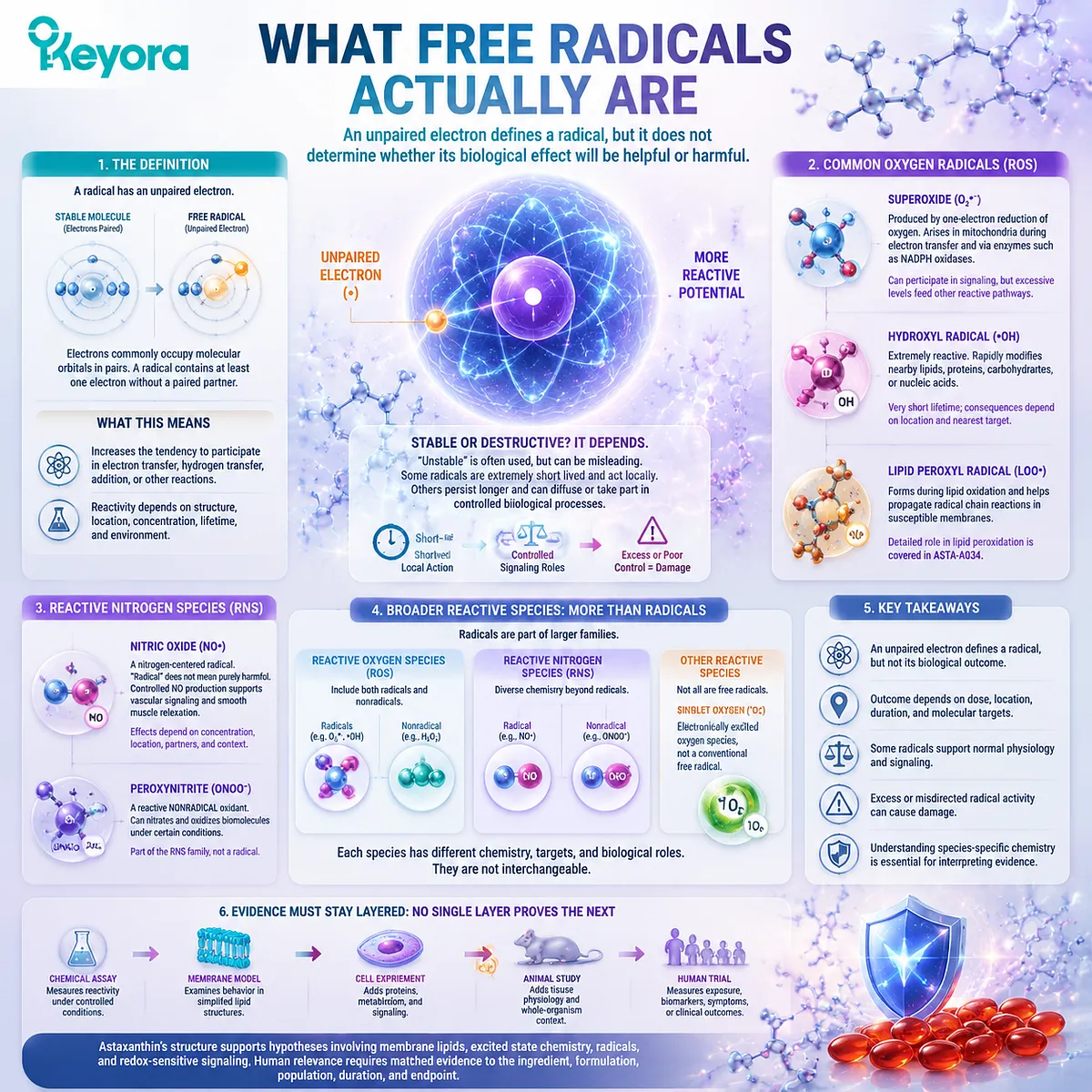
An unpaired electron defines a radical, but it does not determine whether its biological effect will be helpful or harmful
Electrons commonly occupy molecular orbitals in pairs. A radical contains at least one electron without a paired partner. This can increase the molecule’s tendency to participate in electron transfer, hydrogen transfer, addition, or other chemical reactions.
The word “unstable” is often used in consumer explanations, but it can be misleading when treated as a synonym for “always destructive.” Some radicals are extremely short lived and react close to where they are formed. Others can persist long enough to diffuse or participate in controlled biological processes.
Superoxide is an oxygen centered radical produced through one electron reduction of oxygen. It can arise during mitochondrial electron transfer and through enzymes such as NADPH oxidases. Superoxide may participate in signaling, but it can also contribute to other reactive pathways when production becomes excessive or poorly controlled.
The hydroxyl radical is different. It is extremely reactive and can rapidly modify nearby lipids, proteins, carbohydrates, or nucleic acids. Because its lifetime is short, its biological consequences are strongly affected by where it is generated and which molecular target is closest.
Nitric oxide is a nitrogen centered radical. The word “radical” does not make nitric oxide purely harmful. Controlled nitric oxide production participates in vascular signaling, including pathways that support smooth muscle relaxation. Its effects depend on concentration, location, reaction partners, and the physiological setting.
Lipid peroxyl radicals can develop during lipid oxidation and help propagate radical chain reactions within susceptible membrane environments. Their detailed role belongs to the later discussion of lipid peroxidation in ASTA-A034.
Reactive oxygen species, or ROS, form a broader category than free radicals. ROS include radical species such as superoxide and the hydroxyl radical, but they also include nonradical compounds such as hydrogen peroxide.
Reactive nitrogen species, or RNS, are similarly diverse. Nitric oxide is a radical, while peroxynitrite is generally treated as a reactive nonradical oxidant. Singlet oxygen is an electronically excited oxygen species rather than a conventional free radical. Its importance in astaxanthin research will be addressed separately in ASTA-A029.
This distinction matters because each species has different chemistry. A compound that reacts with one radical in a laboratory test may not react identically with hydrogen peroxide, singlet oxygen, nitric oxide, or peroxynitrite inside the body.
Why the Body Uses Reactive Species
Reactive chemistry contributes to signaling, vascular regulation, immune defense, and physiological adaptation
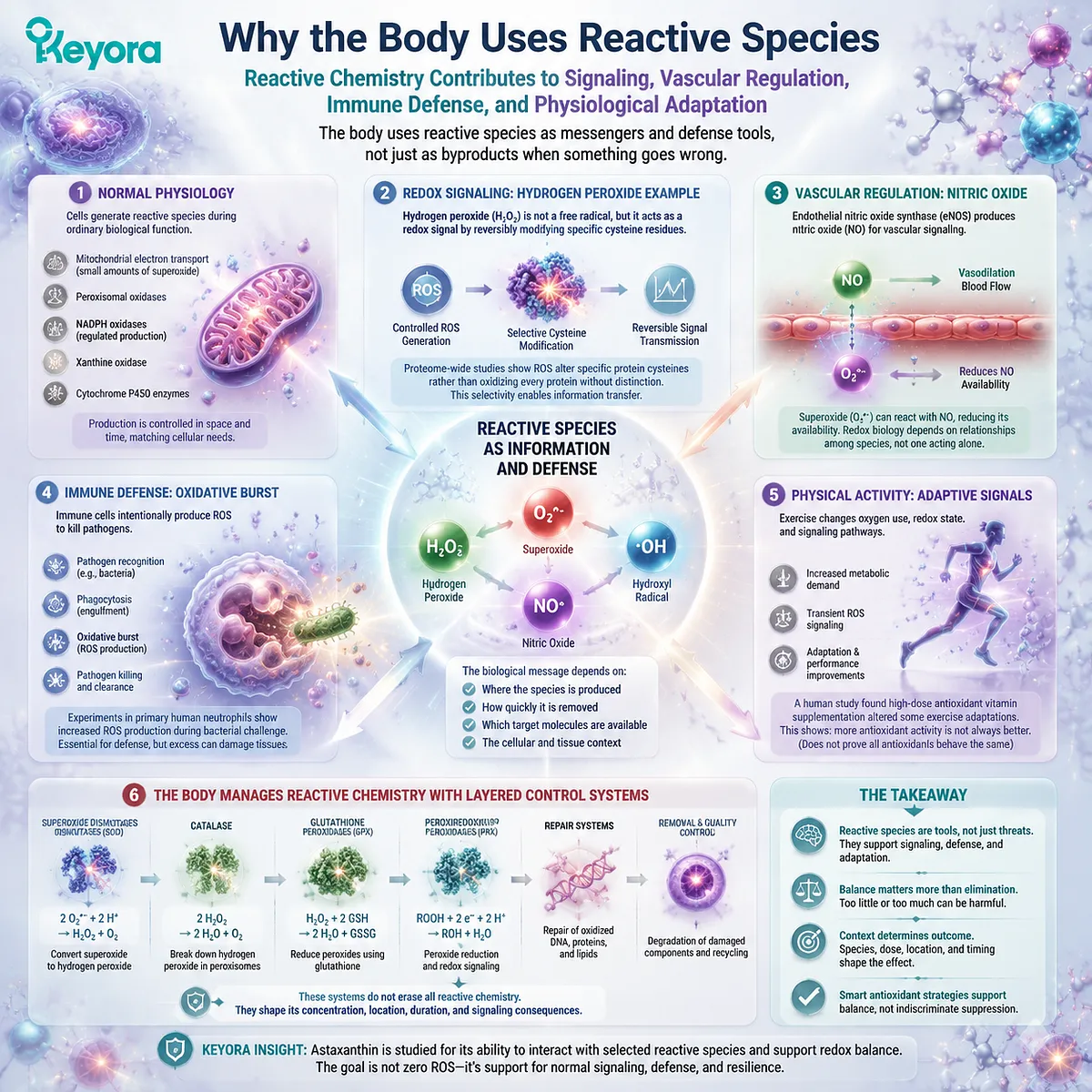
The body does not produce reactive species only during pollution exposure, illness, or cellular failure. Normal enzymes and organelles generate them in controlled amounts as part of ordinary physiology.
Hydrogen peroxide provides a useful example. It is not a free radical, but it can function as a redox signal by reversibly modifying selected cysteine residues in proteins. A proteome wide experimental analysis found that reactive oxygen species can alter specific protein cysteines rather than oxidizing every protein without distinction. This selectivity helps explain how controlled reactive chemistry can transmit information.
Cells also use reactive species to regulate growth, metabolism, movement, stress responses, and survival. The biological message depends on where the species is produced, how quickly it is removed, and which target molecules are available.
Nitric oxide illustrates the same principle in vascular biology. Endothelial nitric oxide synthase generates nitric oxide, which contributes to signaling pathways involved in vascular relaxation and blood flow regulation. Superoxide can reduce nitric oxide availability through chemical interaction, showing that redox biology depends on relationships among species rather than one molecule acting alone.
Immune cells deliberately generate ROS during an oxidative burst. In experiments using primary human neutrophils, bacterial recognition and phagocytosis were associated with increased reactive oxygen species production. This oxidative response is part of innate immune activity, although excessive or prolonged activation may also affect surrounding tissues and inflammatory signaling.
Reactive species can also participate in adaptation to physical activity. Exercise temporarily changes oxygen use, electron flow, enzyme activity, and redox signaling. A human intervention study found that high dose antioxidant vitamin supplementation altered some metabolic adaptations associated with exercise, illustrating why the biological goal cannot be the indiscriminate removal of every reactive signal. That study does not prove that all antioxidants interfere with exercise or that astaxanthin has the same effect, but it shows why “more antioxidant activity is always better” is an unreliable rule.
The body manages these processes through layered control systems. Superoxide dismutases convert superoxide into hydrogen peroxide. Catalase, glutathione peroxidases, peroxiredoxins, and related systems help process peroxides. Repair and removal pathways address oxidized lipids, proteins, and nucleic acids.
These systems do not simply erase all reactive chemistry. They help shape its concentration, location, duration, and signaling consequences.
When Reactive Chemistry Becomes Harmful
Damage becomes more likely when production exceeds control or occurs in the wrong place for too long
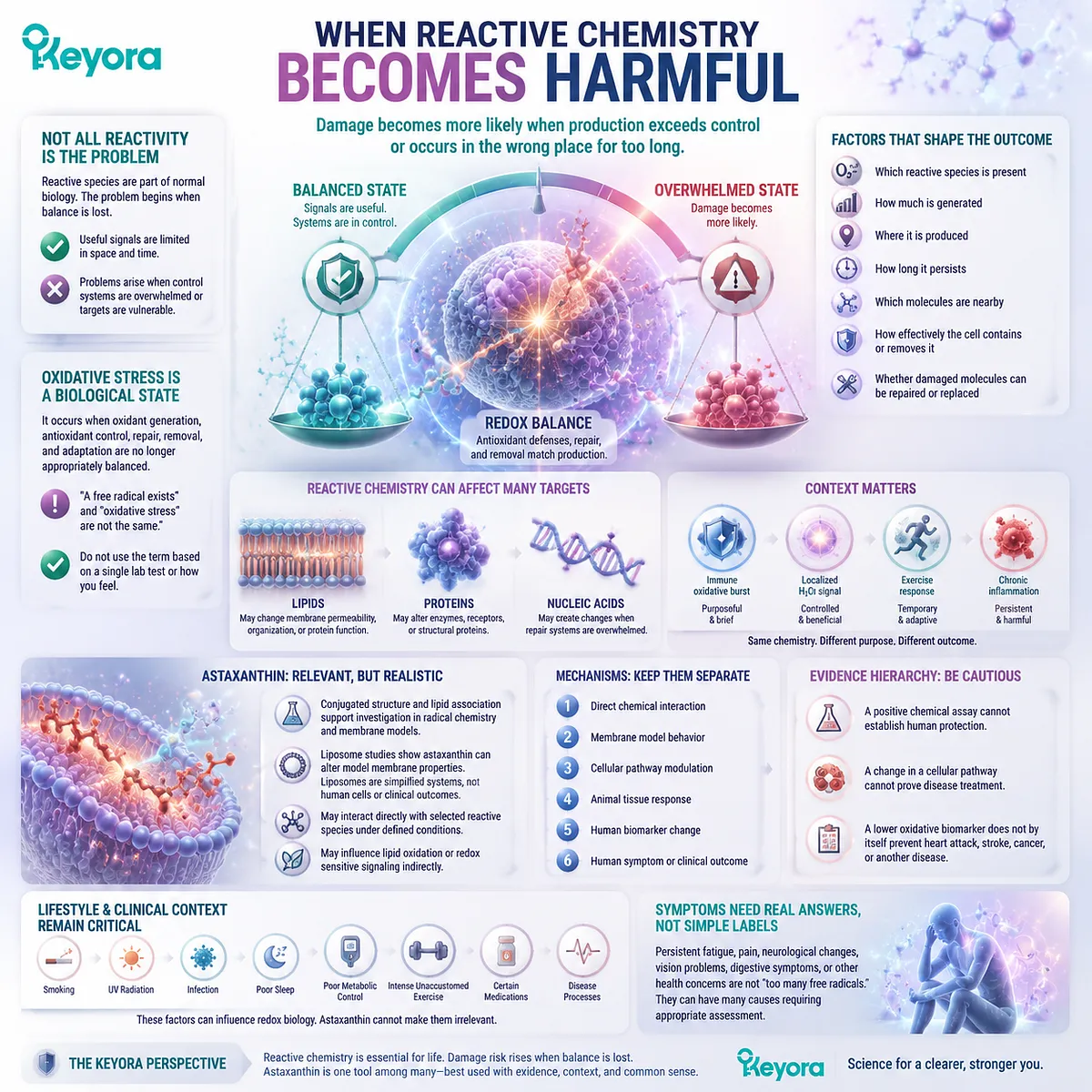
A useful reactive signal is usually limited in space and time. Problems become more likely when generation increases beyond the capacity of antioxidant, repair, and removal systems, or when a highly reactive species forms beside a vulnerable target.
Several factors influence the result:
-
which reactive species is present
-
how much is generated
-
where it is produced
-
how long it persists
-
which molecules are nearby
-
how effectively the cell contains or removes it
-
whether damaged molecules can be repaired or replaced
This is why “a free radical exists” and “oxidative stress is present” are not equivalent statements.
Oxidative stress describes a biological condition in which oxidant generation, antioxidant control, repair, removal, and adaptation are no longer appropriately balanced. The term should not be used merely because a laboratory test detected ROS or because a person feels tired.
Reactive chemistry can affect different molecular targets. Oxidation of membrane lipids may change permeability, membrane organization, or protein function. Protein oxidation may alter enzymes, receptors, or structural proteins. Oxidative changes to nucleic acids may become important when repair systems cannot adequately resolve them.
The consequences also depend on tissue context. A brief immune oxidative burst has a different purpose from persistent ROS generation in chronically activated inflammatory cells. A localized hydrogen peroxide signal is different from uncontrolled hydroxyl radical formation. A temporary exercise response is different from prolonged metabolic stress.
Astaxanthin is relevant because its conjugated structure and lipid association support investigation in radical chemistry and membrane models. Experimental liposome research has shown that incorporating astaxanthin can alter model membrane properties, but a liposome remains a simplified system rather than a complete human cell or clinical outcome.
Astaxanthin may interact directly with selected reactive species under defined conditions. It may also influence lipid oxidation or redox sensitive signaling indirectly. These mechanisms should remain separate:
-
direct chemical interaction
-
membrane model behavior
-
cellular pathway modulation
-
animal tissue response
-
human biomarker change
-
human symptom or clinical outcome
A positive chemical assay cannot establish human protection. A change in a cellular pathway cannot prove disease treatment. A lower oxidative biomarker does not by itself establish that a heart attack, stroke, cancer, or another disease has been prevented.
Lifestyle and clinical context remain important. Smoking exposure, ultraviolet radiation, infection, inadequate sleep, poor metabolic control, intense unaccustomed exercise, certain medications, and disease processes may all influence redox biology. Astaxanthin cannot make these factors irrelevant.
Persistent fatigue, pain, neurological changes, vision problems, digestive symptoms, or other health concerns should not be self diagnosed as “too many free radicals.” These symptoms can have many causes requiring appropriate assessment.
Use the Keyora Species – Role – Balance Check
Three questions separate useful redox signaling from uncontrolled oxidative reactions
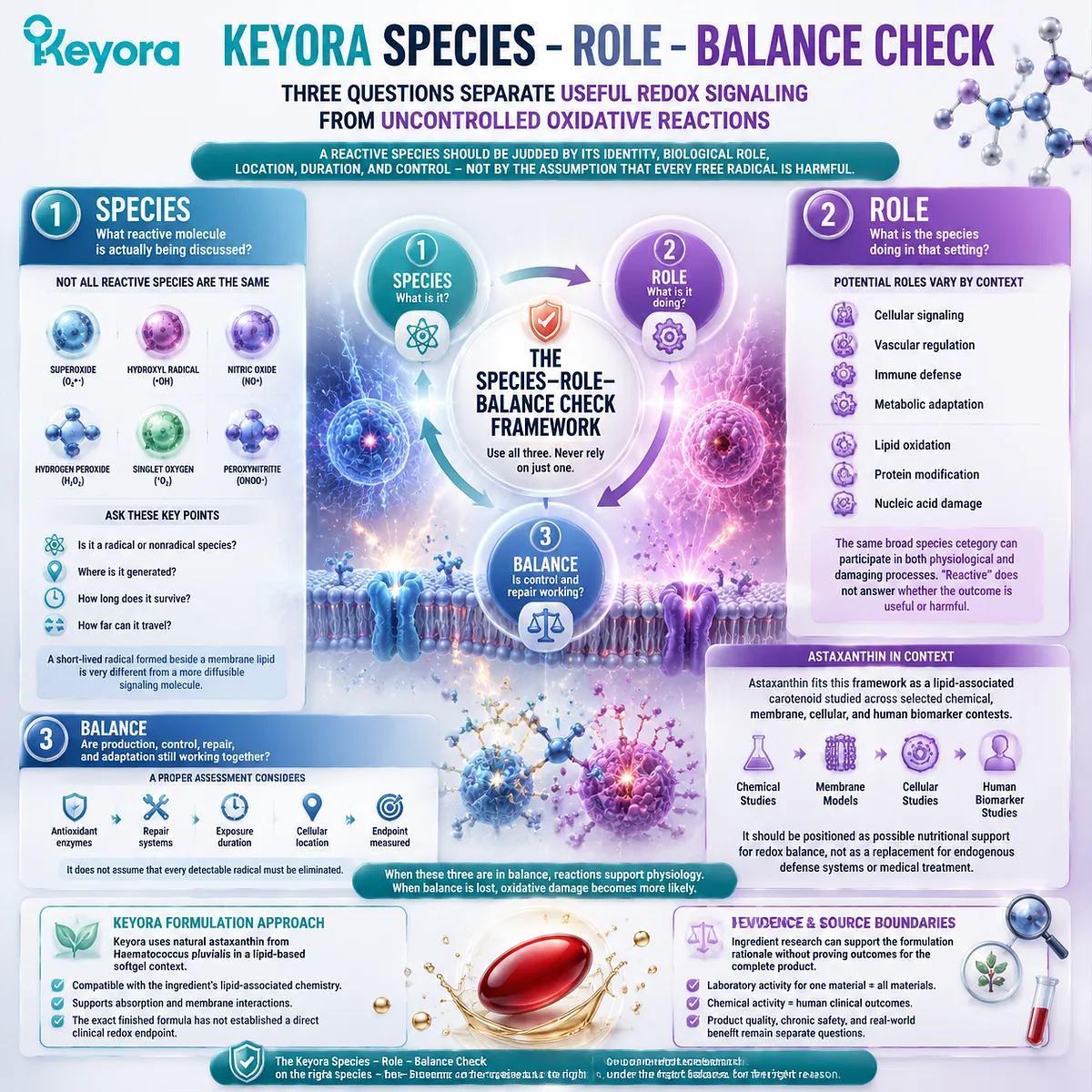
The Keyora Species – Role – Balance Check provides a practical way to evaluate statements about free radicals and antioxidants.
1. Species
What reactive molecule is actually being discussed?
Ask whether it is a radical or nonradical species. Superoxide, hydroxyl radical, nitric oxide, hydrogen peroxide, singlet oxygen, and peroxynitrite should not be treated as chemically interchangeable.
Also ask where the species is generated and how long it survives. A short lived radical formed beside a membrane lipid presents a different situation from a more diffusible signaling molecule.
2. Role
What is the species doing in that setting?
Its role may involve:
-
cellular signaling
-
vascular regulation
-
immune defense
-
metabolic adaptation
-
lipid oxidation
-
protein modification
-
nucleic acid damage
The same broad species category can participate in both physiological and damaging processes. The word “reactive” does not answer whether the outcome is useful or harmful.
3. Balance
Are production, control, repair, and adaptation still working together?
A proper assessment considers antioxidant enzymes, repair systems, exposure duration, cellular location, and the endpoint that was measured. It does not assume that every detectable radical must be eliminated.
The core rule is:
A reactive species should be judged by its identity, biological role, location, duration, and control – not by the assumption that every free radical is harmful.
Astaxanthin fits this framework as a lipid associated carotenoid studied across selected chemical, membrane, cellular, and human biomarker contexts. It should be positioned as possible nutritional support for redox balance, not as a replacement for endogenous defense systems or medical treatment.
Keyora uses natural astaxanthin from Haematococcus pluvialis in a lipid based softgel context. This formulation is compatible with the ingredient’s lipid associated chemistry, but the exact finished formula has not established a direct clinical redox endpoint. Ingredient research can support the formulation rationale without proving that the complete product eliminates radicals, prevents disease, or protects every tissue.
The same evidence boundary applies to source identity. Laboratory activity reported for one astaxanthin material cannot automatically validate every natural or synthetic commercial ingredient. Chemical activity, human evidence, product quality, and chronic safety remain separate questions.
Closing Summary
Free radicals are normal parts of biology, while harm depends on context, control, and duration
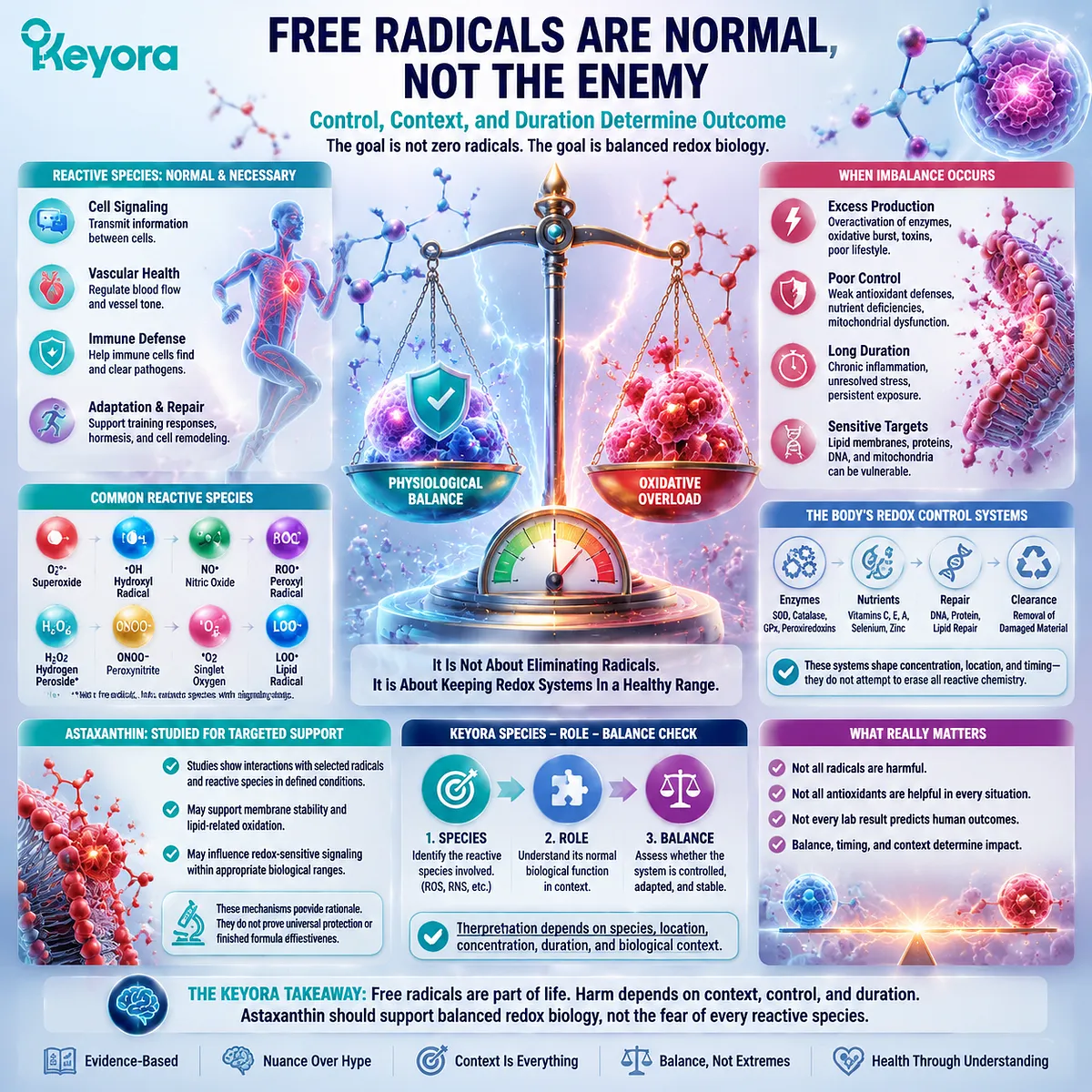
Free radicals contain unpaired electrons, but that definition does not make every radical an enemy. Superoxide, hydroxyl radical, nitric oxide, and lipid radicals differ in chemistry and biological function. ROS and RNS also include reactive nonradical species, so these terms should not be used interchangeably.
Controlled reactive chemistry supports cell signaling, vascular regulation, immune responses, and physiological adaptation. Damage becomes more likely when production is excessive, control is insufficient, exposure persists, or reactive species form near vulnerable lipids, proteins, or nucleic acids.
The goal of antioxidant biology is therefore not to eliminate every radical. It is to preserve appropriately regulated redox conditions.
Astaxanthin is studied for selected radical interactions, membrane related oxidation, and redox sensitive signaling. These mechanisms provide a scientific rationale, but they do not prove universal protection or finished formula effectiveness.
Use the Keyora Species – Role – Balance Check: identify the species, determine its role, and assess whether the biological system remains controlled. Astaxanthin should support that interpretation of balance, not reinforce fear of all reactive chemistry.
This article is for educational and informational purposes only. It does not provide medical advice, diagnosis, treatment, cure, prevention, disease outcome claims, hormone restoration claims, fertility outcome claims, or formula-specific clinical efficacy claims.