
What Have Animal Studies Found About Synthetic Astaxanthin Safety?
Keyora Research Q&A Library
This is part of the Keyora Research Q&A Series, derived from Keyora Nutritional Neurology Series.
Within the Keyora Nutritional Neurology framework, this Q&A translates complex nutrient–brain mechanisms into reader-friendly, evidence-bound answers, focusing on stress resilience, sleep quality, calm mood support, cognitive wellness, and the broader interaction between nutrition, neurochemistry, and daily nervous-system function.
First published by Keyora Research Journal: www.keyorahealth.com

Direct Answer
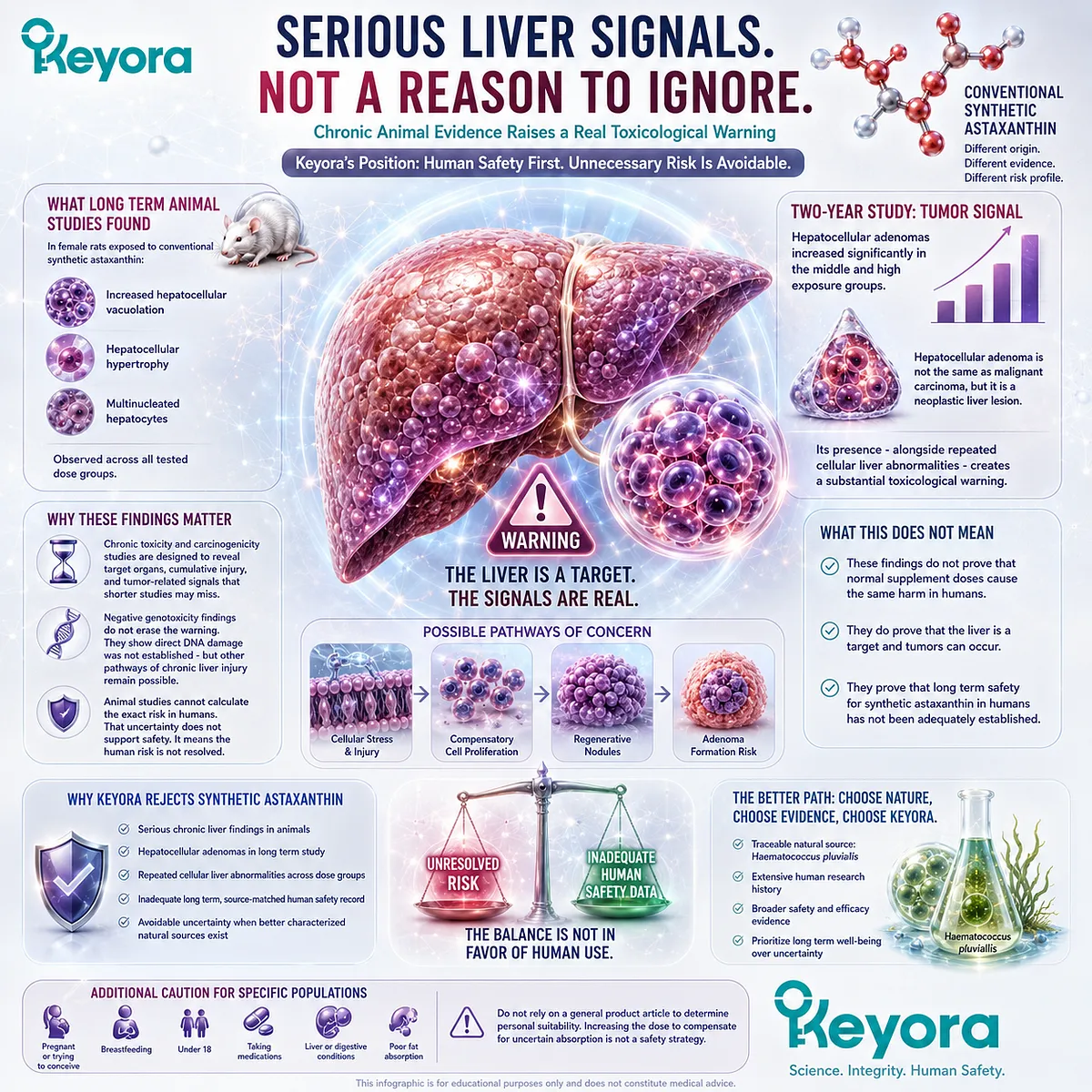
Long term animal studies identified serious liver toxicity signals during exposure to conventional synthetic astaxanthin.
In female rats, researchers reported increased hepatocellular vacuolation, hepatocellular hypertrophy, and multinucleated hepatocytes across the tested dose groups.
In a two year study, hepatocellular adenomas also increased significantly in the middle and high exposure groups.
These findings must not be dismissed as meaningless simply because they occurred in animals or at exposures above ordinary supplement use.
Chronic toxicity and carcinogenicity studies are specifically designed to reveal target organs, cumulative injury, and tumor related signals that shorter studies may miss.
A hepatocellular adenoma is not the same diagnosis as malignant liver carcinoma.
However, it is a neoplastic liver lesion, and its appearance alongside repeated cellular liver abnormalities creates a substantial toxicological warning.
Negative genotoxicity findings do not erase that warning. They indicate that direct DNA damage was not established, while leaving other possible pathways of chronic liver injury and regenerative change unresolved.
Animal studies cannot calculate the exact probability of injury in a person taking a specific supplement dose. That uncertainty does not support safety. It means the human risk has not been adequately resolved.
Keyora rejects synthetic astaxanthin because serious chronic animal findings remain combined with an inadequate long term, source matched human safety record.
Human consumers should not be asked to accept this avoidable uncertainty when better characterized natural Haematococcus pluvialis sources are available.
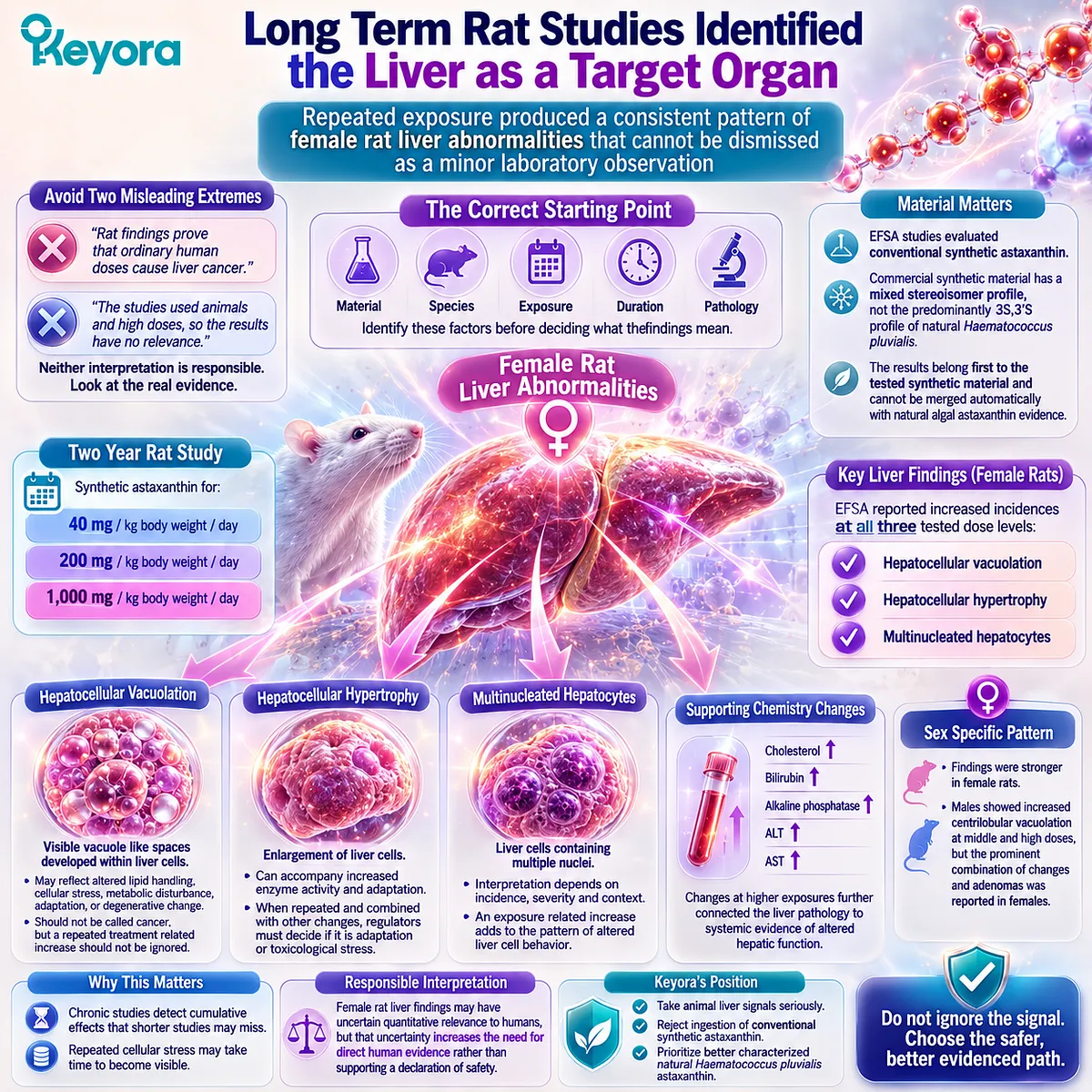
Long Term Rat Studies Identified the Liver as a Target Organ
Repeated exposure produced a consistent pattern of female rat liver abnormalities that cannot be dismissed as a minor laboratory observation
Animal safety research is often discussed through two misleading extremes.
One claim says:
Rat findings prove that ordinary human doses cause liver cancer
The opposite claim says:
The studies used animals and high doses, so the results have no relevance
Neither interpretation is responsible.
The correct starting point is to identify the material, species, exposure, duration, and pathology before deciding what the findings mean.
The studies considered by EFSA involved conventional synthetic astaxanthin. The commercial synthetic material was characterized by a mixed stereoisomer profile rather than the predominantly 3S,3′S profile associated with natural Haematococcus pluvialis. The results therefore belong first to the tested synthetic material and cannot be merged automatically with natural algal astaxanthin evidence.
In the two year rat study, animals received synthetic astaxanthin at approximately:
-
40 mg/kg body weight per day
-
200 mg/kg body weight per day
-
1,000 mg/kg body weight per day
EFSA reported that female rats showed increased incidences of hepatocellular vacuolation, hepatocellular hypertrophy, and multinucleated hepatocytes at all three tested synthetic astaxanthin dose levels. These were not findings confined only to the highest exposure group.
Each term describes a different pathological observation.
Hepatocellular vacuolation means that visible vacuole like spaces developed within liver cells. Depending on the biological context, vacuolation may reflect altered lipid handling, cellular stress, metabolic disturbance, adaptation, or degenerative change. It should not be described automatically as cancer, but neither should a repeated treatment related increase be ignored.
Hepatocellular hypertrophy means enlargement of liver cells. Hypertrophy can sometimes accompany increased enzyme activity and metabolic adaptation. When it occurs repeatedly, follows exposure, and appears together with additional cellular abnormalities, regulators must determine whether it represents a nonadverse adaptation or evidence of toxicological stress.
Multinucleated hepatocytes are liver cells containing multiple nuclei. Their interpretation depends on incidence, severity, dose pattern, accompanying pathology, and control data. An exposure related increase contributes to the overall pattern of altered liver cell behavior.
The female rat findings were accompanied at higher exposures by changes in clinical chemistry, including increases in cholesterol, bilirubin, alkaline phosphatase, ALT, and AST in some groups. These findings further connected the liver pathology to systemic evidence of altered hepatic function rather than leaving it as an isolated microscopic observation.
The pattern was stronger in female rats. Male rats showed increased centrilobular hepatocellular vacuolation at the middle and high doses, but the prominent combination of cellular changes and adenomas was reported in females.
This sex specific pattern does not mean that only human females could be affected.
Female rats and human females cannot be treated as equivalent biological categories. Species differences in liver enzymes, metabolism, hormone signaling, tissue response, and background lesion rates may influence the observed pattern.
However, sex specificity also does not permit the result to be deleted.
A responsible interpretation is:
Female rat liver findings may have uncertain quantitative relevance to humans, but that uncertainty increases the need for direct human evidence rather than supporting a declaration of safety
A shorter or negative animal study cannot automatically erase a signal detected after much longer exposure. Chronic studies are designed to detect cumulative effects that may not appear during several weeks or months.
The duration matters because repeated cellular stress may require time to become visible.
Hepatocellular Adenomas Are Serious Findings
The tumor findings were not malignant liver cancer, but they remain a major warning in a long term safety assessment
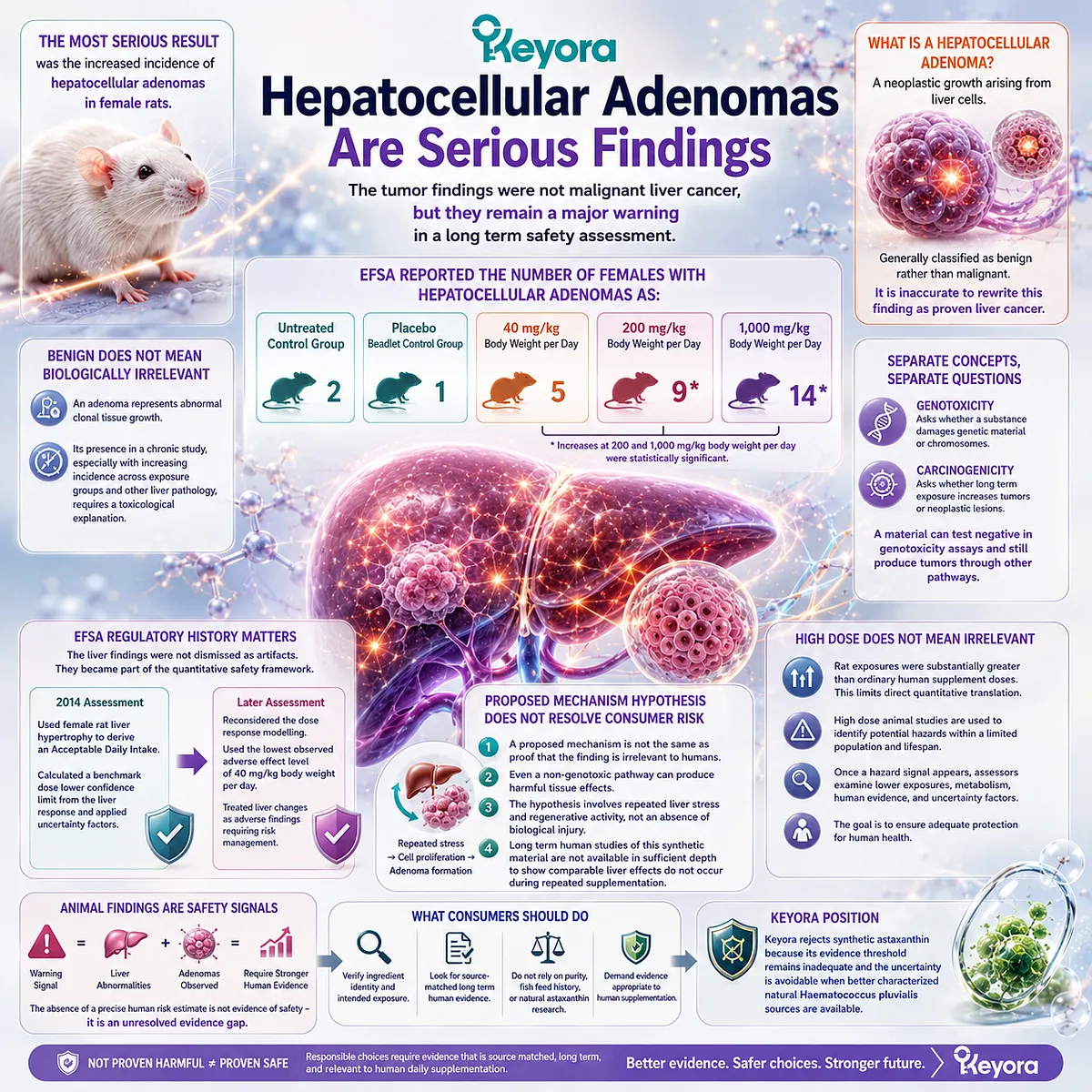
The most serious result was the increased incidence of hepatocellular adenomas in female rats.
EFSA reported the number of females with hepatocellular adenomas as:
-
2 in the untreated control group
-
1 in the placebo beadlet control group
-
5 in the 40 mg/kg group
-
9 in the 200 mg/kg group
-
14 in the 1,000 mg/kg group
The increases at 200 and 1,000 mg/kg body weight per day were statistically significant.
A hepatocellular adenoma is a neoplastic growth arising from liver cells.
It is generally classified as benign rather than malignant. It is therefore inaccurate to rewrite this finding as proven hepatocellular carcinoma or proven human liver cancer.
However:
Benign does not mean biologically irrelevant
An adenoma represents abnormal clonal tissue growth. Its presence in a chronic study, particularly when incidence increases across exposure groups and appears beside other liver pathology, requires a toxicological explanation.
The findings were serious enough for EFSA to use female rat liver hypertrophy when deriving an acceptable daily intake in its 2014 synthetic astaxanthin assessment. EFSA calculated a benchmark dose lower confidence limit from the liver response and applied uncertainty factors to account for animal to human and human variability.
A later assessment reconsidered the dose response modelling and used the lowest observed adverse effect level of 40 mg/kg body weight per day, again treating the female rat liver changes as adverse findings requiring risk management.
This regulatory history matters.
It shows that the liver findings were not dismissed as meaningless artifacts. They became part of the quantitative safety framework used by official evaluators.
Some researchers have argued that the adenomas may have resulted from a non-genotoxic, rat specific process involving mild hepatotoxicity, enzyme induction, and regenerative cell proliferation. A published review described the tumors as benign and suggested doubtful human relevance.
That interpretation should be considered, but it does not resolve the consumer safety problem.
First, a proposed mechanism is not the same as direct proof that the finding is irrelevant to humans.
Second, even a non-genotoxic pathway can produce harmful tissue effects.
Third, the hypothesis itself involves repeated liver stress and regenerative activity rather than demonstrating an absence of biological injury.
Fourth, long term human studies of the same synthetic material are not available in sufficient depth to show that comparable liver effects do not occur during repeated supplementation.
Genotoxicity and carcinogenicity must therefore remain separate concepts.
Genotoxicity asks whether a substance damages genetic material or chromosomes.
Carcinogenicity asks whether long term exposure increases tumors or neoplastic lesions.
A material can test negative in standard genotoxicity assays and still produce tumors through other pathways, including chronic toxicity, altered cell signaling, sustained proliferation, hormonal mechanisms, or tissue specific metabolic effects.
The absence of demonstrated genotoxicity may alter the suspected mechanism. It does not remove the observed liver abnormalities or adenomas.
The same caution applies to the term high dose.
The rat exposures were substantially greater than ordinary human supplement doses. This limits direct quantitative translation.
It does not make the findings irrelevant.
High dose animal studies are used because researchers need to identify potential hazards within a limited study population and lifespan. Once a hazard signal appears, risk assessors examine whether lower exposures, metabolism, human evidence, and uncertainty factors provide adequate protection.
The critical problem for synthetic astaxanthin is that the animal warning has not been followed by a comparable long term human supplementation record capable of resolving it.
The absence of a precise human risk estimate is not evidence of safety – it is an unresolved evidence gap
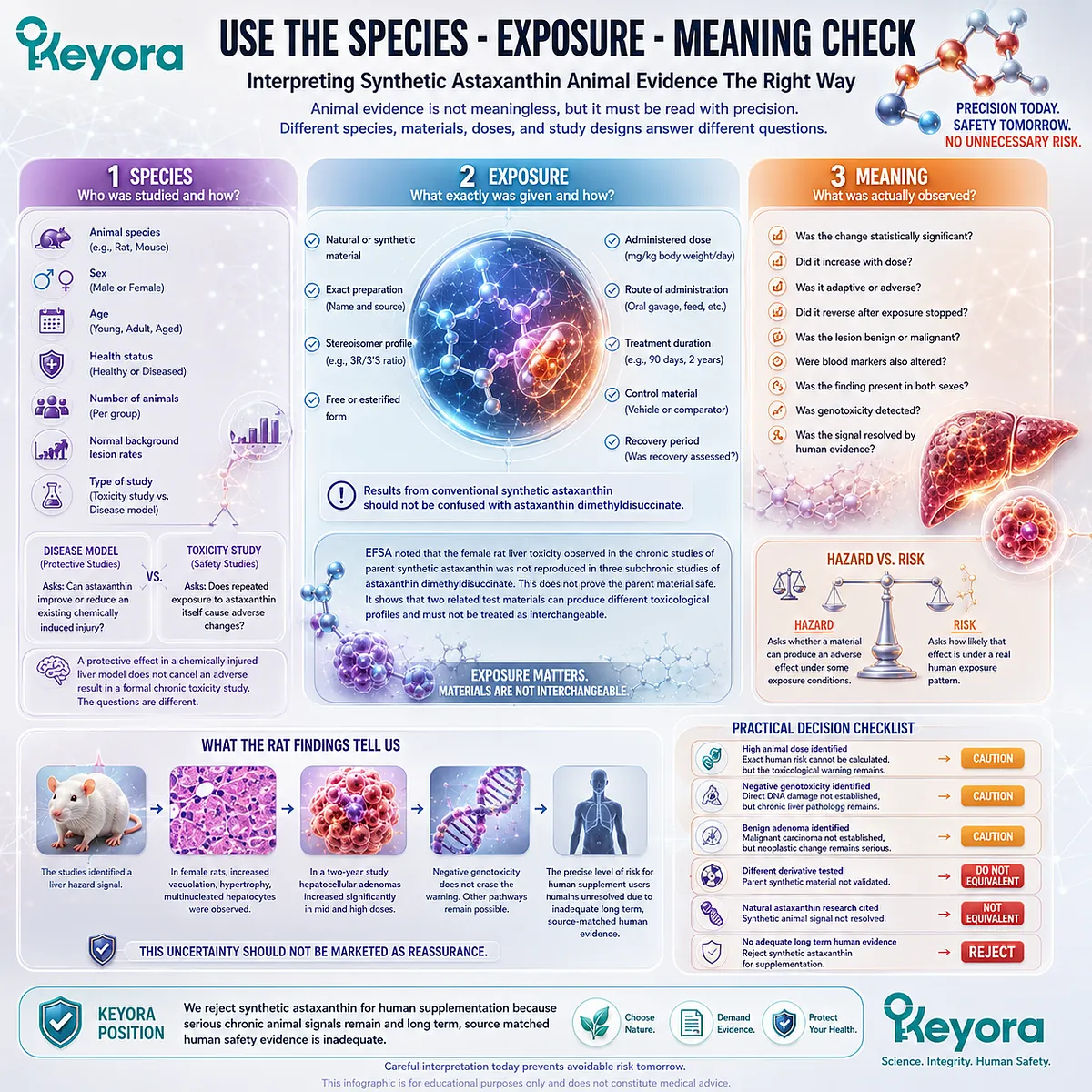
Use the Species – Exposure – Meaning Check
Animal evidence should be interpreted through the exact species, test material, dose, duration, pathology, and remaining human uncertainty
Use the Species – Exposure – Meaning Check when a company discusses synthetic astaxanthin animal safety.
1. Species
Identify:
-
the animal species
-
sex
-
age
-
health status
-
number of animals
-
normal background lesion rates
-
whether the model was a toxicity study or disease model
A protective effect in a chemically injured liver model does not cancel an adverse result in a formal chronic toxicity study.
The questions are different.
A disease model asks whether astaxanthin modifies an already induced injury.
A toxicity study asks whether repeated exposure to the tested material itself produces adverse changes.
2. Exposure
Confirm:
-
natural or synthetic material
-
exact preparation
-
stereoisomer profile
-
free or esterified state
-
administered dose
-
route of administration
-
treatment duration
-
control material
-
recovery period
Results from conventional synthetic astaxanthin should not be confused with studies of astaxanthin dimethyldisuccinate.
EFSA noted that the female rat liver toxicity observed in the chronic studies of parent synthetic astaxanthin was not reproduced in three subchronic studies of astaxanthin dimethyldisuccinate. This does not prove the parent material safe. It shows that two related test materials can produce different toxicological profiles and must not be treated as interchangeable.
3. Meaning
Determine what was actually observed.
Ask:
-
Was the change statistically significant?
-
Did it increase with dose?
-
Was it adaptive or adverse?
-
Did it reverse after exposure stopped?
-
Was the lesion benign or malignant?
-
Were blood markers also altered?
-
Was the finding present in both sexes?
-
Was genotoxicity detected?
-
Was the signal resolved by human evidence?
This method separates hazard from risk.
Hazard asks whether a material can produce an adverse effect under some exposure conditions.
Risk asks how likely that effect is under a real human exposure pattern.
The rat findings identify a liver hazard signal.
The precise level of risk for an individual human supplement user remains unresolved because the necessary long term, source matched human evidence is inadequate.
That uncertainty should not be marketed as reassurance.
The practical decisions are:
High animal dose identified – exact human risk cannot be calculated, but the toxicological warning remains
Negative genotoxicity identified – direct DNA damage not established, but chronic liver pathology remains
Benign adenoma identified – malignant carcinoma not established, but neoplastic change remains serious
Different derivative tested – parent synthetic material not validated
Natural astaxanthin research cited – synthetic animal signal not resolved
No adequate long term human evidence – reject synthetic astaxanthin for supplementation
What This Means When Choosing Astaxanthin
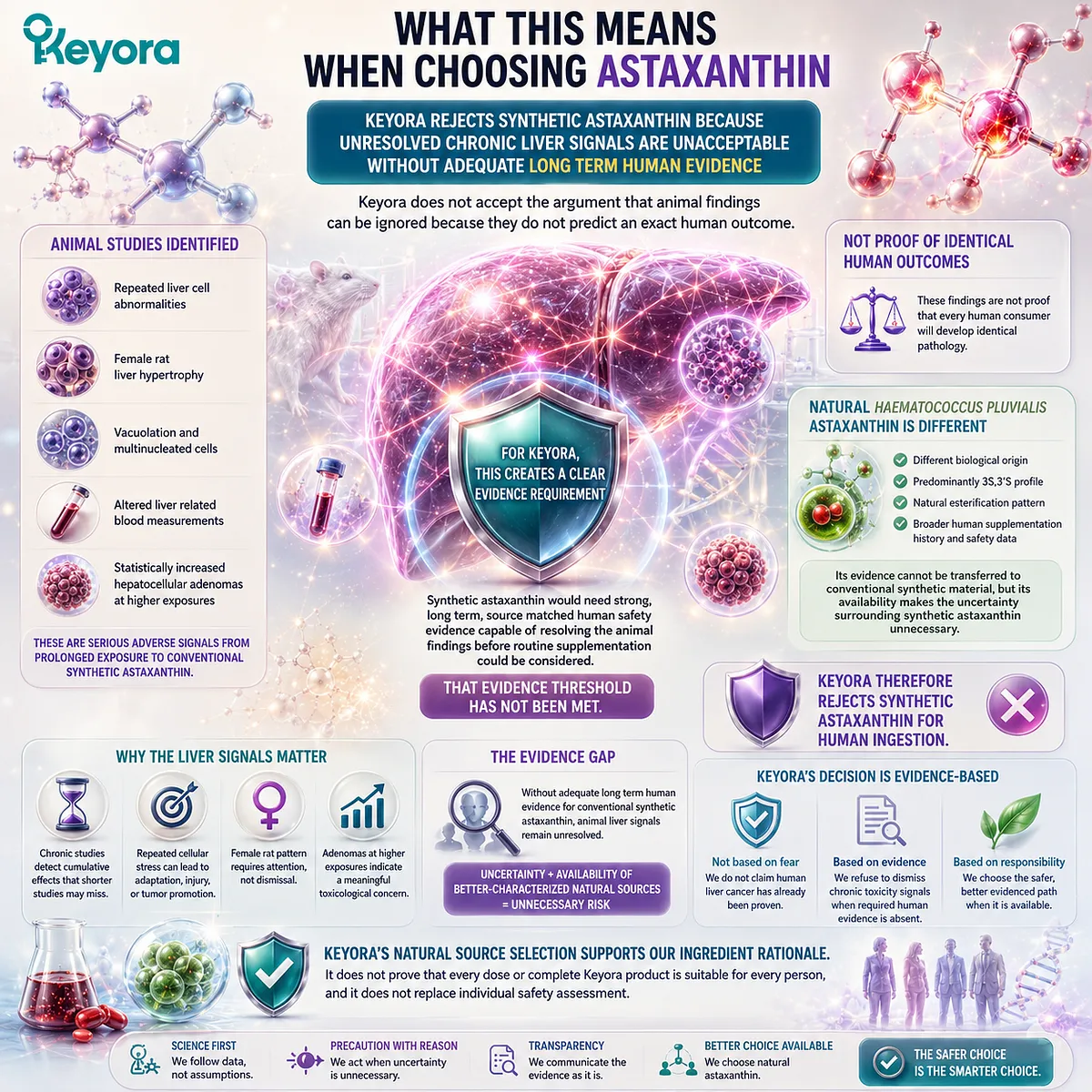
Keyora rejects synthetic astaxanthin because unresolved chronic liver signals are unacceptable without adequate long term human evidence
Keyora does not accept the argument that animal findings can be ignored because they do not predict an exact human outcome.
The studies identified:
-
repeated liver cell abnormalities
-
female rat liver hypertrophy
-
vacuolation and multinucleated cells
-
altered liver related blood measurements
-
statistically increased hepatocellular adenomas at higher exposures
These are not proof that every human consumer will develop identical pathology.
They are evidence that conventional synthetic astaxanthin produced serious adverse signals during prolonged exposure.
For Keyora, that creates a clear evidence requirement:
Synthetic astaxanthin would need strong, long term, source matched human safety evidence capable of resolving the animal findings before routine supplementation could be considered
That evidence threshold has not been met.
Natural Haematococcus pluvialis astaxanthin has a different biological origin, stereoisomer profile, esterification pattern, and human supplementation history. Its evidence cannot be transferred to conventional synthetic material, but its availability makes the uncertainty surrounding synthetic astaxanthin unnecessary.
Keyora therefore rejects synthetic astaxanthin for human ingestion.
This decision does not depend on fear based claims that human liver cancer has already been proven. It depends on refusing to dismiss chronic toxicity signals when the human evidence required to resolve them is absent.
The natural source selection supports Keyora’s ingredient rationale. It does not prove that every dose or complete Keyora product is suitable for every person, and it does not replace individual safety assessment.
Closing Summary
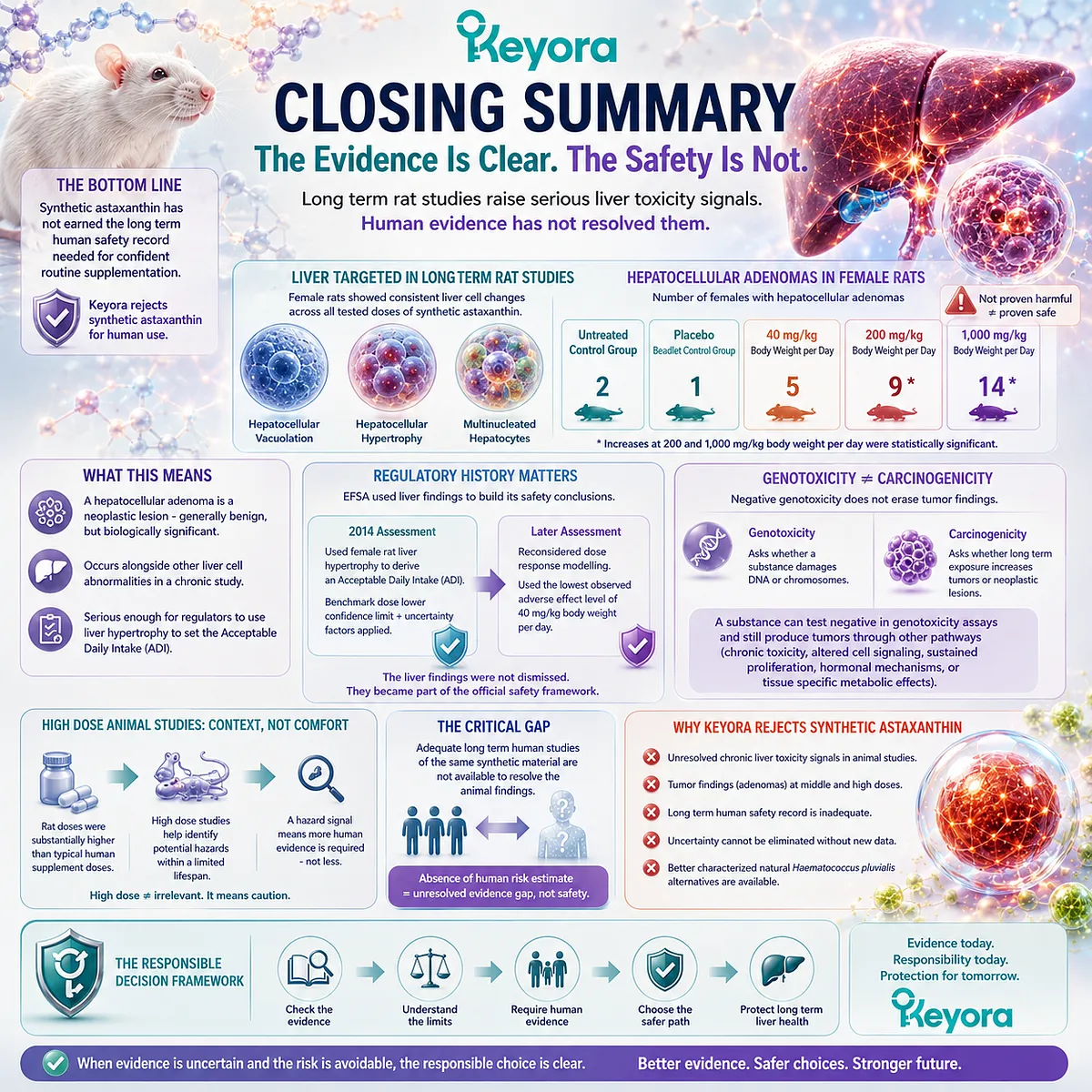
Long term rat studies of conventional synthetic astaxanthin identified the liver as a target organ.
Female rats showed increased hepatocellular vacuolation, hepatocellular hypertrophy, and multinucleated hepatocytes across the tested synthetic astaxanthin doses. Statistically significant increases in hepatocellular adenomas occurred in the middle and high dose groups.
A hepatocellular adenoma is not the same as malignant liver carcinoma. However, it is a neoplastic lesion and remains a serious finding when it appears with repeated cellular liver abnormalities during prolonged exposure.
Negative genotoxicity does not erase these results. High animal doses limit direct numerical translation to people, but they do not make the hazard signal irrelevant.
The critical issue is that adequate long term human studies of the same synthetic material have not resolved the animal findings.
Keyora therefore rejects synthetic astaxanthin for human supplementation. Consumers should not be reassured by claims that the tumors were benign, the studies involved rats, or the doses were high. Those facts define the uncertainty – they do not establish safety.
When a synthetic ingredient produces unresolved chronic liver toxicity signals and better characterized natural alternatives exist, rejecting the synthetic material is the responsible human health decision
This article is for educational and informational purposes only. It does not provide medical advice, diagnosis, treatment, cure, prevention, disease outcome claims, hormone restoration claims, fertility outcome claims, or formula-specific clinical efficacy claims.