
What Is Screen Fatigue?
Keyora Research Q&A Library
This is part of the Keyora Research Q&A Series, derived from Keyora Astaxanthin Research Journal Series.
Within the Keyora Astaxanthin Researcn framework, this Q&A translates complex astaxanthin biology into reader-friendly, evidence-bound answers, focusing on natural astaxanthin identity, molecular structure, antioxidant and redox mechanisms, membrane lipid interaction, mitochondrial resilience, inflammatory signaling pathways, human evidence interpretation, and the scientific principles behind responsible supplementation.
First published by Keyora Research Journal: www.keyorahealth.com

Short Answer
Screen fatigue refers to the physical and mental tiredness that can develop after prolonged exposure to digital screens such as computers, smartphones, tablets, and televisions.
Common symptoms may include tired eyes, dry eyes, blurred vision, headaches, difficulty focusing, and a general feeling of mental exhaustion after long periods of screen use.
While screen fatigue is often associated with the eyes, it is increasingly recognized as a whole-body issue involving visual strain, cognitive load, reduced blinking, prolonged sitting, disrupted sleep patterns, and increased exposure to digital environments.
What Is Screen Fatigue?
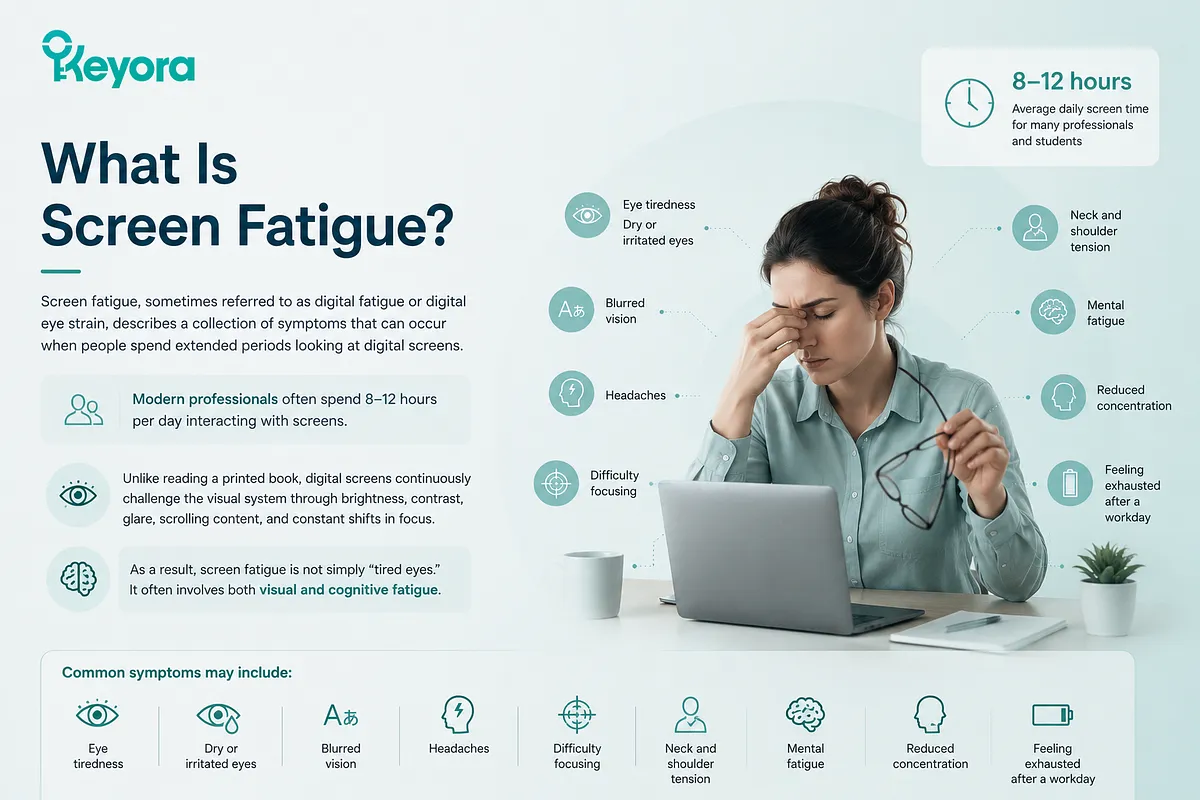
Screen fatigue, sometimes referred to as digital fatigue or digital eye strain, describes a collection of symptoms that can occur when people spend extended periods looking at digital screens.
Modern professionals often spend 8–12 hours per day interacting with screens. Office workers, software engineers, designers, financial analysts, remote workers, and students are among the groups most commonly affected.
Unlike reading a printed book, digital screens continuously challenge the visual system through brightness, contrast, glare, scrolling content, and constant shifts in focus.
As a result, screen fatigue is not simply “tired eyes.” It often involves both visual and cognitive fatigue.
Common symptoms may include:
-
Eye tiredness
-
Dry or irritated eyes
-
Blurred vision
-
Headaches
-
Difficulty focusing
-
Neck and shoulder tension
-
Mental fatigue
-
Reduced concentration
-
Feeling exhausted after a workday
What Causes Screen Fatigue?
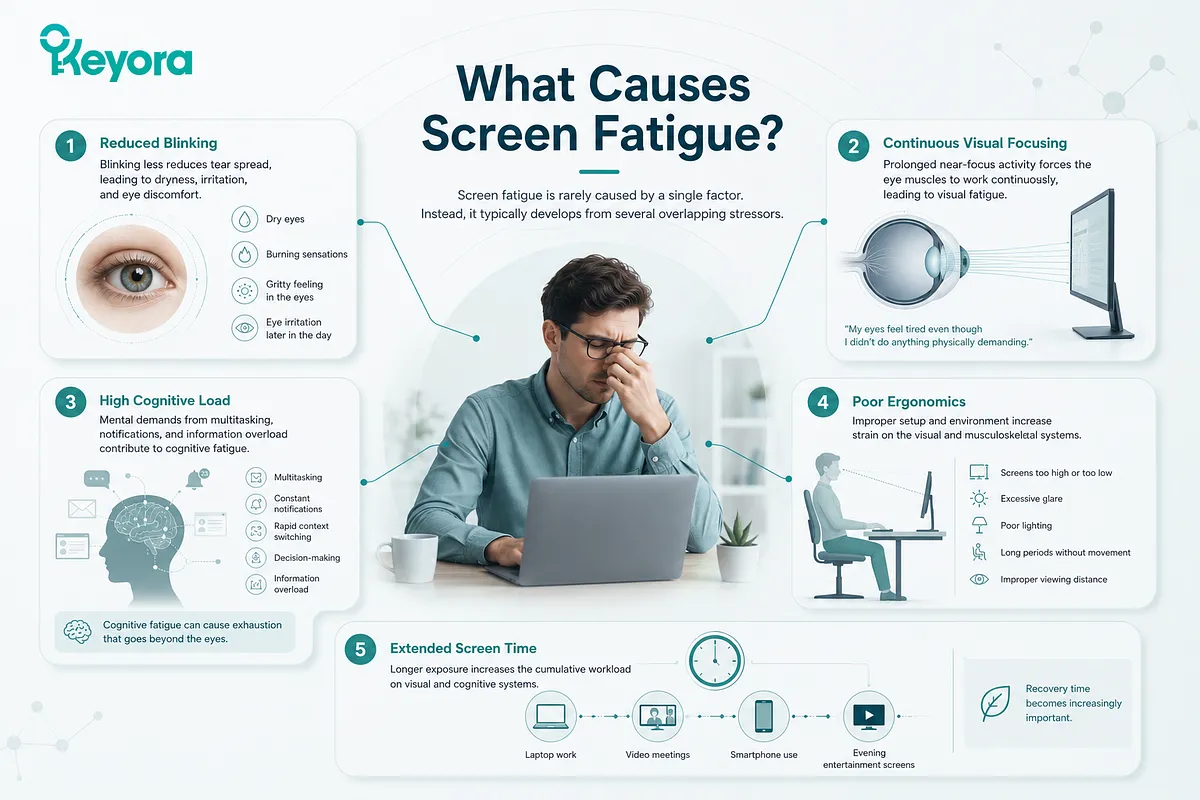
Screen fatigue is rarely caused by a single factor.
Instead, it typically develops from several overlapping stressors.
1. Reduced Blinking
People naturally blink less when concentrating on screens.
Blinking helps spread tears across the surface of the eye and supports comfort and visual clarity.
During intense computer work, blink frequency may decrease significantly, which can contribute to dryness, irritation, and eye discomfort.
Common signs include:
-
Dry eyes
-
Burning sensations
-
Gritty feeling in the eyes
-
Eye irritation later in the day
2. Continuous Visual Focusing
The muscles inside the eye continuously adjust focus when viewing digital content.
Reading emails, spreadsheets, code, presentations, or messages often requires prolonged near-focus activity.
Over time, this sustained effort may contribute to visual fatigue and difficulty maintaining comfortable focus.
People frequently describe this as:
“My eyes feel tired even though I didn’t do anything physically demanding.”
3. High Cognitive Load
Many people assume screen fatigue is purely an eye problem.
In reality, the brain plays a major role.
Modern digital work often involves:
-
Multitasking
-
Constant notifications
-
Rapid context switching
-
Decision-making
-
Information overload
This cognitive demand can create mental fatigue even when visual symptoms are relatively mild.
The result is a feeling of exhaustion that extends beyond the eyes.
4. Poor Ergonomics
Screen positioning, lighting, and posture can significantly influence fatigue levels.
Common contributors include:
-
Screens positioned too high or too low
-
Excessive glare
-
Poor lighting conditions
-
Long periods without movement
-
Improper viewing distance
These factors may increase strain on both the visual and musculoskeletal systems.
5. Extended Screen Time
The longer the exposure, the greater the cumulative workload placed on the visual and cognitive systems.
For many knowledge workers, screen time has become one of the largest daily environmental stressors.
A typical day may include:
-
Laptop work
-
Video meetings
-
Smartphone use
-
Evening entertainment screens
As a result, recovery time becomes increasingly important.
Can Screen Time Increase Oxidative Stress?
Researchers continue to investigate how prolonged screen exposure affects biological systems.
While screen fatigue is primarily discussed in terms of visual discomfort and cognitive workload, scientists are also exploring the role of oxidative stress in eye health and recovery.
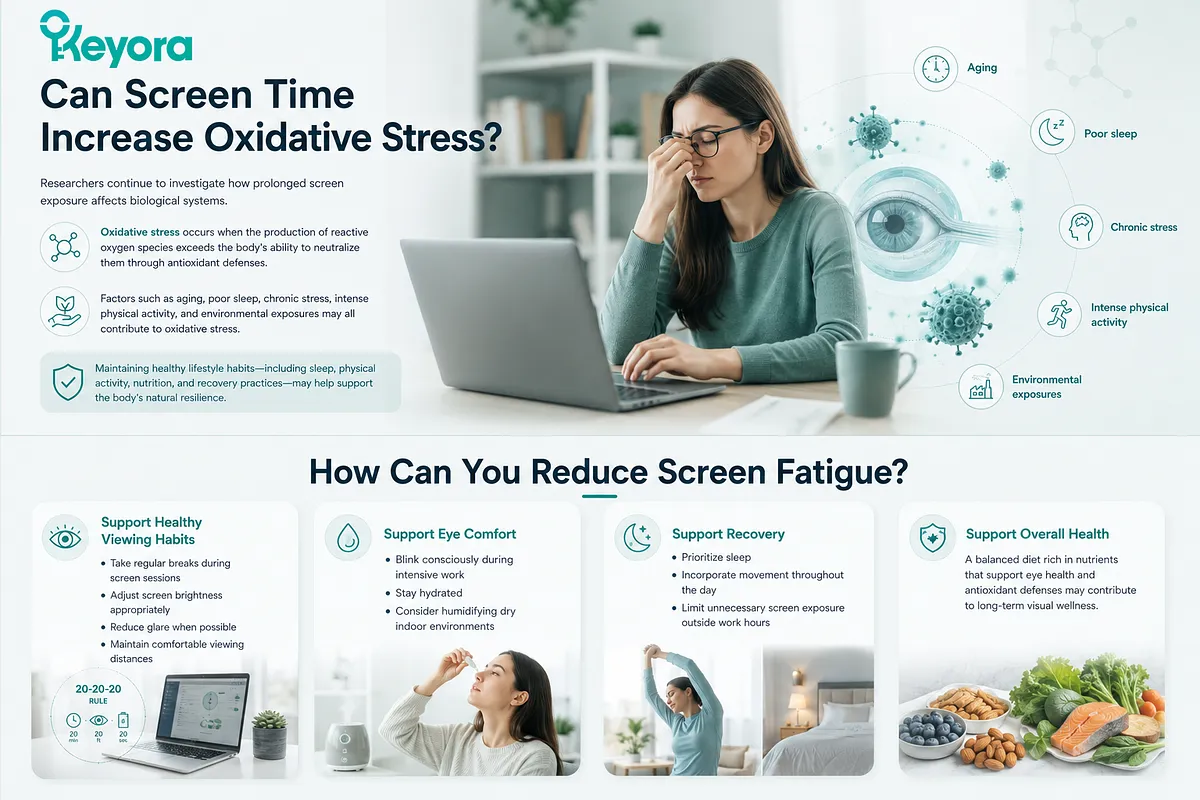
Oxidative stress occurs when the production of reactive oxygen species exceeds the body’s ability to neutralize them through antioxidant defenses.
Factors such as aging, poor sleep, chronic stress, intense physical activity, and environmental exposures may all contribute to oxidative stress.
Maintaining healthy lifestyle habits—including sleep, physical activity, nutrition, and recovery practices—may help support the body’s natural resilience.
How Can You Reduce Screen Fatigue?
Although screens are unavoidable for many people, several practical strategies may help reduce fatigue.
Support Healthy Viewing Habits
-
Take regular breaks during screen sessions
-
Adjust screen brightness appropriately
-
Reduce glare when possible
-
Maintain comfortable viewing distances
Support Eye Comfort
-
Blink consciously during intensive work
-
Stay hydrated
-
Consider humidifying dry indoor environments
Support Recovery
-
Prioritize sleep
-
Incorporate movement throughout the day
-
Limit unnecessary screen exposure outside work hours
Support Overall Health
A balanced diet rich in nutrients that support eye health and antioxidant defenses may contribute to long-term visual wellness.
.
Key Takeaways
· Screen fatigue is a common consequence of prolonged exposure to digital devices and may affect both visual comfort and mental performance.
· The condition is typically caused by a combination of reduced blinking, prolonged near-focus work, increased cognitive load, poor ergonomics, and extended screen exposure.
· Screen fatigue is not solely an eye issue—it often reflects the cumulative demands placed on the visual, neurological, and musculoskeletal systems throughout the workday.
· While screens are an unavoidable part of modern life, healthy viewing habits, proper recovery practices, and good sleep hygiene may help reduce the impact of digital fatigue.
· Understanding the underlying mechanisms behind screen fatigue can help individuals make informed decisions about eye care, workplace habits, and long-term digital wellness.
References
Core References
1. Sheppard AL, Wolffsohn JS.
Digital Eye Strain: Prevalence, Measurement and Amelioration.
BMJ Open Ophthalmology. 2018.
Why it matters:
This review summarizes the prevalence of digital eye strain and discusses the primary mechanisms behind screen-related visual discomfort, including reduced blinking and prolonged visual demand.
2. Rosenfield M.
Computer Vision Syndrome: A Review of Ocular Causes and Potential Treatments.
Ophthalmic and Physiological Optics. 2016.
Why it matters:
Provides a comprehensive overview of the physiological causes of computer-related visual symptoms and practical management approaches.
3. Coles-Brennan C, Sulley A, Young G.
Management of Digital Eye Strain.
Clinical and Experimental Optometry. 2019.
Why it matters:
Examines evidence-based approaches for reducing symptoms associated with prolonged digital device use.
4. Portello JK, Rosenfield M, Bababekova Y, et al.
Computer-Related Visual Symptoms in Office Workers.
Ophthalmic and Physiological Optics. 2012.
Why it matters:
Highlights the relationship between occupational screen exposure and common symptoms such as eye discomfort, dryness, and fatigue.
5. Ranasinghe P, Wathurapatha WS, Perera YS, et al.
Computer Vision Syndrome Among Computer Office Workers.
BMC Research Notes. 2016.
Why it matters:
Demonstrates the widespread prevalence of screen-related visual symptoms among office workers.
6. American Optometric Association.
Computer Vision Syndrome (Digital Eye Strain).
Why it matters:
Provides clinical guidance on the causes, symptoms, and management of digital eye strain.
Further Reading
· Lawrenson JG, Hull CC, Downie LE. Blue-Light Blocking Spectacle Lenses and Visual Performance.
· Gowrisankaran S, Sheedy JE. Computer Vision Syndrome: A Review.
· Blehm C, Vishnu S, Khattak A, et al. Computer Vision Syndrome: A Review.
Scientific Review & Editorial Standards
Article Type: Educational Health Content
Prepared By: Keyora Research Team
Reviewed For Scientific Accuracy: Qualified scientific reviewer using peer-reviewed literature available at the time of publication.
Last Updated: June 2026
Evidence Base: Peer-reviewed scientific publications, clinical reviews, and professional eye care organization resources.
Disclaimer
This article is intended for educational and informational purposes only. It is not intended to diagnose, treat, cure, or prevent any disease and should not be considered medical advice. Individuals experiencing persistent eye discomfort, vision changes, or other health concerns should consult a qualified healthcare professional.